Placeholder Domain Hijacked for ClickFix Campaigns
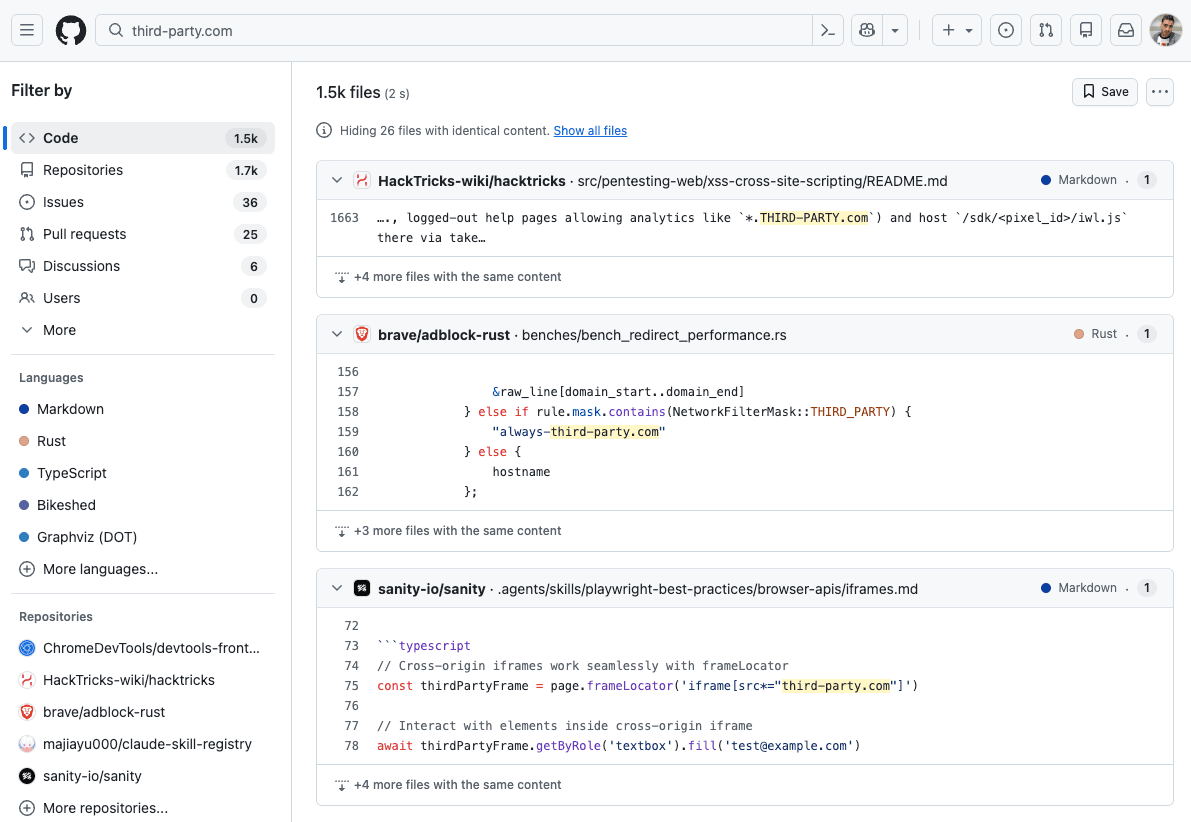
A mundane, ubiquitous example URL embedded within countless developer documentation files has horrifyingly metamorphosed into a live attack vector. The specific domain, third-party[.]com, historically utilized by developers for years as a benign, illustrative placeholder for external services, has been actively serving malicious content since at least June 2026. Explicitly targeting Windows environments, the compromised domain presents users with a fraudulent Cloudflare verification challenge, utilizing advanced social engineering to coerce them into manually executing a destructive command via the Windows “Run” dialog.
Security researchers at Manifold initially detected this alarming anomaly while rigorously auditing the public capabilities of AI agents and the documentation supporting Model Context Protocol (MCP) servers. An automated system flagged a file referencing third-party[.]com, as their threat intelligence feeds had already categorized the domain as a known phishing indicator. Subsequent forensic investigation confirmed that the original source documents and corresponding code examples remained completely unaltered. The catastrophic change resided entirely within the active content hosted at the destination address, transforming a previously harmless placeholder into a weaponized lure. You can read the comprehensive technical breakdown regarding how the third-party.com placeholder domain now serves ClickFix on the Manifold Security blog.
The Staggering Scope of the Vulnerability
Initial, conservative assessments indicated the presence of this compromised domain across more than 1,500 distinct files residing within approximately 1,700 public GitHub repositories. This expansive exposure encompassed critical materials originating from highly trusted entities such as Chromium, Sanity, and Vercel. While subsequent, more stringent URL parsing methodologies refined the immediate hit count to 672 highly vulnerable files, GitHub inherently classifies such search results as approximations. Therefore, while these figures do not represent an absolute, exhaustive registry, the immense scale vividly illustrates how deeply this unreserved domain became embedded as a universally trusted, harmless example throughout the global development ecosystem.
When accessed via a Windows operating system, the malicious webpage flawlessly imitates a standard Cloudflare security check. Covert JavaScript instantaneously injects a concealed PowerShell command directly into the user’s clipboard. Simultaneously, deceptive on-screen instructions urge the victim to depress the ‘Win+R’ key combination, paste the recently acquired clipboard contents into the resulting dialog box, and press ‘Enter’. This sophisticated command silently contacts elxxvvx[.]xyz, seamlessly retrieving a secondary remote script utilizing the Invoke-RestMethod cmdlet. It then executes this secondary payload entirely within volatile memory via Invoke-Expression, deliberately suppressing all generated error messages to maintain absolute stealth.
Conversely, if a user navigates to the identical address utilizing a macOS or Linux environment, the server intelligently delivers a benign, innocuous placeholder page explicitly stating that a Windows PC is required for access. This calculated, User-Agent-dependent delivery mechanism successfully circumvents countless automated security scanners and static analysis tools. In a striking example of this evasion, the IPFire blocklist temporarily designated the domain as malicious on July 7, only to inexplicably delist it ten days later, despite the webpage continuing to actively serve the malicious payload specifically to its intended Windows targets.
Analyzing the ClickFix Methodology and Mitigation Strategies
During Manifold’s rigorous technical evaluation, the secondary command-and-control server, elxxvvx[.]xyz, remained unresponsive. Consequently, the researchers could not observe the ultimate culmination of the infection chain or analyze the final payload. Nevertheless, as recently as September 23, third-party[.]com continued relentlessly serving the deceptive lure to Windows visitors. Fortunately, at this precise moment, cybersecurity agencies have not documented any confirmed, real-world incidents where a link residing within a specific repository directly facilitated the successful infection of a developer or a corresponding application.
The profound systemic risk originates not from the direct compromise of the repositories themselves, but rather from the deeply ingrained, perilous habit of treating unreserved, realistic domains as perpetually neutral examples. Within the Chromium project, the domain frequently appears throughout extensive documentation; Sanity utilized it specifically within a Playwright testing example; and Vercel’s Turborepo incorporated the address directly within origin validation tests. Even more concerning, specific AI agent skills contain explicit directives to fetch third-party[.]com/widget.js, an action an automated tool might execute literally and disastrously. For further context regarding the exploitation of developer resources, review the report detailing how a placeholder domain used in dev docs now serves ClickFix attacks.
The entire ClickFix methodology is fundamentally predicated upon bridging the psychological gap between a highly trusted contextual environment and a malicious command ultimately executed voluntarily by the user. In early September, distinct threat actors similarly hijacked legitimate webpages leveraging Cloudflare infrastructure, presenting visitors with identical, fraudulent verification prompts demanding ‘Win+R’ execution. In the specific case of third-party[.]com, the attack mechanism itself is not novel; however, the source of the victim’s trust is utterly unique, as the address had masqueraded as a harmless technical placeholder for years.
Historical WHOIS records indicate the domain was initially registered in 1996, decades prior to the current malicious campaign, and absolutely no evidence suggests it harbored malicious intent originally. Unlike the universally recognized example.com, example.org, and example.net, the Internet Assigned Numbers Authority (IANA) does not officially reserve third-party[.]com for documentation purposes. Consequently, its operational content remains entirely subject to the whims of its current, lawful registrant. When the underlying infrastructure of such an unreserved address inevitably changes, decades of legacy code examples automatically and dangerously pivot, redirecting users toward the newly established, potentially hostile resource.
Cybersecurity experts vehemently recommend that developers, technical writers, and AI architects exclusively utilize officially IANA-reserved domains for all documentation and testing scenarios. Furthermore, organizations must aggressively audit all previously published materials to identify and eradicate any references to unreserved, third-party addresses they do not cryptographically control. Security teams strongly advise against indiscriminately whitelisting unfamiliar, active domains merely to suppress automated security alerts. Finally, concerning internal URL validation protocols, developers must strictly separate rigorous syntactical validation from the inherently perilous act of physically connecting to an external, unverified server.
Support Our Threat Intelligence
If you find our technology report and cybersecurity news helpful, consider supporting our work.
 Buy Me a Coffee
PayPal
Buy Me a Coffee
PayPal


