Tag: Social Engineering
-

Signal Unleashes “Name Not Verified” Shields and New Social Engineering Defenses
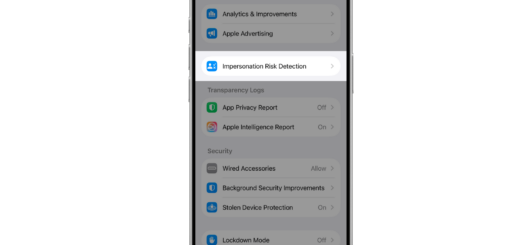
Signal has integrated supplementary verification prompts and educational notices within its application to fortify users against the perils of phishing and social engineering. These nascent cues are engineered to facilitate the identification of fraudulent profiles, specifically targeting solicitation requests from adversaries masquerading as official Signal representatives. A primary emphasis has been placed on the subversion…
-

The Great Split: How MITRE ATT&CK v19 Redefines Defense Evasion and Maps the AI Threat Landscape
MITRE has unveiled ATT&CK v19, a monumental evolution of the framework utilized by security cohorts to delineate adversary tactics and techniques. This iteration fundamentally recalibrates the established architecture: developers have bifurcated the overly broad Defense Evasion category, introduced granular detail for Industrial Control Systems (ICS), and expanded the purview of offensives leveraging Artificial Intelligence, social…
-

The Support Chat Trap: How a “Customer Screenshot” Led to a Critical Code-Signing Breach at DigiCert
A seemingly innocuous file transmitted via a support chat escalated into a significant crisis for DigiCert. An adversary masquerading as a client presented a malicious archive as a “customer screenshot,” successfully infiltrating systems utilized for the issuance of digital certificates. The incursion, detailed in an official DigiCert report, commenced on April 2, 2026. An unidentified…
-

The “Snow” Storm: How UNC6692 Uses Microsoft Teams and Email Bombing to Breach Corporate Fortresses
Corporate correspondence has once again emerged as a convenient portal for adversaries. In this nascent campaign, the assailants eschew direct “forced entry,” choosing instead to orchestrate a familiar professional complication for employees and promptly offering “succor” while masquerading as Microsoft Teams support personnel. The Mandiant team has detailed the maneuvers of the collective designated as…
-

Hidden in the Cloud: Harvester’s New Linux Malware Abuses Microsoft Graph API for Invisible Espionage
The Harvester threat collective has re-emerged, wielding a sophisticated instrument designed to elude conventional defensive parameters. Security researchers have identified a nascent iteration of the GoGra backdoor for Linux, which surreptitiously camouflages its presence by masquerading as legitimate traffic through Microsoft’s ecosystem. A joint investigation by Symantec and Carbon Black Threat Hunter has established a…
-

The AI Multiplier: How North Korea’s “HexagonalRodent” Turned ChatGPT into a $12M Crypto Heist
Inexperienced North Korean cyber operatives have successfully exfiltrated millions of dollars in cryptocurrency over a span of several months. This feat was achieved not through the deployment of novel malware or the exploitation of sophisticated vulnerabilities, but rather by leveraging commonplace artificial intelligence tools. Specialists from Expel have detailed the activities of HexagonalRodent, a collective…
-

The Trusted Trap: How Hackers are Weaponizing GitHub and Jira Notifications to Bypass Filters
A routine missive from a familiar service has long since ceased to be a hallmark of security. Specialists from Cisco Talos have identified a nascent surge in cyber offensives wherein adversaries exploit the legitimate notification frameworks of GitHub and Jira to disseminate phishing attempts and spam with minimal interference. From an external perspective, these communications…
-

The Podcast Trap: How UNC1069’s AI Deepfakes Are Poisoning the Global npm Registry
What begins as a mundane exchange—an invitation to a podcast or a routine professional briefing—may serve as the preamble to a sophisticated incursion, potentially granting adversaries access to millions of downstream projects. In recent weeks, several maintainers of prominent Node.js libraries have revealed they were targeted by an identical social engineering stratagem. While the Axios…
-

The Long Game: How North Korea’s UNC4736 Spent Six Months Infiltrating Drift for a $285M Payday
The recent incursion into the cryptocurrency sanctuary Drift, which culminated in the exfiltration of $285 million, has been unmasked not as a serendipitous breach, but as the denouement of a meticulously orchestrated operation spanning nearly half a year. Beneath the veneer of conventional professional discourse lay a labyrinthine scheme of infiltration, wherein trust was forged…
-

The 15-Second Takeover: How North Korea’s UNC1069 Hijacked Axios and 100 Million Users
The ubiquitous JavaScript library axios, a cornerstone utilized by millions of digital architectures, was transfigured for several hours into a conduit for the dissemination of malignant code. In a calculated maneuver, adversaries subverted the account of a lead maintainer, leveraging his credentials to promulgate contaminated iterations of the library. The cataclysm unfolded on March 31st.…
-

The Trust Trap: How Cyber Marauders Are Turning WhatsApp Into a Windows Infection Engine
In the waning days of February 2026, cyber adversaries inaugurated a nascent campaign characterized by an unorthodox stratagem: the dissemination of malignant Windows artifacts via the ubiquitous channels of WhatsApp. The calculus was elegantly simple—the inherent trust placed in a familiar messaging medium erodes the user’s vigilance, facilitating an infection chain that unfolds almost imperceptibly.…
-

The Invisible Shield: How macOS Tahoe 26.4 is Quietly Killing “ClickFix” Scams
Apple has surreptitiously fortified the defensive architecture of macOS, introducing a mechanism poised to rescue patrons from one of the most insidious stratagems employed by malefactors. This nascent feature necessitates no configuration, awakening precisely at the precipice of a user’s attempt to execute a potentially perilous command within the terminal. Within the nascent iteration of…
-

Digital Siege: Israel Declares “State of Perpetual Warfare” as Iranian Cyber Strikes Double
Israel is adopting an increasingly stringent assessment of the cyber threat emanating from Iran, entirely abandoning any pretense that the unfolding events are merely a sequence of disparate, isolated incursions. Yossi Karadi, the sovereign custodian of the Israel National Cyber Directorate, proclaimed that the pressure within the digital ether is relentlessly intensifying, and the overarching…
-

The Trust Trap: How Fake “Critical” GitHub Alerts Are Hijacking Developer Workflows
Developers are being besieged en masse with terrifying claims of “critical vulnerabilities” directly within the hallowed halls of GitHub, yet a profoundly different motive lurks beneath these alarming admonitions. According to a dispatch from Socket, shadowy actors are disseminating fabricated alerts regarding afflictions within Visual Studio Code, thereby luring unwary patrons into the snares of…
-

The Fall of the Invulnerable Mac: Inside MioLab’s “Nova” Malware-as-a-Service Empire
The burgeoning ubiquity of Apple computational machines is inexorably shifting the equilibrium of power within the clandestine cybercriminal underworld. Whereas macOS was hitherto perceived as a mere niche dominion, contemporary malefactors now regard it as a veritable wellspring of reliable revenue. Nascent instruments of digital siege herald the irrevocable demise of the “invulnerable Mac” epoch.…
-

The Support Snare: How Cybercriminals are Hijacking LiveChat to Impersonate Amazon and PayPal
Phishing bombardments have long possessed the acumen to meticulously forge correspondence from colossal brands; however, contemporary digital marauders are increasingly eschewing orthodox counterfeit landing pages in favor of ushering their quarry into a chat interface impeccably disguised as an authentic customer support sanctuary. The vanguard at Cofense has chronicled precisely such a machination: malefactors are…