The Rise of AI in the Cybercriminal Underground
Generative AI as a Criminal Commodity
Cybercriminals increasingly integrate artificial intelligence into traditional attack strategies. However, they frequently exploit this novel technology as a lucrative commodity. Recently, researchers investigated various illicit forums and dark web channels. Consequently, they discovered generative AI currently dominates underground conversations. Nevertheless, security analysts remain highly skeptical regarding these grandiose criminal claims. To understand this evolving landscape, you should read the detailed report on AI in the underground.
Illicit Access to Popular AI Services
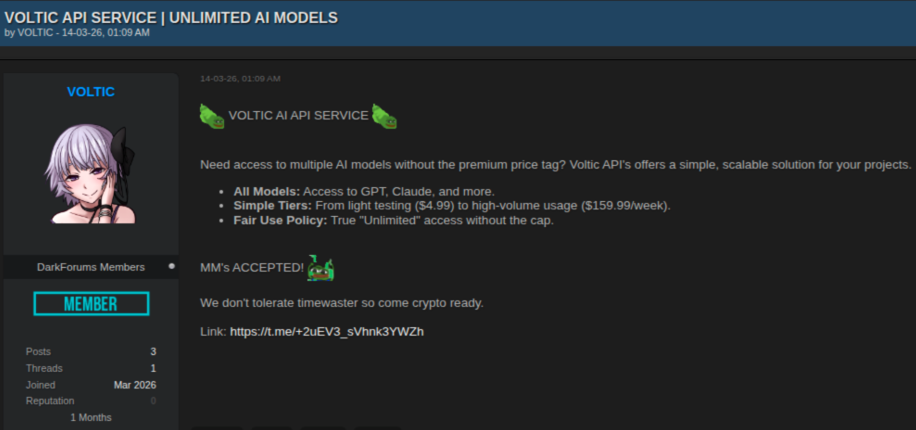
The primary practical interest revolves around accessing popular artificial intelligence services. Threat actors actively sell compromised API keys and shared accounts. Furthermore, they provide proxy access to ChatGPT, Claude, Grok, and other prominent models. Consequently, eager buyers quickly flock to these illicit market offerings. Additionally, specific individuals create dedicated channels to share evasion techniques. They readily exchange malicious prompts and bypass instructions for restricted public models.
Enhancing Social Engineering Campaigns
A significant portion of these discussions focuses heavily on social engineering. Attackers utilize artificial intelligence to rapidly draft convincing phishing emails. Similarly, they generate deceptive SMS messages and sophisticated scripts for fraudulent phone calls. Furthermore, these tools help criminals maintain a consistent linguistic style across multiple foreign languages. Currently, dark web marketplaces actively advertise automated voice bots for telecommunication fraud. Vendors also offer premium services to fabricate entirely synthetic personas. Therefore, these malicious packages include convincing images and compelling text for elaborate romance scams.
Unverified AI-Enhanced Malicious Tools
Another distinct category involves tools explicitly marketed as AI-driven. For instance, researchers highlight the Leak Bazaar platform, designed to parse stolen corporate data. Similarly, developers aggressively promote the Apex AI tool for alleged malware generation. Threat actors also advertise Metatron, a localized assistant for penetrating defensive systems. However, experts strongly emphasize that these advertised capabilities remain largely unverified. In reality, many of these sensational advertisements function simply as deceptive marketing ploys.
Real Attacks and Hacker Skepticism
Furthermore, forum participants actively discuss genuine attacks involving public artificial intelligence assistants. Some hackers claim they successfully deployed Claude during an offensive campaign against Mexican government networks. Meanwhile, other users report observing AI assistance within captured malware samples. Nevertheless, these intriguing observations still originate directly from unverified underground participants. Interestingly, the criminal underworld lacks a unanimous consensus regarding artificial intelligence. Some progressive attackers actively recruit prompt engineers to enhance their daily operations. Conversely, traditional hackers strongly doubt the actual utility of these automated technologies. They actively fear this rapid automation will ultimately devalue their specialized manual labor. Ultimately, researchers believe current AI simply accelerates existing attack methodologies rather than creating novel paradigms.
Defending Against AI-Powered Threats
To effectively mitigate these evolving risks, security professionals recommend implementing robust defense strategies. Organizations must never rely exclusively on a single protective layer. Instead, administrators should promptly install critical software updates. Furthermore, companies must enforce multi-factor authentication and mandate secure access keys. Finally, network defenders should continuously monitor their digital infrastructure. Consequently, they can detect unusual anomalous activities before a devastating attack fully develops.
Support Our Threat Intelligence
If you find our technology report and cybersecurity news helpful, consider supporting our work.
 Buy Me a Coffee
PayPal
Buy Me a Coffee
PayPal


