Tag: AI security
-

The Autonomous Blue Team: Build a Self-Healing SIEM with the AI Detection Engineering Lab
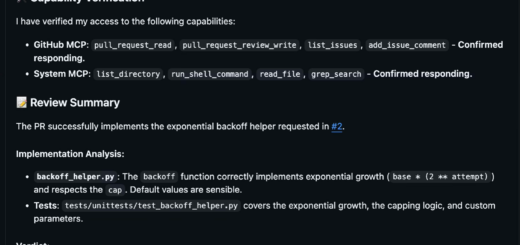
AI Detection Engineering Lab A template for building an AI-powered detection engineering pipeline using Claude Code as an autonomous blue team agent. Deploy a full SIEM lab, generate simulated attack telemetry, and let an AI agent build, validate, tune, and deploy security detections — all mapped to the MITRE ATT&CK framework. What This Does An AI agent…
-

Ending the AI Regulation Maze: Tech Giants and Security Titans Launch MOSAIC to Harmonize Global Standards
Architects of artificial intelligence security standards are increasingly confronted by a predicament as formidable as the threats themselves: a proliferation of regulations characterized by a profound lack of cohesion. Disparate terminologies and divergent methodologies complicate the ability of corporations to discern which recommendations to prioritize, compelling security practitioners to squander invaluable time deciphering documentation rather…
-

The Keys to the Kingdom: Unauthorized Users Infiltrate Anthropic’s “Mythos” Cyber-Weapon
While certain enterprises are merely initiating the evaluation of nascent artificial intelligence architectures, others have already devised surreptitious conduits to subvert them. Anthropic has encountered a disconcerting predicament wherein a clandestine cohort of users successfully secured unauthorized ingress to one of the industry’s most formidable models engineered for vulnerability discovery. The model, designated as Mythos,…
-

Slower Than the Hackers: Why “Negative Time-to-Exploit” is Killing Traditional Security
Vulnerabilities have begun to outpace defensive measures not merely by hours, but by entire days, often preceding the release of formal rectifications. According to recent empirical analyses, the average Time-to-Exploit for the most perilous defects has plummeted to a staggering negative seven days. In essence, adversaries are increasingly adept at weaponizing flaws before a vendor…
-

Meet PentAGI: The Autonomous AI Swarm Redefining Modern Penetration Testing
PentAGI PentAGI is an innovative tool for automated security testing that leverages cutting-edge artificial intelligence technologies. The project is designed for information security professionals, researchers, and enthusiasts who need a powerful and flexible solution for conducting penetration tests. Features Secure & Isolated. All operations are performed in a sandboxed Docker environment with complete isolation. Fully…
-

The Web is a Minefield: How Hidden “Agent Traps” Can Hijack Autonomous AI
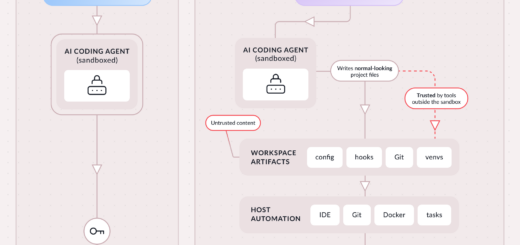
Researchers from Google DeepMind have elucidated how mundane web pages can be transmuted into instruments of assault against autonomous AI agents. This phenomenon pertains not to the sophisticated breaching of infrastructure, but to the meticulous crafting of content designed to obfuscate algorithms and coerce them into serving the interests of an adversary. In their published…
-

Hiding in Plain Sight: How Claude AI Exposed a 13-Year-Old RCE Flaw in Apache ActiveMQ
A vulnerability of over a decade’s standing has been unearthed within a preeminent messaging server, facilitating unauthorized command execution—often without the requirement of administrative credentials. The security lapse, designated CVE-2026-34197, resides in Apache ActiveMQ Classic and permits remote code execution via the management interface. An adversary can compel the server to retrieve an external configuration…
-

Code Red for AI: CVSS-10 Vulnerability in Flowise Under Active Attack from Starlink IP
A vulnerability garnering the maximum severity rating has already been subjected to active exploitation, despite the remedial patch having been issued only recently. The flaw concerns Flowise, a prominent platform utilized for the development of applications driven by artificial intelligence. The monitoring system VulnCheck chronicled the inaugural attempts to exploit CVE-2025-59528 on the morning of…
-

Anthropic Issues Mass DMCA to Erase 8,100 Claude Code Repositories
The GitHub platform has received a formal grievance under the Digital Millennium Copyright Act (DMCA) from the artificial intelligence vanguard, Anthropic. The petition asserts that a repository harboring code inextricably linked to the “Claude” project constitutes a profound violation of the corporation’s intellectual property. The dispute centers upon a project christened “claude-code,” which had been…
-

The SaaS Killer? UK Cyber Sentinels Warn “Vibe Coding” is Creating a Security Time Bomb
The United Kingdom’s paramount cybersecurity sentinel has issued a solemn caveat: a nascent paradigm of artificial intelligence-driven software genesis threatens to irrevocably transfigure the topography of the cloud computing bazaar. This pertains to the burgeoning phenomenon of “vibe coding”—a paradigm wherein digital services and applications are woven into existence with scarcely a whisper of human…
-

The Great AI Contagion: How TeamPCP and Vect are Conscripting a Dark Web Army
The compromise of a widely utilized library for artificial intelligence projects has escalated into a crisis far more profound than a mere data breach. The syndicate known as TeamPCP has proclaimed the genesis of a sprawling criminal alliance, extending an open invitation to anyone desiring to participate in ransomware bombardments. This ordeal commenced with a…
-

Zero-Day Velocity: How Hackers Weaponized the Langflow AI Framework in Under 24 Hours
The tempo of cyber bombardments directed at artificial intelligence instruments is precipitating rapidly; the latest tribulation surrounding Langflow serves as a stark testament to the blistering celerity with which digital marauders weaponize newly publicized vulnerabilities. In this instance, we confront a critical affliction that was actively exploited mere hours following its public revelation. The United…
-

Claudy Day: The Invisible Chain That Turned Claude.ai into a Silent Data Harvester
An ordinary hyperlink to an AI chat may easily masquerade as a treacherous snare. The vanguard at Oasis Security has illuminated that within Claude.ai, merely navigating to a meticulously crafted address and striking the Enter key is entirely sufficient to compel the auxiliary to execute clandestine directives, of which the unsuspecting patron remains blissfully oblivious.…
-

The AI Accelerator: How 29 Million Leaked Secrets are Fueling a New Era of Digital Insecurity
The ubiquitous integration of artificial intelligence into software development over the past year has precipitously accelerated production cycles while concurrently exacerbating deeply entrenched security vulnerabilities. The nascent State of Secrets Sprawl 2026 dossier published by GitGuardian illuminates a grim reality: the meteoric surge in GitHub activity has been inextricably mirrored by a rampant proliferation of…
-

The API Battlefield: Akamai’s 2026 Report Unmasks the Staggering 113% Surge in Interface Attacks
Akamai has promulgated its annual State of the Internet dossier, chronicling the landscape of applications, APIs, and distributed denial-of-service (DDoS) bombardments, and has subsequently chronicled a profound metamorphosis in adversarial stratagems. The cardinal revelation distills to this singular truth: kinetic strikes have evolved into architectures of profound systemic complexity, become precipitously more economical to scale,…