H96 Android TV Boxes Secretly Drive Massive Ad Fraud
The Hidden Life of Cheap Streaming Devices
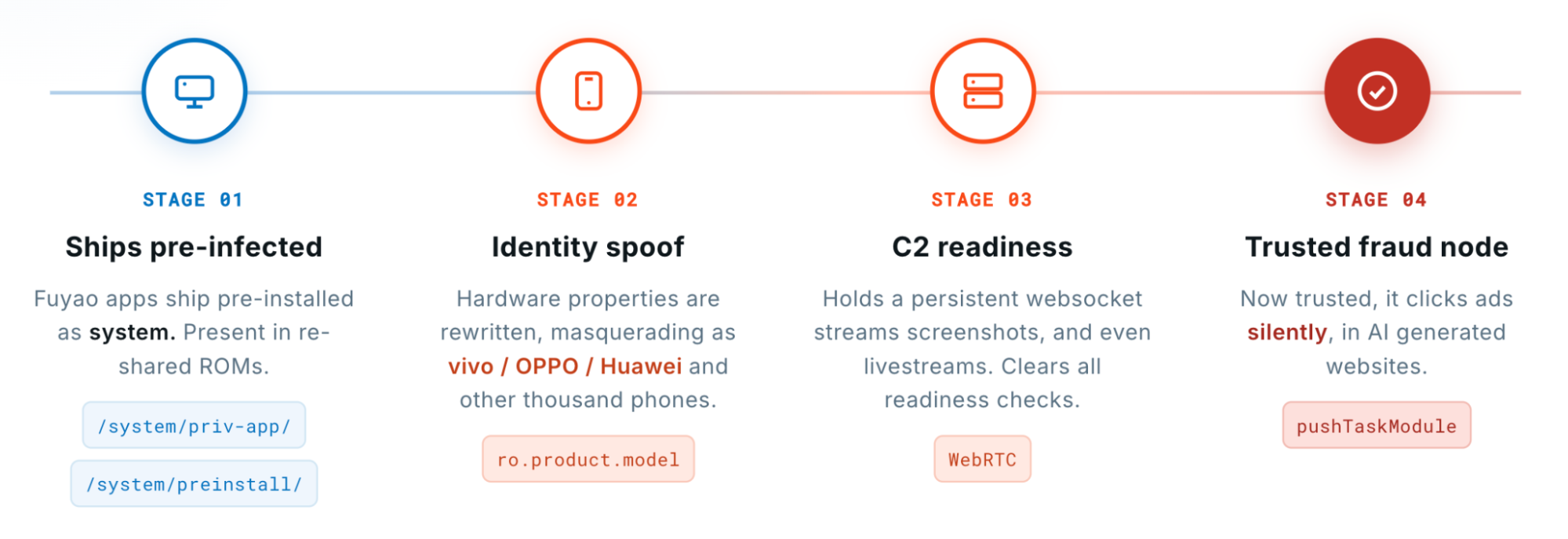
An inexpensive set-top box connected to your television could be generating illicit revenue long after the screen goes dark, entirely without your knowledge. Cybersecurity researchers at Bitsight recently dismantled a massive ad fraud network. This sophisticated operation stealthily hijacked H96 Android TV boxes to simulate web traffic and generate fake advertisement clicks.
Accidental Discovery Exposes Global Botnet
A fortuitous event catalyzed the unraveling of this elaborate scheme. Cyber threat analyst Pedro Fale registered an expired domain previously utilized as a command-and-control server for these infected set-top boxes. Immediately, the newly acquired address began receiving a deluge of telemetry from tens of thousands of devices globally, exposing detailed hardware specifications and installed application inventories.
Device Spoofing and Targeted Advertising
Astonishingly, nearly all compromised set-top boxes falsely identified themselves as premium smartphones from brands like Samsung, Vivo, Huawei, or Xiaomi. This calculated device spoofing enabled the malware to access lucrative advertisements specifically targeted at mobile users, meticulously creating the illusion of legitimate human interaction. Furthermore, researchers discovered two distinct applications developed by Zhejiang Fengwo IoT Technology – operating under the moniker Fengwo Group – installed on these devices.
The Fengwo Group’s Automated Fraud Ecosystem
According to Bitsight’s comprehensive analysis, Fengwo Group actively managed an expansive network of websites populated with auto-generated content covering finance, health, education, gaming, music, and food. Interestingly, legitimate human visitors never encountered advertisements on these pages. The fraudulent ads only materialized when the website successfully identified the specific, pre-configured profile of a spoofed smartphone transmitted by the compromised H96 Android TV boxes.
Exploiting Educational Tools for Malicious Code
To orchestrate these fraudulent tasks, the developers ingeniously repurposed Blockly, a visual programming environment originally created by Google to teach children coding fundamentals. By utilizing this interface, operators could effortlessly construct complex interaction scenarios by simply snapping together pre-built visual blocks, requiring no deep coding expertise. Upon saving, the system seamlessly translated these visual workflows into executable JavaScript code and deployed them directly to the infected set-top boxes. For a deeper technical dive, you can read more about how Fuyao built an ad fraud empire using AI and kids coding blocks.
Simulating Human Behavior to Evade Detection
Upon receiving a task, the compromised device would covertly launch a background browser, navigate to targeted websites, seamlessly switch between tabs, scroll through pages naturally, and interact with specific ad banners. The malware utilized three sophisticated image recognition and content analysis systems. These systems empowered the program to locate precise ad blocks and navigate pages in a manner that convincingly mimicked genuine human behavior, thereby evading standard anti-fraud detection mechanisms.
Dual-Purpose Malware: Proxies and Ad Fraud
These hijacked set-top boxes executed two distinct illicit functions, though never simultaneously. While the television was actively displaying content via HDMI, the device typically operated as a residential proxy node, secretly routing third-party internet traffic through the owner’s home network connection. Conversely, when the television was powered down, the device seamlessly pivoted to execute aggressive ad fraud routines. This strategic separation likely minimized system load, ensuring the malware did not disrupt the user’s primary video streaming experience.
Financial Impact and the Threat of Uncertified Devices
Bitsight actively tracked approximately 38,000 devices communicating with just one of Fengwo Group’s deprecated domains. Based on conservative estimates, this specific ad fraud operation could effortlessly generate nearly $50,000 daily. Crucially, this figure completely excludes the substantial revenue generated by leasing access to compromised residential IP addresses; thus, the true financial scope of the operation is likely vastly larger.
Such uncertified streaming devices have long provoked serious concern among cybersecurity professionals and the United States Federal Bureau of Investigation (FBI). These devices are frequently sold pre-loaded with highly modified, unofficial versions of the Android operating system. They rarely receive critical security patches and often contain pre-installed malware designed specifically to lease the user’s internet connection. Anonymous clients can purchase this access to conduct massive data scraping, automate ticket scalping, or launch severe cyberattacks.
Corporate Denials and Consumer Protection
Publicly, Fengwo Group aggressively claims to have developed over 120,000 “digital humans” powered by advanced artificial intelligence. However, Bitsight strongly suspects this grandiose marketing terminology serves merely as a convenient cover story for their expansive botnet of infected physical devices. Attempts to obtain an official comment from the company failed entirely; emails dispatched to the address listed on their corporate website bounced back due to a consistently full inbox.
Cybersecurity experts strongly advise consumers to purchase streaming devices exclusively from reputable manufacturers, meticulously verify official Android TV certification, and exercise extreme caution when installing third-party applications. Alarmingly, suspicious programs featuring residential proxy capabilities have been discovered not only in television set-top boxes but also embedded within other inexpensive smart home gadgets, including digital photo frames.
Support Our Threat Intelligence
If you find our technology report and cybersecurity news helpful, consider supporting our work.
 Buy Me a Coffee
PayPal
Buy Me a Coffee
PayPal


