Operation Double Barrel: Unveiling North Korean Cyber Espionage
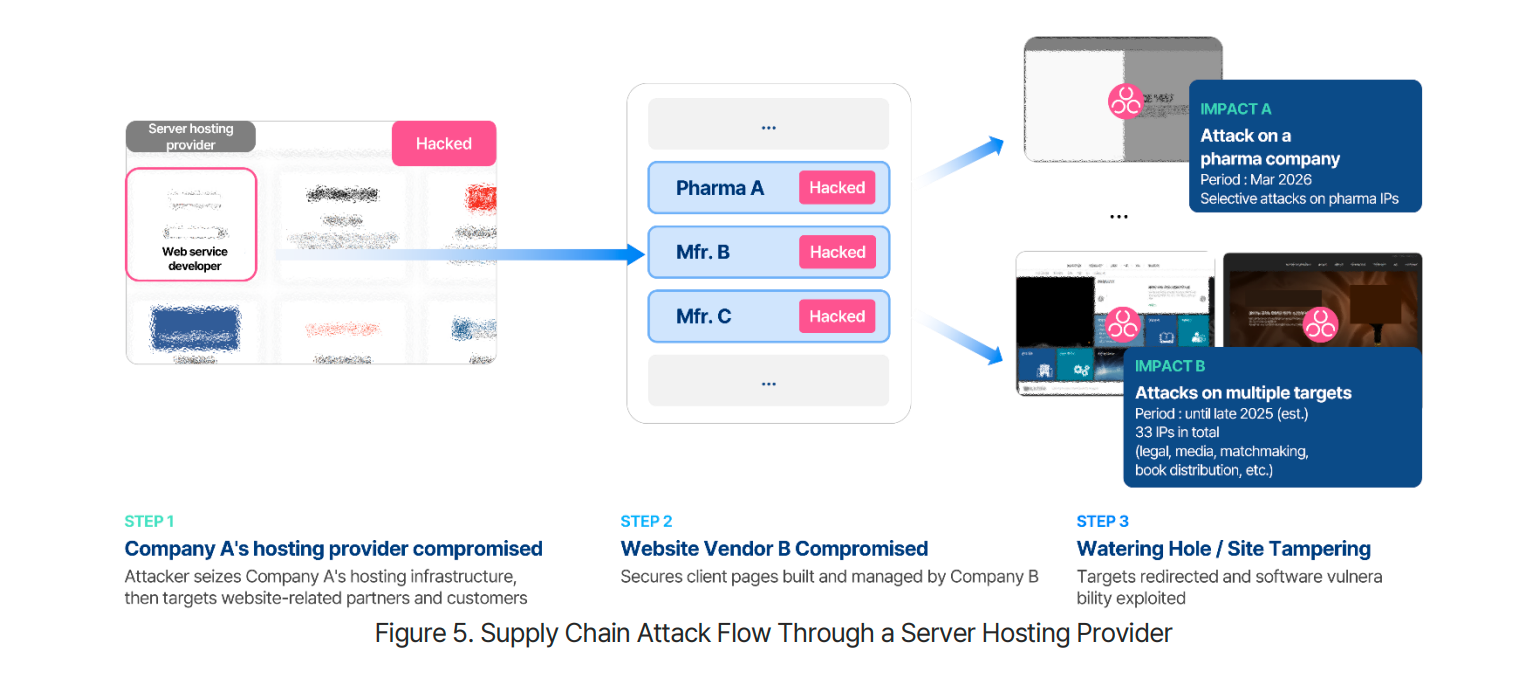
Occasionally, two ostensibly disparate cyber threats are inextricably linked by a shared arsenal of tools; South Korean cybersecurity experts have recently discovered that overlapping infrastructure likely orchestrates both a wave of website compromises and devastating Gunra ransomware attacks.
A Coordinated Warning on Sophisticated Intrusions
Multiple South Korean government agencies have jointly issued an urgent advisory regarding relentless cyber offensives perpetrated by a hacker syndicate, allegedly tethered to North Korea, targeting both private citizens and corporate entities nationwide. A comprehensive analysis of this malicious campaign, aptly christened Operation Double Barrel, was meticulously prepared by threat intelligence firms AhnLab, ENKI Whitehat, and S2W.
From early 2025 through the first half of 2026, these malicious actors ruthlessly exploited a zero-day vulnerability nestled within South Korean financial security software – a mandated application for navigating banking and governmental portals. Victims were systematically lured to compromised domains through sophisticated watering hole attacks and highly targeted spear-phishing campaigns.
The Perils of Supply Chain Compromises
The extensive roster of compromised platforms encompassed media outlets, esteemed educational and medical institutions, and prominent manufacturing conglomerates. Evidence strongly suggests these entities were breached via a singular contractor responsible for web development and maintenance, glaringly indicating a catastrophic supply chain compromise.
Stealth Backdoors and In-Memory Execution
Following the successful exploitation of the vulnerability, a clandestine backdoor was stealthily installed upon the victim’s machine to grant covert remote access; notable variants included Struggle (SIGNBT 3.0) and Brandoor (COPPERHEDGE). To ensure absolute invisibility, the malicious code eschewed traditional file storage, concealing its configurations and payloads within the Windows Registry and NTFS alternate data streams. It resiliently restored itself upon system reboots and injected supplemental modules directly into volatile memory, completely circumventing the physical disk.
Furthermore, specific malware samples would only execute when provided with a secret, proprietary startup argument; absent this trigger, the program masqueraded as entirely benign, effectively thwarting automated sandbox analysis.
The Intersection of Espionage and Gunra Ransomware
This identical zero-day vulnerability was also weaponized in parallel attacks that culminated not in silent espionage, but rather in the ruthless encryption of files by the Gunra ransomware and the subsequent mass exfiltration of corporate data. A meticulous comparison of these dual campaigns illuminated undeniable correlations: the exploitation of matching vulnerabilities, the deployment of akin malicious toolkits, identical SSH key fingerprints, and a completely shared network infrastructure, encompassing identical download and reverse-tunneling server addresses.
While this empirical evidence does not definitively prove that the aforementioned North Korea-affiliated syndicate and the Gunra operators constitute a single cohesive unit, it profoundly implies a clandestine exchange of cyber weaponry or a restricted, strategic collaboration between the two entities.
Mitigating the Expanding Attack Surface
In a distinct but related analysis, threat hunters detailed the interconnected SIGNBT malware cluster, wherein legitimate DLL libraries were maliciously hijacked; an insidious file was systematically loaded in place of an authentic, trusted program component. The ultimate payload was meticulously decrypted and executed exclusively within the system’s memory, significantly complicating detection efforts reliant upon traditional hashes or conventional file names.
To strategically mitigate these escalating risks, authorities strongly advise organizations to expeditiously update the specific security software mandated for accessing distinct websites and digital services. Moreover, they urge the immediate deletion of infrequently utilized applications post-use. This proactive hygiene dramatically curtails the attack surface, a necessity given that zero-day vulnerabilities remain profoundly perilous even within fully patched environments.
Support Our Threat Intelligence
If you find our technology report and cybersecurity news helpful, consider supporting our work.
 Buy Me a Coffee
PayPal
Buy Me a Coffee
PayPal


