Linux AI Bug Fixes Outpace Incoming Kernel Reports
Linux kernel maintainers observed an encouraging milestone in software security. Specifically, subsystem maintainers report that Linux AI bug fixes are finally overtaking the influx of automated defect reports. Linus Torvalds highlighted this positive trend during the recent release of Linux 7.4-rc2. In particular, developers managing the extended Berkeley Packet Filter subsystem noted a decisive turning point. Consequently, engineering teams express renewed optimism about stabilizing critical core components against automated vulnerability hunting.
BPF Subsystem Gains Ground Against Defect Influx
The eBPF architecture executes verified programs inside kernel space to support networking and system observability. Recently, maintainers experienced an unprecedented wave of algorithmic bug submissions. However, lead maintainer Alexei Starovoitov confirmed that incoming remediations now exceed incoming defect disclosures. As highlighted in the Linux 7.4-rc2 release announcement on LKML, maintainers are steadily reducing their review backlog. Therefore, targeted developer focus is transforming persistent triage pressure into tangible code stabilization.
Nevertheless, other kernel subsystems have not yet achieved this operational balance. The preceding milestone, Linux 7.4-rc1, merged an extraordinary total of nearly twenty thousand commits. While substantial GPU hardware headers expanded that volume, machine-assisted discovery contributed significantly to the surge. Furthermore, the second release candidate incorporated extensive automated syntactic adjustments generated by the Coccinelle tool. Excluding these bulk modifications, active commits divided evenly across device drivers, networking infrastructure, and core memory filesystems.
Industry-Wide Auditing and Coordinated Vulnerability Disclosures
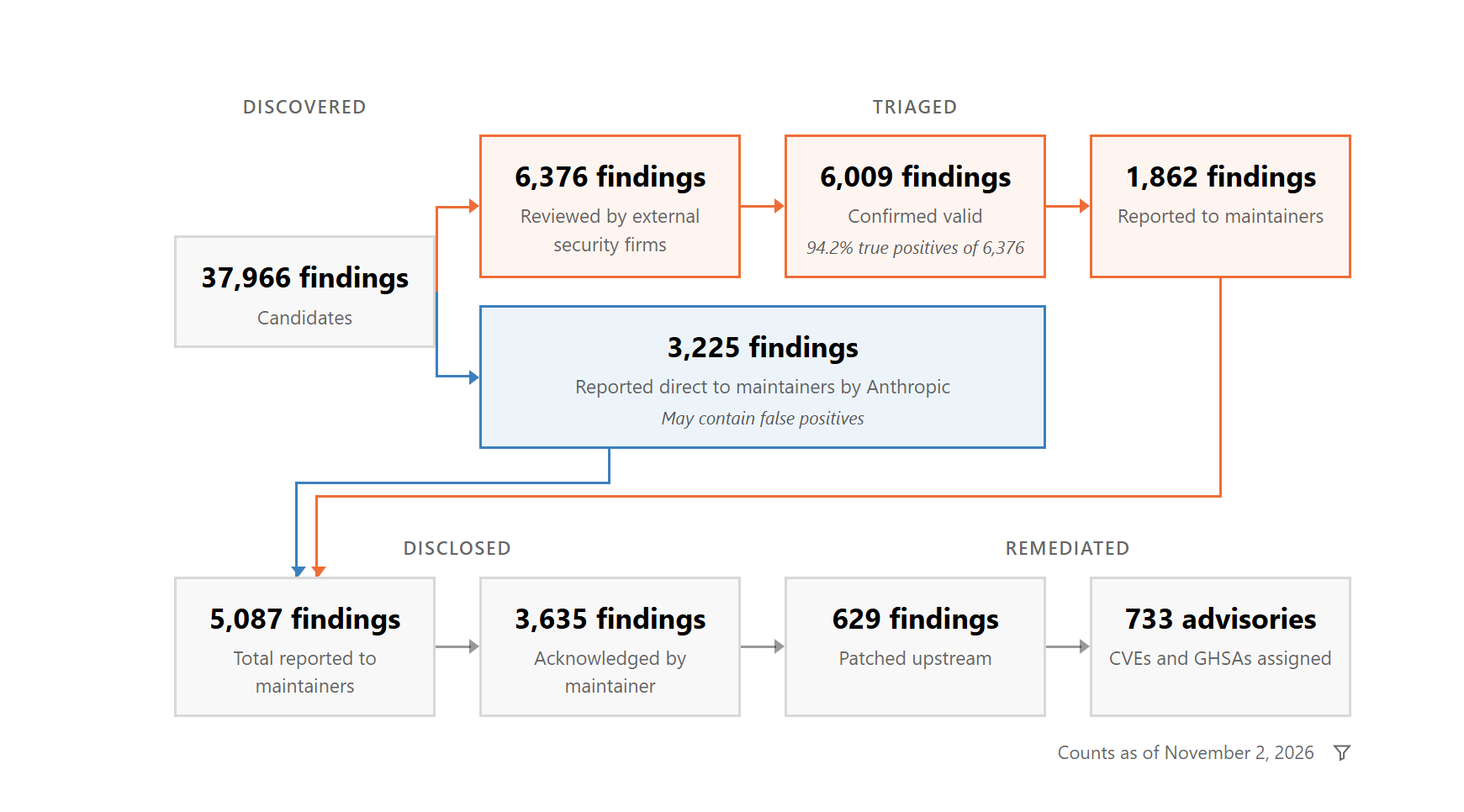
Beyond internal tooling, large technology research laboratories are driving immense automated discovery pipelines. For instance, memory management maintainer David Hildenbrand recently merged numerous patches addressing legacy flaws. Notably, independent researchers at Anthropic discovered the vast majority of these memory anomalies. According to the coordinated vulnerability disclosure report published by Anthropic, automated scanners flagged over five thousand potential vulnerabilities across open-source ecosystems.
Automated Exploitation Models and Human Code Review
Similarly, automated evaluation frameworks developed by OpenAI demonstrated significant auditing capabilities. Their specialized systems identified nearly one thousand local privilege escalation vulnerabilities within experimental test environments. Crucially, upstream kernel contributors repaired dozens of these exposed flaws prior to public discussion. Torvalds emphasized that maintainers now resolve automated defect notices much earlier in release cycles. Moreover, human software engineers meticulously rewrite model-generated patches to ensure long-term architectural stability. Ultimately, disciplined collaboration enables open-source maintainers to master rapid algorithmic security auditing.
Support Our Threat Intelligence
If you find our technology report and cybersecurity news helpful, consider supporting our work.
 Buy Me a Coffee
PayPal