Intel Orchestrates Massive Security Patch Release
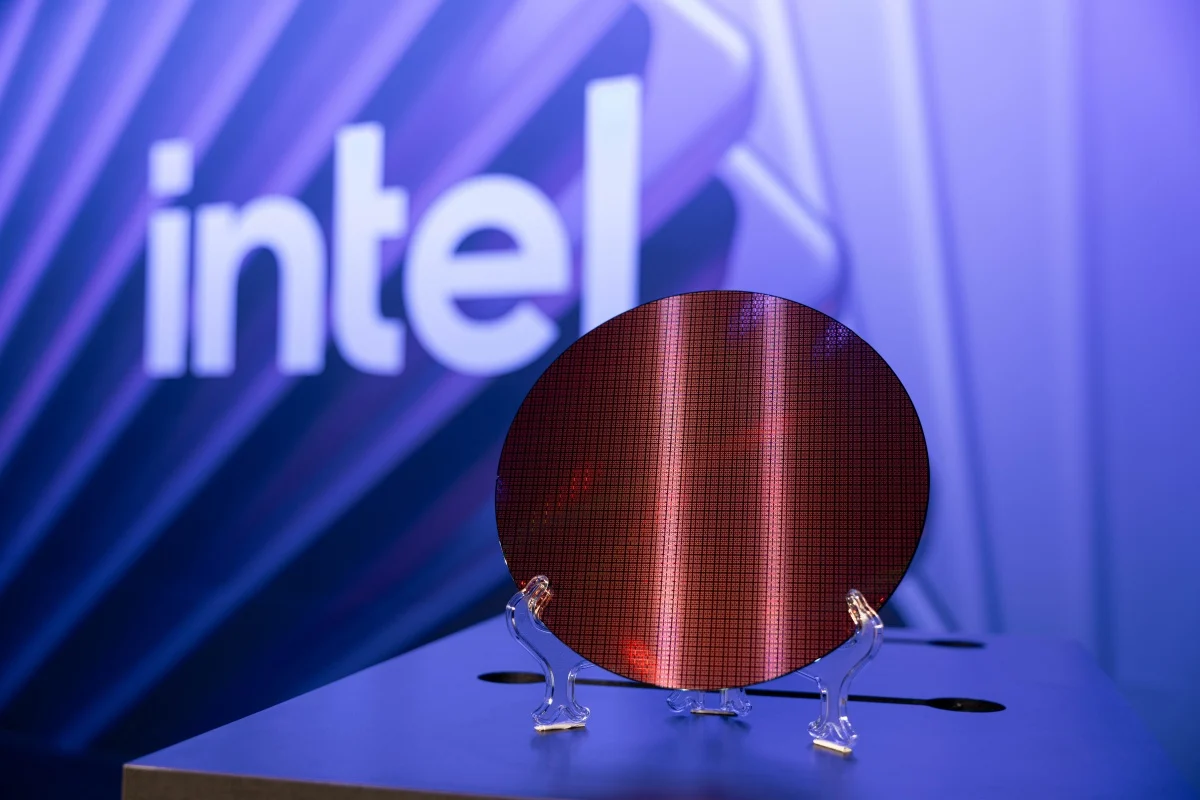
Intel recently orchestrated one of its most expansive security patch releases in recent memory. On August 11, the corporation published an astonishing 43 security advisories simultaneously. These critical warnings encompass Xeon processors, wireless adapters, firmware, trusted computing environments, and a comprehensive suite of artificial intelligence software. Alarmingly, several of these flaws received high-severity ratings. They potentially allow malicious actors to escalate privileges, expose sensitive data, or completely disable systems.
Critical Vulnerabilities in Data Center and WiFi Components
Data Center Attestation Primitives Flaw
One of the most severe issues identified is CVE-2026-20702, which carries a high severity score of 8.9. This vulnerability directly affects the Intel Data Center Attestation Primitives (DCAP). Specifically, it compromises the attestation verification library, a crucial component that ensures a secure computing environment remains in an expected, uncompromised state. A remote attacker can exploit this weakness over a network without requiring any user account or interaction. Fortunately, Intel included the necessary fix within the DCAP 1.25 release. You can find more details and official advisories at the Intel Security Center.
Extensive Issues in PROSet/Wireless WiFi
Intel also discovered two substantial clusters of errors within its PROSet/Wireless WiFi software for Windows. The first bulletin, INTEL-SA-01422, details numerous complex problems within the drivers. These include improper access controls, out-of-bounds memory reading and writing, null pointer dereferences, and uncontrolled resource consumption. Consequently, some of these errors enable local attackers to execute code with elevated privileges, while others trigger crippling denial-of-service conditions.
The second comprehensive set, INTEL-SA-01468, also earned a high-severity classification. The identified problems encompass stack buffer overflows, memory boundary verification failures, use-after-free conditions, and flawed authentication protocols. The potential consequences are severe, ranging from unauthorized information disclosure and privilege escalation to complete system halts. Alarmingly, some of these attacks only require the perpetrator to be in close physical proximity to the vulnerable device, requiring absolutely no user interaction.
Microcode and Processor-Level Updates
Addressing Speculative Execution Leaks
The updates also directly address vulnerabilities within Intel processors themselves. The company successfully rectified several errors embedded in the microcode and secure computing mechanisms. Notably, INTEL-SA-01423 describes a sophisticated data leak originating from incorrect value passing during speculative command execution. To successfully execute this highly complex attack, an adversary requires elevated privileges and direct local access. Intel promptly prepared necessary microcode updates for all affected processors.
Securing Xeon and Trust Domain Extensions
Specific patches target server-grade Xeon processors and the crucial Intel Trust Domain Extensions (TDX) technology, which securely isolates virtual machines from both the main system and the hypervisor. Exploitable errors within Xeon 6 processors utilizing TDX could potentially lead to information disclosure or unauthorized privilege escalation. One specific problem involves insufficiently precise access demarcation, while another relates to the improper handling of intersecting protected memory regions. Consequently, Intel released new microcode to definitively eliminate these vulnerabilities.
AI and Machine Learning Software Patches
Securing the AI Ecosystem
A significant portion of this massive August release focuses entirely on artificial intelligence and machine learning software. Critical updates were deployed for numerous tools, including Intel Extension for PyTorch, Intel Extension for TensorFlow, LLM-on-Ray, LLM Scaler, Intel AI Containers, and the Intel Neural Compressor. In total, the August 11 advisory list features over a dozen distinct components directly associated with AI development, modeling, and hardware accelerators.
Hardware Aware Automated Machine Learning Vulnerability
For instance, researchers discovered CVE-2026-34175, carrying a medium severity score of 5.4, within the Hardware Aware Automated Machine Learning tool. Because the software failed to properly control file search paths, a local, unprivileged program could potentially acquire additional privileges under specific conditions. Intel strongly recommends upgrading to a version no older than the critical patch published earlier on April 8, 2026.
Firmware and System Logic Fixes
Several other important warnings concern system logic chipset firmware, UEFI implementations, the Slim Bootloader, Neural Processing Unit drivers, and Intel TDX trusted environment components. Investigators discovered buffer boundary verification errors, out-of-bounds memory reading, and incorrect condition verification within the Neural Processing Unit driver. All of these listed problems essentially allow a local, unprivileged application to intentionally cause a denial of service without requiring any further user interaction.
Intel strongly advises all users and administrators to install these new software, firmware, and microcode versions promptly through their respective computer and server manufacturers or directly from official product sources. This comprehensive August release encompasses 43 distinct advisories. Therefore, IT professionals must meticulously review the list of affected hardware and software, as this unified update package resolves critical problems across multiple architectural layers simultaneously.
Support Our Threat Intelligence
If you find our technology report and cybersecurity news helpful, consider supporting our work.
 Buy Me a Coffee
PayPal
Buy Me a Coffee
PayPal