Windows 11 Bypasses Intel SMAP Protections
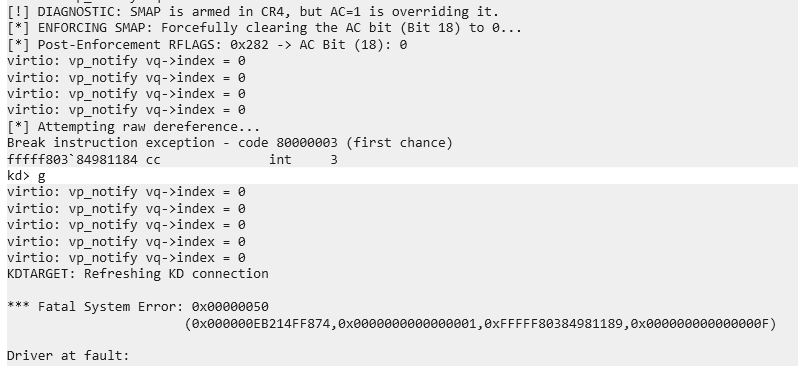
Intel processors feature a critical security mechanism designed specifically to prevent the Windows kernel from accessing standard application memory. However, during certain system calls, this vital protection mysteriously deactivates itself. A security specialist recently discovered this alarming behavior while developing a demonstration exploit for the HackSys Extreme Vulnerable Driver.
The Expected SMAP Intervention
The researcher leveraged an arbitrary write vulnerability to redirect kernel code execution. The primary objective was to forcibly relocate the stack into the memory space of a standard user process. Theoretically, this audacious maneuver should have instantly triggered a catastrophic system failure. The Supervisor Mode Access Prevention (SMAP) mechanism exists precisely to thwart such actions. Intel specifically engineered SMAP to strictly prohibit the kernel from accessing user memory pages.
An Unexpected Exploit Success
Astonishingly, on a virtual machine running Windows 11 build 26200.8328, the exploit chain executed flawlessly. The researcher successfully acquired coveted SYSTEM privileges. Subsequent forensic analysis revealed a perplexing configuration. Bit 21 of the CR4 register indicated that SMAP was officially enabled. Simultaneously, however, the Alignment Check (AC) bit within the processor’s flag register was also inexplicably active. According to official Intel documentation, an active AC bit explicitly authorizes the kernel to access user memory, entirely overriding the active SMAP protection.
Isolating the Vulnerability Trigger
A rigorous series of tests confirmed that the AC state remained entirely independent of the user application. Even when the program explicitly cleared the AC bit before initiating a system call, the driver still received execution control with the AC bit set to 1. Once researchers forcibly cleared the AC bit from within the driver, any attempt to read user memory immediately triggered a system crash. Therefore, the core SMAP mechanism functioned perfectly. The glaring issue was that Windows itself preemptively authorized access to this memory along the investigated request processing path.
The Historical Context of Windows Architecture
This baffling phenomenon stems directly from fundamental Windows architectural choices. As early as 2020, specialists at the Microsoft Security Response Center meticulously investigated the feasibility of fully enabling SMAP for the standard kernel. In a comprehensive published study, Microsoft concluded that existing Windows code directly accesses user memory far too frequently.
Performance Degradation vs. Security
During routine system boot evaluations, Microsoft specialists meticulously recorded approximately 2,900 distinct user memory access events scattered across 994 discrete functions. Automatically inserting the necessary instructions to toggle user memory access generated severe performance penalties. This approach retarded system calls by approximately 23%. Certain critical file system operations suffered debilitating slowdowns ranging from 20% to 40%. Microsoft deemed this approach acceptable only for the highly restricted secure Windows kernel, where they maintain absolute control over the executing code.
Modern Implementations and Lingering Flaws
Subsequently, Microsoft introduced specialized functions designed to facilitate secure data exchange between the kernel and user memory. Current Microsoft documentation specifically highlights functions like RtlCopyFromUser and RtlCopyToUser. However, the idealized model, which strictly requires all kernel code to utilize these secure functions exclusively, still fails to encompass the entirety of the Windows operating system.
These findings certainly do not render SMAP entirely useless within the Windows ecosystem. The researcher conducted this specific verification on a particular Windows 11 build, utilizing a specific driver request processing pathway. Nevertheless, this startling experiment irrefutably demonstrates a severe vulnerability. When exploiting certain vulnerable drivers, an attacker can secure execution control within a context where the kernel’s access to user memory is already permitted. Consequently, security professionals can no longer consider SMAP an impenetrable, independent barrier against sophisticated post-exploitation kernel attacks.
Support Our Threat Intelligence
If you find our technology report and cybersecurity news helpful, consider supporting our work.
 Buy Me a Coffee
PayPal
Buy Me a Coffee
PayPal


