Build a Powerful ESP32-C3 Ad Blocker
Innovative Miniature Network Filtration
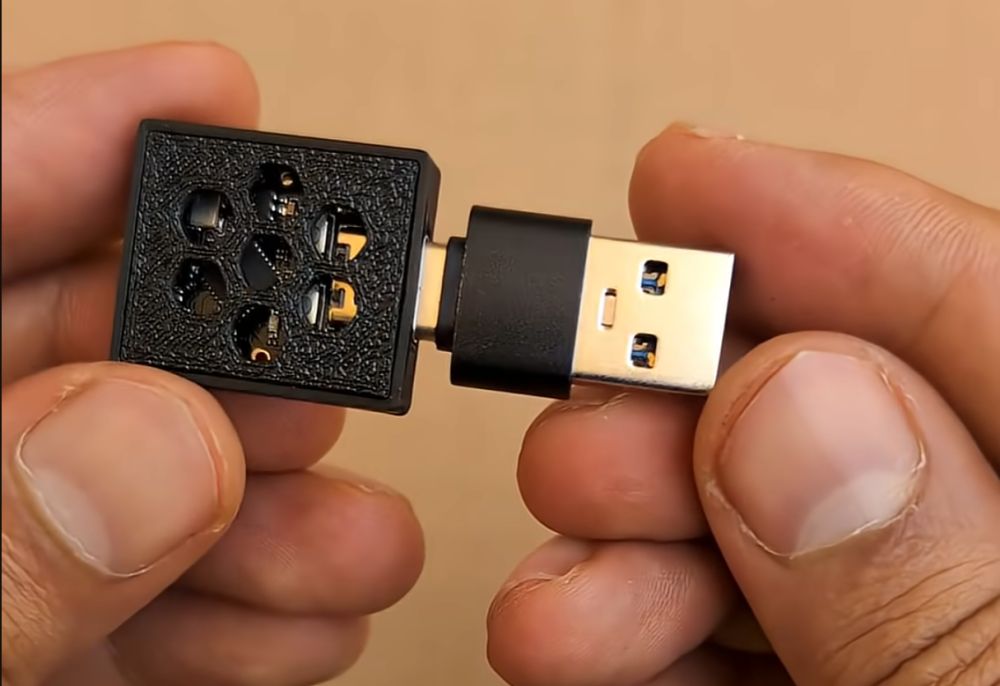
Egyptian developer ZedAxis has engineered an exceptional ESP32-C3 ad blocker. This remarkable device efficiently blocks over 537,000 domains. Furthermore, it costs approximately $5 to assemble.
The device functions gracefully as a fallback DNS server. It perfectly serves a standard home network environment. The developer utilizes Pi-hole on a Raspberry Pi for primary filtration. Meanwhile, this miniature board substitutes it during sudden reboots. Consequently, home devices avoid connecting to standard servers without ad-blocking capabilities. You can explore similar network setups through this visual demonstration.
Overcoming Hardware Memory Constraints
The ESP32-C3 possesses a mere 400 KB of RAM. Additionally, it features only 4 MB of flash memory. Therefore, storing hundreds of thousands of addresses conventionally remains impossible. The developer cleverly opted to store short 40-bit digital fingerprints. These fingerprints efficiently replace the actual textual domains. A 32-bit variation would inevitably yield excessive data collisions. Conversely, 64-bit values would consume entirely unnecessary storage space.
Before loading the database, the program downloads public blocklists. It subsequently removes extraneous comments and duplicate entries. Following this, the software converts each domain into a precise digital fingerprint. The resulting values undergo careful sorting procedures. Finally, the system writes them securely to the board’s flash memory.
Seamless Request Processing Capabilities
When a network request arrives, the microcontroller acts instantly. The ESP32 processes the website address using an identical cryptographic method. It then swiftly searches for a match within the database. The system reliably blocks any identified malicious domain. Afterward, it redirects all remaining legitimate requests to an external server.
According to ZedAxis, the custom software occupies roughly 50 KB of RAM. Responding to a blocked domain request takes approximately 10 milliseconds. Additionally, the board hosts a straightforward administrative control panel. Users can conveniently view network statistics here. They can also seamlessly append custom addresses to their private blocklist.
Maximizing Storage and Efficiency
The total domain capacity heavily depends on the memory layout. Typically, the ESP32 retains two distinct copies of the software. This standard practice consistently ensures secure over-the-air firmware updates. Retaining this excellent feature allows the database to accommodate 250,000 addresses. However, discarding wireless updates dramatically increases the overall capacity. Allocating the second partition expands storage to roughly 537,000 domains.
This impressive project does not replace comprehensive enterprise systems. It cannot fully substitute Pi-hole or AdGuard Home. The miniature filter lacks a detailed historical request log. It does not provide granular statistics for individual devices. Furthermore, it currently offers only fundamental configuration options.
Discreet and Reliable Operation
Nevertheless, the board consumes merely a few dozen milliamperes. Thus, it functions flawlessly as a perpetual backup network filter. ZedAxis creatively connected the device to a residential optical router. He utilized the USB port on his Huawei OptiXstar model.
This port exclusively supplies necessary electrical power to the board. All data exchange occurs rapidly via the integrated Wi-Fi module. Consequently, the compact filter remains entirely concealed behind the router. It continues to block advertisements effortlessly around the clock. The system works perfectly even when the primary server experiences temporary downtime.
Support Our Threat Intelligence
If you find our technology report and cybersecurity news helpful, consider supporting our work.
 Buy Me a Coffee
PayPal
Buy Me a Coffee
PayPal


