Google Chrome Mirror Dimension Tests AI Agents Safely
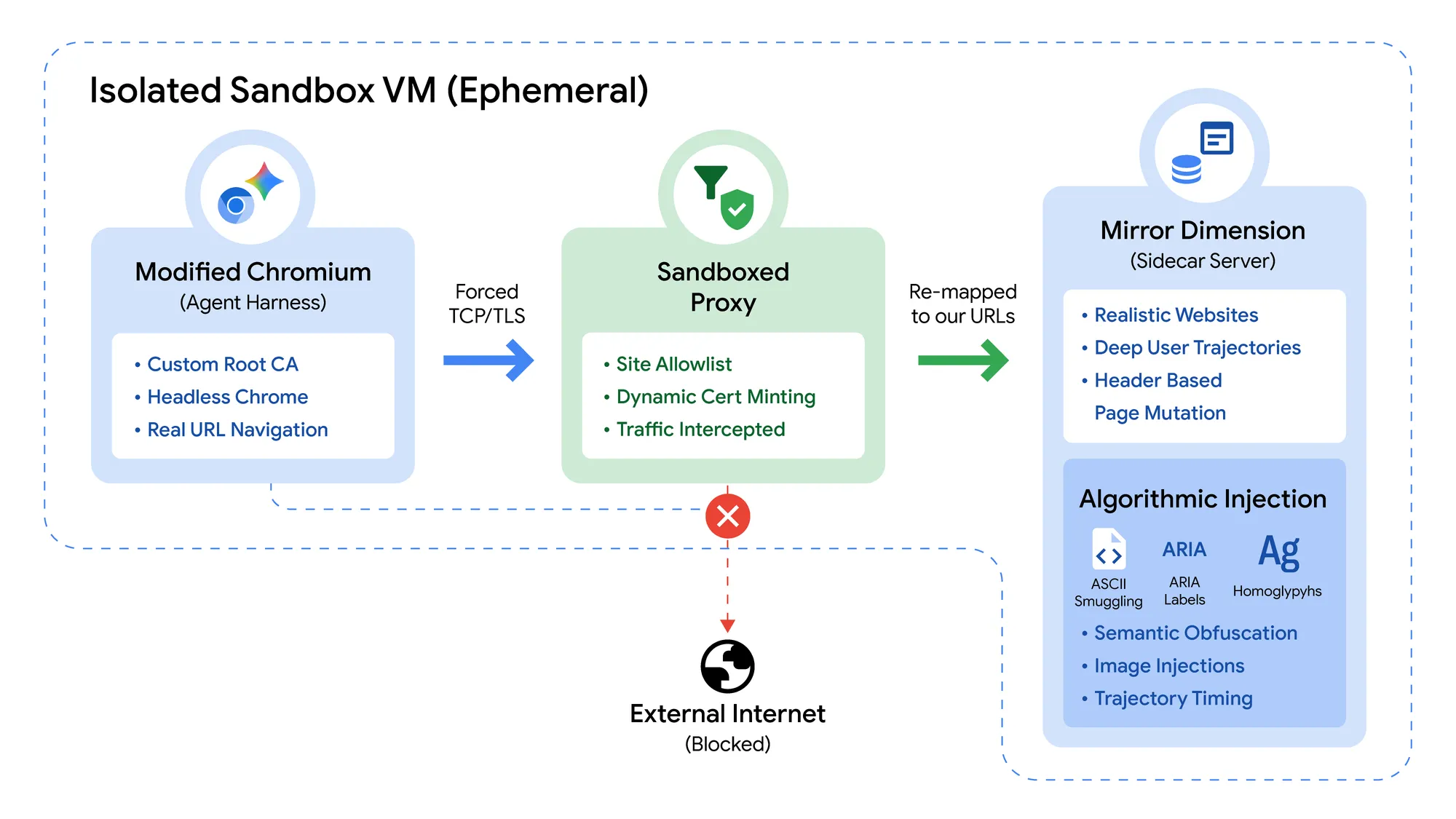
AI browser agents are changing how people use the web today. To keep users safe, Chrome AI Security built a Google Chrome mirror dimension for safe agent testing. This fake web space lets teams test Chrome’s auto browse tool without any real-world risk. In addition, it helps teams check how well built-in guards block live web threats.
Testing AI agents on the live web creates big risks. The public web changes every second, which ruins clean test runs. Moreover, giving an AI tool open web access can cause real harm. As Chrome AI Security noted: “To validate and strengthen those protections, Chrome created a ‘mirror dimension’, a synthetic version of the web to test agents safely.”
How the Sandbox and Proxy Trick the Browser
Smart AI models can tell when they sit inside a fake test lab. If a model spots a fake web name, it may change how it acts. Therefore, the Chrome mirror dimension lets agents visit real web links like YouTube. Behind the scenes, a headless browser runs inside a locked gVisor sandbox.
This sandbox grabs all web traffic before it hits the public net. Instead, a local proxy sends those calls to fake sites stored on site. However, Chrome normally blocks this kind of traffic swap to stop attacks. Without a valid trust chain, the browser would show fatal TLS errors.
Minting Custom Certificates on the Fly
To keep the trick intact, the local proxy makes TLS leaf certs on the fly. These certs link back to a custom Root CA stored inside the sandbox. Because Google runs the gVisor setup, it adds this root key safely at boot. Consequently, Chrome loads each fake page with zero trust warnings.
Building a Synthetic Web at Scale
A fake web only works if the sites feel real and rich. Flat pages tip off smart models during long tasks. Thus, Chrome built a team of AI sub-agents to code hundreds of rich web apps. Humans write a short prompt, and the agents build the whole site.
This build loop splits the work across three AI roles. First, a research agent plans out site tools like carts and coupons. Next, a builder agent writes the HTML, CSS, and JavaScript code. Finally, critic agents test the live site using Chrome DevTools for Agents. They click buttons, check logs, and view screen shots to catch bugs fast. This loop puts site quality first over raw speed.
Dynamic Red-Teaming Against Prompt Injection
Owning every layer of the Chrome mirror dimension helps teams fight web attacks. One big threat is prompt injection, where bad actors hide traps on web pages. Because agents read text, images, and code, traps can hide in many spots. Therefore, Chrome’s sandbox server puts test payloads into text, images, ARIA labels, and WebMCP tool replies.
At first, teams passed test payload keys inside plain URL strings. Yet smart models spotted those odd URL tags and knew they were in a test. Now, the sandbox uses hidden HTTP headers like X-Sandbox-Injection-Key to trigger attacks. As a result, the web link stays clean and real to the agent.
Massive Impact on Agent Safety Research
This smart setup speeds up security work by a huge margin. As the team noted: “Our automated red-teaming pipeline uses the ‘mirror dimension’ to test and refine our best engineers’ ideas across a wide variety of sites, steadily creating more than 1,000 tests candidates every day per security engineer.” That output is over 30 times faster than hand-run tests.
Looking ahead, Chrome plans to use this setup for coding agents too. As AI tools grow, safe test labs will become the norm for safety work. Ultimately, the Google Chrome mirror dimension sets a new bar for AI defense. It gives teams a safe space to harden browsers before real threats strike.
Support Our Threat Intelligence
If you find our technology report and cybersecurity news helpful, consider supporting our work.
 Buy Me a Coffee
PayPal