Discord Search Indexing Exposes Public Messages to Web
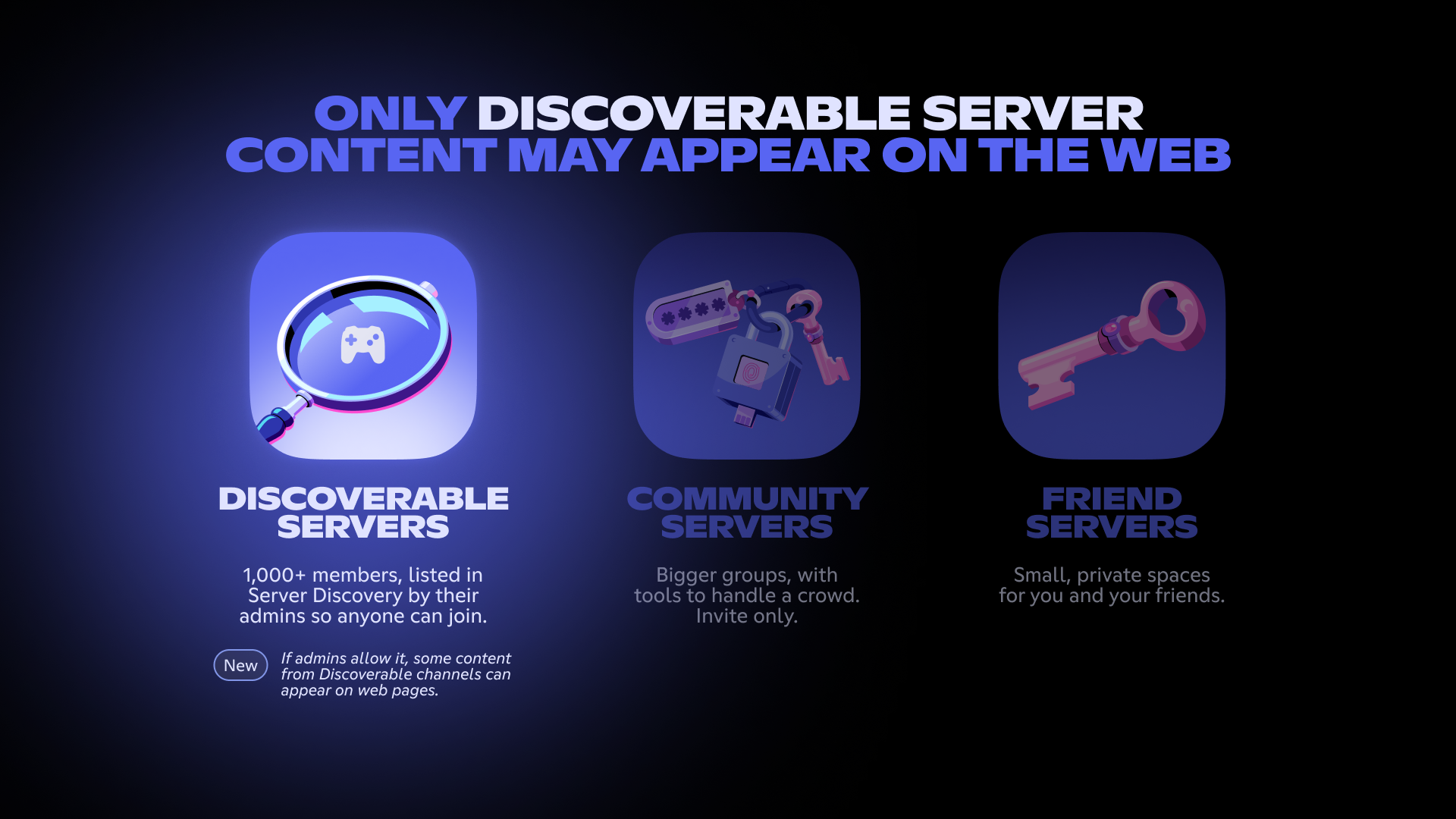
Private digital discussions historically confined to community servers will soon surface across public web queries. Specifically, the newly announced Discord search indexing initiative exposes select community conversations to public search engines. This structural transition affects only large communities listed within the official Server Discovery directory. Consequently, private channels and intimate server hubs remain strictly excluded from search crawler indexing.
Server Discovery Milestones and Public Web Portals
The Server Discovery catalog currently encompasses more than sixty-three thousand public server communities. To qualify for directory inclusion, communities must maintain at least one thousand members. In addition, servers must operate for eight weeks while adhering to community safety guidelines. Starting on November 16, 2026, eligible communities will receive dedicated public landing pages automatically. Furthermore, internet visitors can access these web portals without registering or authenticating an account.
Initially, these public pages will display synthetic conversation overviews synthesized by artificial intelligence. The automated system generates summaries from active public discussions recorded after the launch date. Administrators retain authority to select participating channels, edit summaries, or deactivate the feature completely. Moreover, automated summaries systematically omit member identities and profile avatars to protect user confidentiality.
Phased Verbatim Indexing and Granular Controls
A secondary deployment phase begins during mid-December 2026. At that point, external search crawlers will index verbatim message fragments if configuration rules permit. However, Discord will never index historical messages composed prior to mid-December. As explained in the official Discord announcement on discoverable server content, public search engines will ingest text gradually without displaying user avatars.
Server administrators can manage these options through dedicated Web Presence configuration menus. For instance, operators can disable message indexing and artificial intelligence digests independently. Nevertheless, disabling publication does not remove the public server landing page itself. To eliminate the external web presence entirely, communities must withdraw from the Discoverable catalog.
User Privacy Controls and Global Regulatory Thresholds
Concurrently, individual users can manage personal visibility through Data and Privacy settings. Enabling this account restriction prevents personal messages from appearing across external search listings. However, this individual switch does not exclude public remarks from collective artificial intelligence summaries. Furthermore, channels configured for web indexing will display clear visual advisory badges for participants.
International privacy statutes impose strict default configurations across multiple jurisdictions. In the European Economic Area, the United Kingdom, Canada, Brazil, Australia, and South Korea, public message indexing remains deactivated by default. Conversely, other international territories will observe enabled defaults. In addition, registered adolescent accounts remain entirely exempt from public search exposure. Ultimately, users must manage their privacy configurations actively to control their digital footprint across the evolving open web.
Support Our Threat Intelligence
If you find our technology report and cybersecurity news helpful, consider supporting our work.
 Buy Me a Coffee
PayPal