Nexus Dark-Web Market Sells 153 Million Driver’s Licenses as FBI Opens Probe
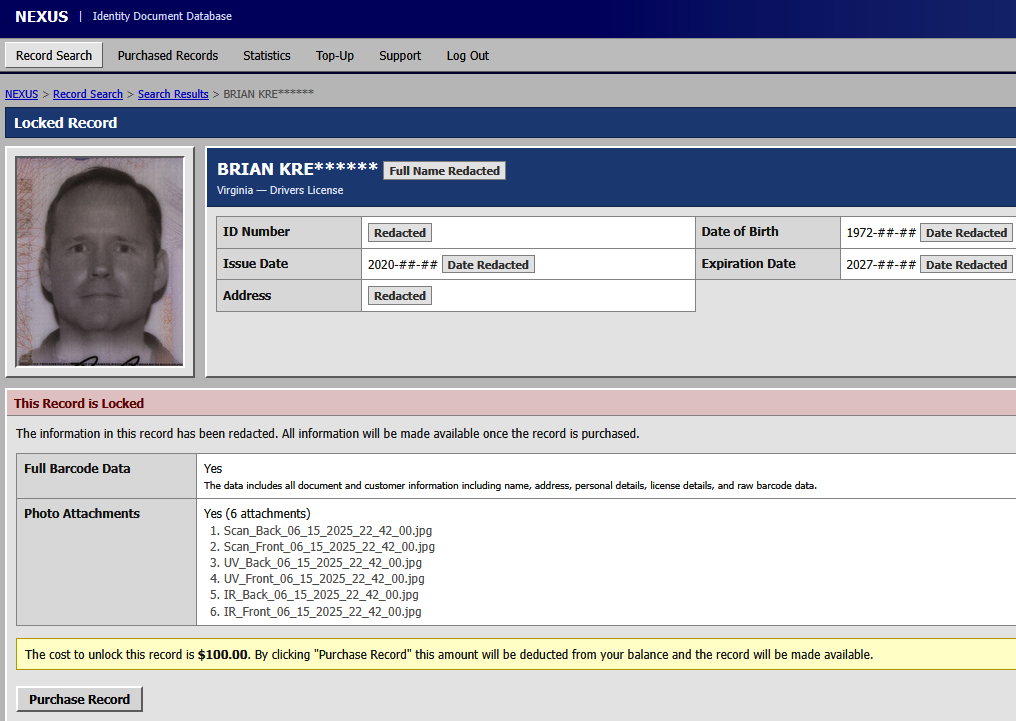
A document meant to affirm one’s identity has become merchandise for criminals. On the dark web, a marketplace named Nexus has surfaced, peddling digital copies of more than 153 million driver’s licenses belonging to residents of the United States and Canada. Among the records were documents of high-ranking American officials.
The database also held over 10 million identity cards, more than 3 million travel and foreign documents, and no fewer than 579,000 medical cards. Some records included images of the front and back of the license, an ordinary photograph, and versions captured during verification under infrared and ultraviolet light.
A Database That Grew by the Hour
The proprietors of Nexus claimed to have been intercepting fresh documents from a major identity-verification provider for over a year. In a single day, the number of driver’s licenses swelled by nearly 400,000, a sign of ongoing data collection. A blank search query on the platform returned roughly 11.5 million pages, each bearing 15 results.
An examination of the timestamps linked several documents to trips, car rentals, and venues where visitors had their licenses scanned. As KrebsOnSecurity reported, the trail led to the company IDScan.net, which verifies more than 21 million documents each month across 20,000 locations. The source of the database, however, has not yet been officially confirmed.
IDScan.net Investigates as the FBI Opens a Case
IDScan.net launched an internal review, engaged lawyers and independent digital-forensics specialists, and preserved its system logs for the inquiry. The FBI’s New Orleans field office opened an official case into a possible breach of the company. Soon after the information was published, the Nexus marketplace vanished from the dark web.
Copies of licenses can help criminals open credit accounts, circumvent remote identity checks, and hunt for people concealing their whereabouts. Potential victims are advised to monitor their credit history, scrutinize unfamiliar accounts, and, if necessary, place a credit freeze or a fraud alert.
Support Our Threat Intelligence
If you find our technology report and cybersecurity news helpful, consider supporting our work.
 Buy Me a Coffee
PayPal
Buy Me a Coffee
PayPal


