Perceptive Ecosystems: Apple Unveils Next-Generation Apple Intelligence Architecture
Pervasive Artificial Intelligence Integration
Apple recently unveiled a groundbreaking generation of Apple Intelligence. Specifically, the enterprise expanded its native artificial intelligence capabilities across almost all core devices and applications. These enhancements transform Photos, Safari, Passwords, Messages, Mail, Phone, Calendar, Shortcuts, and the Home application. Presently, developers can evaluate initial features through early software builds. Meanwhile, Apple promises a comprehensive public deployment this autumn.
Architectural Overhauls and Privacy Standards
The primary transformation resides within the underlying core software layout. Notably, these new capabilities operate on the next generation of Apple Foundation Models. Apple engineered these advanced systems in close collaboration with Google and its Gemini framework. Consequently, the system routes basic workflows directly onto the local device hardware. Conversely, more complex computational tasks execute via Private Cloud Compute. Crucially, Apple asserts this framework guarantees complete data isolation. No external telemetry persists on the servers, and independent experts can continuously audit the security architecture.
Reimagining Siri and Media Manipulation
The Inception of Siri AI
The virtual assistant will soon undergo an extensive algorithmic modernization. This updated ecosystem is officially designated as Siri AI. Furthermore, the assistant will demonstrate a superior understanding of real-time contextual data. It can seamlessly retrieve telemetry across localized messages, emails, photographs, and third-party tools. Additionally, Siri AI will eventually debut within a dedicated standalone application interface. Apple intends to launch these capabilities in a beta phase later this fiscal year.
Advanced Photographic Editing Capabilities
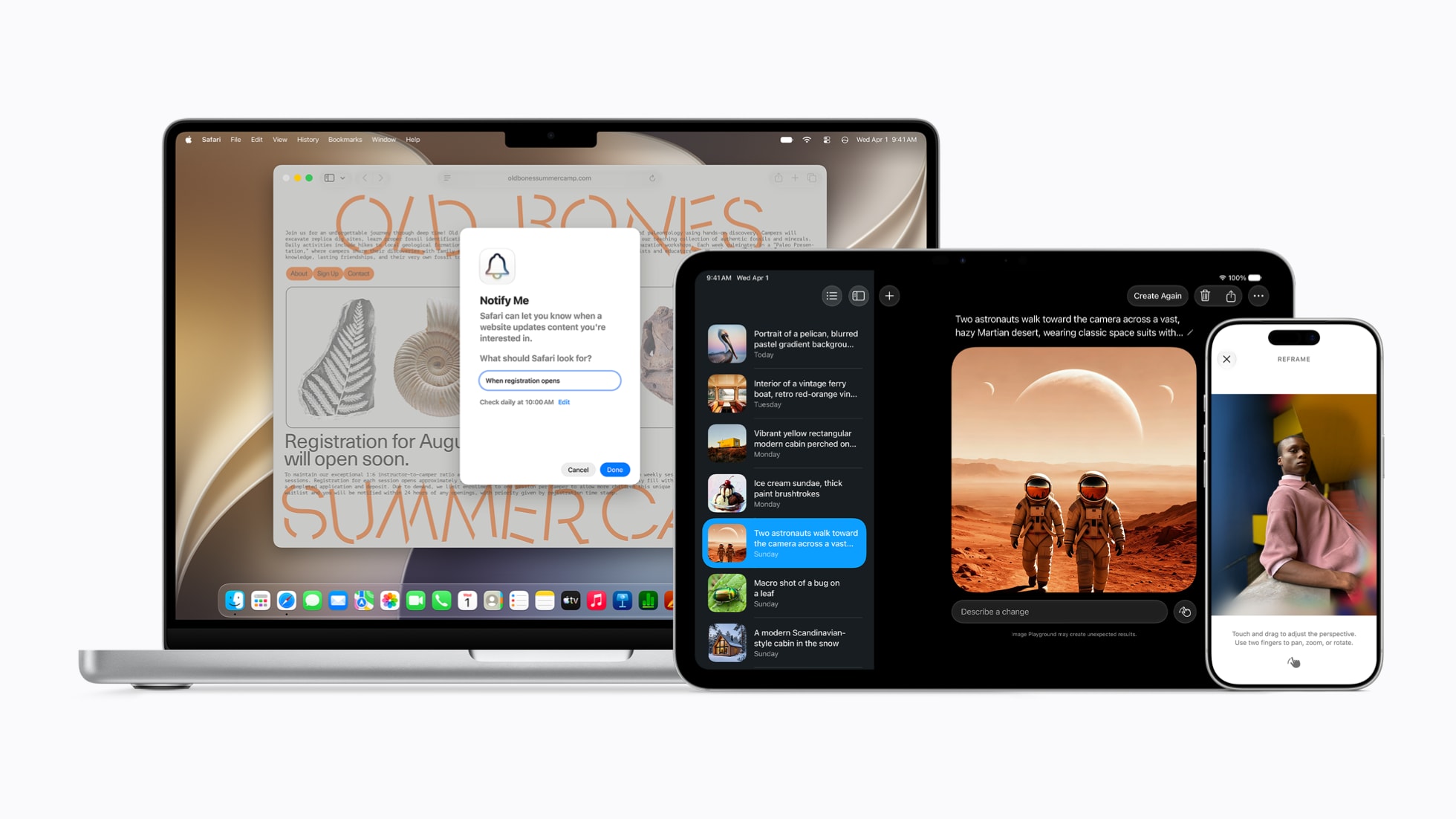
The native Photos application introduces a sophisticated array of generative editing instruments. For example, a feature named Spatial Reframing allows editors to dynamically alter image compositions post-capture. Users can shift perspectives fluidly, while the generative model seamlessly synthesizes missing contextual margins. In tandem, the Extend tool broadens photographic borders and straightens uneven horizons without forced cropping. Moreover, the Clean Up utility removes intrusive elements with exceptional precision, neatly reconstructing complex backgrounds. Ultimately, all images altered by Apple Intelligence receive an invisible SynthID cryptographic watermark.
Web Refinement and Security Automation
Intelligent Navigation in Safari
Safari will natively ingest several productivity-focused intelligence capabilities. Specifically, the browser will automatically segregate active tabs into contextual themes. If a user plans an itinerary, Safari aggregates reservations and maps into an isolated group. Furthermore, the novel Notify Me feature monitors digital storefronts for active changes. The browser dispatches an instant notification whenever a price drop or inventory update occurs.
Automated Credential Fortification
The standalone Passwords utility will soon automate the remediation of compromised credentials. As a result, Apple Intelligence autonomously navigates to target domains to rotate weak passwords. This protective cycle executes seamlessly with negligible user intervention. Additionally, Safari introduces the Describe an Extension interface. Users simply define a desired utility using natural language, and the browser compiles a functional tool directly onto the toolbar.
Expressive Content and Contextual Workflows
Amplifying the Image Playground
The Image Playground workspace gains immense processing power via cloud-based synthesis models. Operators can craft entirely new visual assets or refine existing imagery using touch-based segmentation. Subsequently, users can resize elements or modify scenes through intuitive textual prompts. The system outputs these assets across multiple presentation formats, including lock screen backgrounds and digital flyers. Naturally, these files also inherit the protective SynthID tracking tag.
Harmonized Messaging and Call Context
Meanwhile, Messages and Mail will deliver highly intuitive contextual recommendations. If an interlocutor requests media files, the system proactively searches local libraries using advanced keyword mapping. Therefore, operators can compile calendar reminders or notes with a single interaction. The native Smart Reply matrix also adapts dynamically to mirror the user’s personal writing style.
In addition, the Phone application introduces Call Context. When calling a verified commercial enterprise, the device displays pertinent booking codes extracted from Mail. Crucially, this process respects absolute privacy by analyzing metadata rather than recording conversation streams.
Automation, Smart Home, and Inclusivity
Natural Language Automation
The Calendar application will soon synthesize complex events from basic, unstructured textual descriptions. Consequently, the system automatically identifies participants, locations, and titles. Similarly, Shortcuts introduces the Describe a Shortcut compiler. This utility builds sophisticated automation flows from basic text strings. For instance, a user can instruct the terminal to configure alarms based on the earliest upcoming calendar entry.
Streamlining the Intelligent Home
Within the Home ecosystem, the intelligence layer consolidates repetitive smart home alerts into a unified event card. Therefore, users avoid overwhelming notification streams from security sensors. Additionally, HomeKit Secure Video cameras will generate concise textual summaries of recorded clips. This allows users to audit security events rapidly without manual playback.
Universal Design and Accessibility Enhancements
Finally, Apple will deploy extensive upgrades to its accessibility framework. VoiceOver will deliver highly articulate descriptions of complex imagery and physical environments. Concurrently, Live Recognition empowers users to query their surroundings via the physical Action Button. The system simplifies Voice Control by interpreting conversational text rather than rigid commands. Ultimately, the revised Accessibility Reader synthesizes concise summaries of dense technical manuscripts effortlessly.
System-wide grammar adjustments, intelligent folder recommendations, and localized Workout Buddy capabilities complete this massive deployment. Apple aims to weave artificial intelligence deeply into daily human workflows rather than segregating it within isolated utilities. The true validation of Apple Intelligence will occur during the global autumn rollout, testing its resilience against authentic daily tasks.
Support Our Threat Intelligence
If you find our technology report and cybersecurity news helpful, consider supporting our work.
 Buy Me a Coffee
PayPal
Buy Me a Coffee
PayPal


