North Korean Fake Construction Company Uses Deepfakes to Chase US Contracts
TL;DR
Security researchers exposed a North Korean fake construction company operating under the name “The Great House” to pursue U.S. building contracts. During live video calls with analysts, the operator used real-time deepfake software and abruptly cut the feed when asked to pass a visual check. Unlike earlier tech-sector scams, this fake construction company delivered no malware and focused strictly on generating revenue for Pyongyang.
What Happened During the Investigation
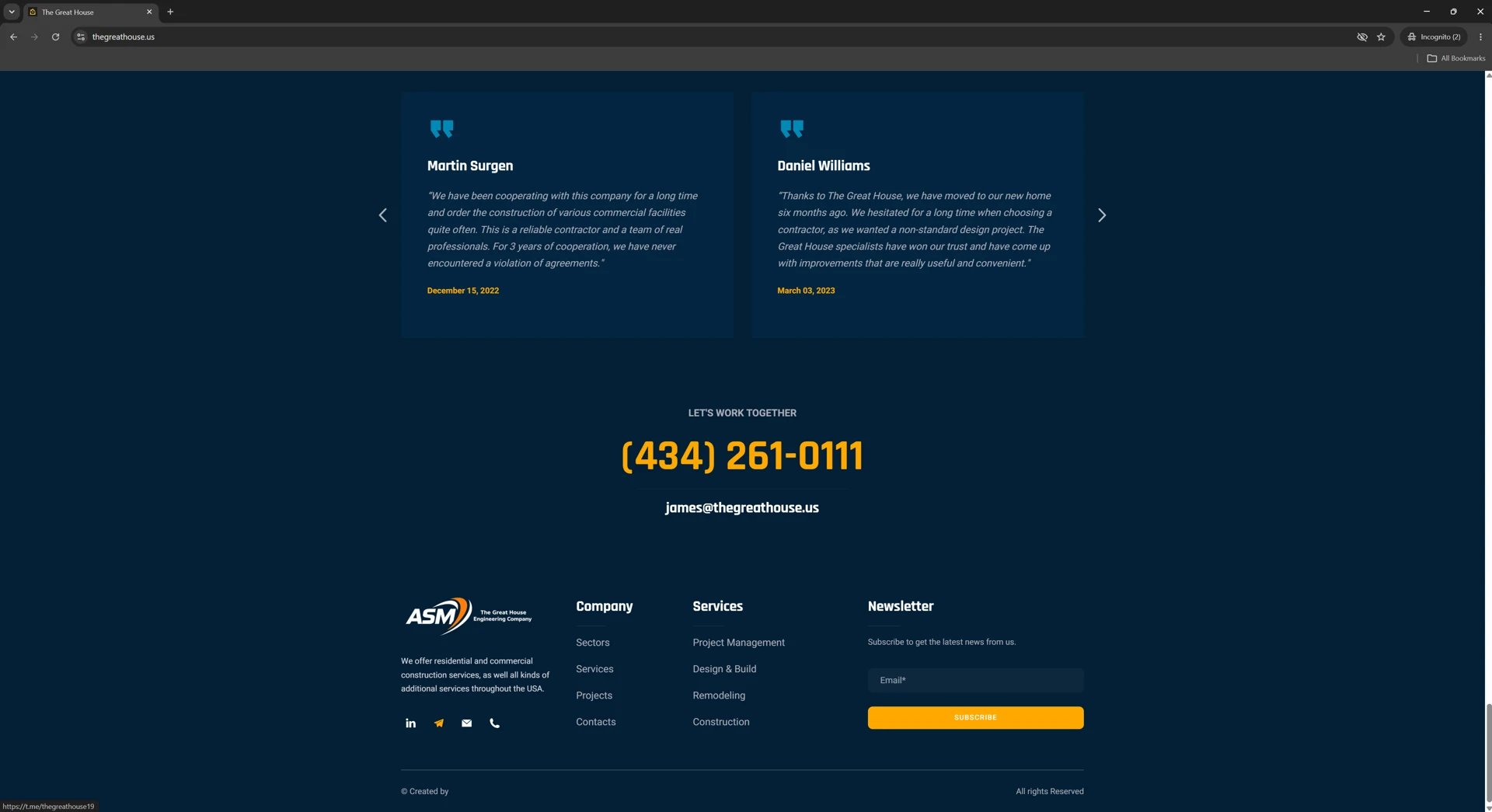
On October 18, 2025, an operator registered the domain thegreathouse.us to present “The Great House” as a Lynchburg, Virginia contractor. According to an investigation into the North Korean fake construction company by Silent Push Preemptive Cyber Defense Analysts, the site claimed over 10 years in business, more than 200 clients, and over 60,000 square feet built. However, basic business records quickly contradicted those claims.
Specifically, the website displayed a Virginia phone number (434-261-0111), while its underlying HTML telephone link pointed to an Arkansas area code (+1-479-410-0717). Furthermore, WHOIS records listed a third phone number from Massachusetts (+1-351-345-0257) alongside a New York registrant address. Analysts then contacted the company’s Telegram handle (thegreathouse19) while posing as a prospective client and arranged two meetings with a representative named “Edward.”
Live Deepfake Artifacts on Video
During the first 25-minute call, Edward kept his camera off and pushed back when researchers requested identity verification. Eventually, he agreed to turn on his camera for a second meeting. Almost immediately, analysts spotted layering artifacts, facial distortion, and lip-sync lag.
“We also noticed he seemed to keep his mouth out of frame on purpose. This was likely because the deepfake software couldn’t keep his lip movements synced with his voice, causing a visible lag,” Silent Push researchers wrote. Next, the team asked Edward to lean back and hold a hand in front of his face. He feigned confusion, declined the test, and ended the video feed shortly afterward.
Who Is Behind the Activity
Silent Push assesses with high confidence that a North Korean remote worker operates thegreathouse.us. First, the domain’s registrant email (devtop0109@gmail.com) appears on a public list of 1,400 addresses attributed to North Korean IT workers by researchers “SttyK” and Rakeshkrishs12. Second, the live face-swap tradecraft matches tools previously linked to the Contagious Interview subgroup of Lazarus, also tracked as Famous Chollima and WageMole.
Earlier in 2025, Silent Push documented three fake cryptocurrency consulting fronts – BlockNovas LLC, Angeloper Agency, and SoftGlide LLC – that delivered BeaverTail, InvisibleFerret, and OtterCookie malware to developers. “This time, though, no malware is delivered, and the operator, now running a fake construction company, goes after building contracts directly instead of trying to lure job applicants,” the report noted.
Impact and Industry Shift
The investigation covered a single front company and two calls, identifying no confirmed clients, bids, or financial payments. Still, the case marks a notable shift beyond software engineering. As U.S. Treasury and FBI advisories have warned, North Korean remote workers generate hundreds of millions of dollars for the regime each year. Moreover, recent Silent Push research uncovered Discord recruiters offering Western and Latin American citizens 35% of a salary to act as legal identities while funneling 65% back to North Korea.
How Organizations Can Stay Protected
As Brandefense analysts noted in their review of the case, a polished website and video call are no longer enough to vet contractors. To defend against a North Korean fake construction company or remote worker front, procurement teams should run three independent checks before signing contracts.
First, test live video calls by asking representatives to wave a hand across their face, turn sideways, or lean back, and treat any refusal as a major red flag. Second, compare website claims against WHOIS domain creation dates and check for mismatched state phone numbers. Third, verify contractor licenses directly through official state licensing boards rather than clicking vendor-supplied links. Finally, U.S. organizations that spot suspected North Korean fronts should report them to the FBI via the Internet Crime Complaint Center (IC3).
Support Our Threat Intelligence
If you find our technology report and cybersecurity news helpful, consider supporting our work.
 Buy Me a Coffee
PayPal