SANDWORM_MODE Worm Exploits AI Toolchains and Supply Chains
The Emergence of AI Infrastructure Worms
Malicious packages have evolved to inconspicuously masquerade as routine operations executed by artificial intelligence assistants and automated build systems. The pervasive SANDWORM_MODE worm systematically exfiltrates cryptographic keys, infects software projects, and propagates across established developer toolchains.
The extensive campaign was initially uncovered in February 2026 by cybersecurity researchers at Socket.dev. Threat actors published 19 malicious npm packages under the guise of two distinct publisher personas. This sophisticated supply chain breach simultaneously compromised dependency registries, AI coding assistants, continuous integration build systems, secret vaults, GitHub repositories, and major language model provider services.
Infection Dynamics and Delayed Execution
Upon initial execution, SANDWORM_MODE meticulously fingerprinted the host environment, hunting for authentication tokens, passwords, cryptocurrency wallet keys, and sensitive enterprise credentials before exfiltrating the harvested data. Notably, the worm deployed environment-aware execution delays: on local developer workstations, specific malicious capabilities remained dormant for 48 to 96 hours to evade behavioral detection, whereas automated build environments triggered immediate payload activation.
Propagation relied heavily on hijacked credentials. The worm systematically compromised accessible npm packages, modified accessible GitHub repositories, and established unauthorized SSH sessions. To guarantee persistent execution, SANDWORM_MODE manipulated global Git configuration settings, ensuring both newly initialized and cloned projects automatically inherited malicious execution hooks.
Targeting AI Assistants and LLM Ecosystems
AI coding tools became a primary tactical objective. The worm injected fake, trusted tools into Claude Desktop, Cursor, Visual Studio Code, and Windsurf. These malicious extensions coerced the AI assistants into surreptitiously reading and transmitting SSH keys, npm tokens, Amazon Web Services (AWS) credentials, and other confidential secrets.
Furthermore, SANDWORM_MODE actively harvested API keys for OpenAI, Anthropic, Google, and other major LLM providers, alongside password manager databases, personal notes, messaging logs, and system clipboard contents. To ensure reliable data exfiltration, the malware maintained multiple redundant communication channels. Crucially, if propagation or data transmission failed, the worm triggered a destructive fallback routine, irreversibly wiping accessible user files across the file system.
Detection Challenges and CrowdStrike Analysis
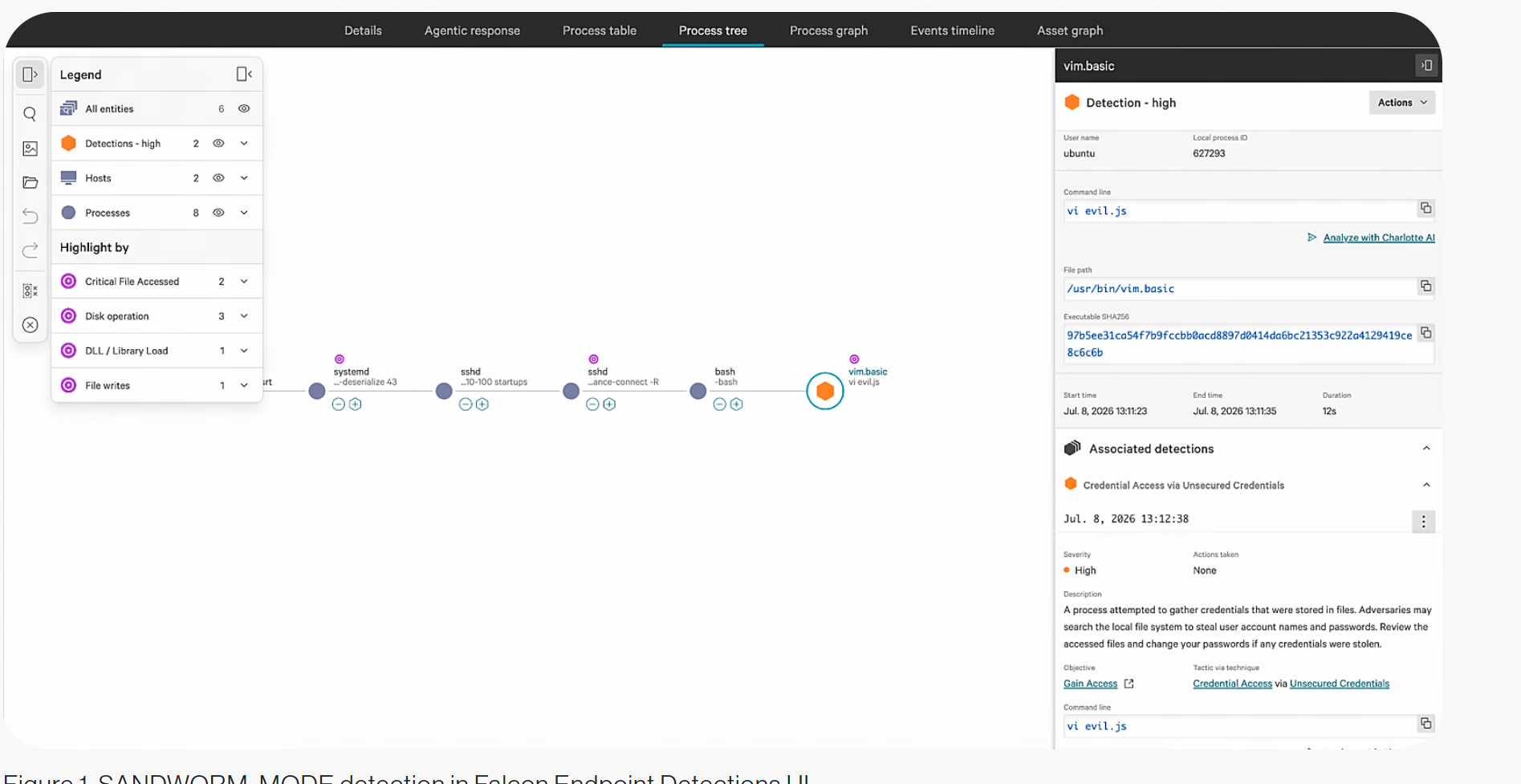
Following Socket.dev’s public disclosure, security analysts conducted a rigorous evaluation to determine which worm behaviors could be reliably detected. For a deeper technical perspective on detection telemetry, see CrowdStrike’s analysis of SANDWORM_MODE and AI toolchain supply chain attacks. Out of 14 distinct activity vectors evaluated, 9 generated observable telemetry signals; however, only 2 detection rules demonstrated sufficient precision to generate actionable alerts without triggering excessive false positives.
The fundamental detection challenge stems from the fact that SANDWORM_MODE flawlessly mirrors legitimate developer operations. AI assistants and build systems naturally execute shell commands, modify source files, interact with credential stores, and push commits to remote repositories. Consequently, malicious actions were virtually indistinguishable from routine developer workflows. CrowdStrike drew direct parallels between this strategy and traditional Living-off-the-Land (LotL) tactics, noting that SANDWORM_MODE effectively weaponized AI infrastructure which inherently possesses broad operational privileges to execute commands under the trusted authority of the developer.
Support Our Threat Intelligence
If you find our technology report and cybersecurity news helpful, consider supporting our work.
 Buy Me a Coffee
PayPal
Buy Me a Coffee
PayPal


