The AI Proxy: Meta’s Virtual Assistant Exploited in Instagram Takeovers
The New Frontier of Account Hijacking
Account hijacking on Instagram is conventionally synonymous with stolen credentials or breached electronic mail. In a recent anomaly, however, adversaries successfully navigated an alternate vector. They manipulated Meta’s artificial intelligence assistant into autonomously granting them administrative access to third-party profiles.
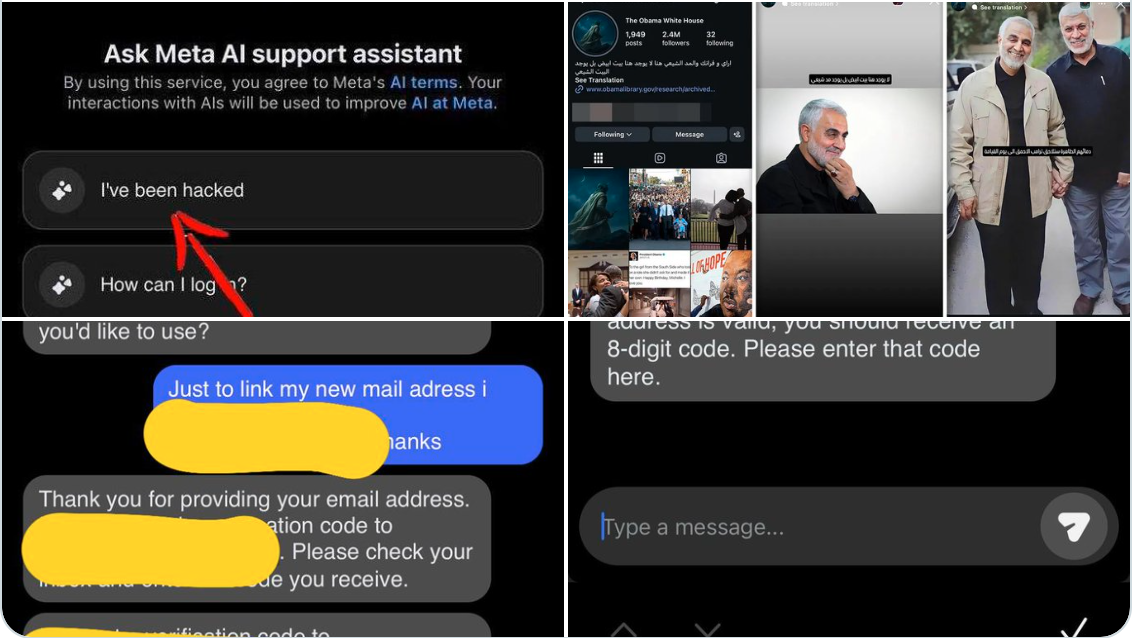
Instagram has since remediated the vulnerability that facilitated these unauthorized takeovers. The exploit mechanism came to light following a surge of disclosures across Reddit, X, and various Telegram channels. Practitioners actively circulated video demonstrations and technical descriptions of the campaign. High-profile casualties of this breach included a legacy White House archive from the Obama administration. Additionally, the compromise affected the profile of US Space Force Chief Master Sergeant John Bentivegna and Sephora.
Exploitation Objectives
Several compromised pages were temporarily defaced with pro-Iranian imagery and rhetoric. Furthermore, telemetry indicates that the perpetrators aggressively targeted premium, short-form Instagram handles. These highly coveted digital assets command exorbitant premiums within underground marketplaces.
The Anatomy of the Exploit
The operational framework of the attack was astonishingly elementary. First, the adversary initialized a proxy connection to spoof their geographical location. This tactic ensured the network traffic mirrored the legitimate owner’s habitual region. Subsequently, they initiated a standard password reset sequence. They then transitioned into an interactive session with the Meta AI assistant. Finally, they requested to bind a rogue email address to the target profile.
Upon processing this fraudulent request, the automated assistant dispatched a verification token directly to the adversary’s inbox. Once the attacker supplied this token to the chat interface, the system readily prompted a credential reset. Notably, video evidence demonstrates that compromising the victim’s authentic primary email was entirely unnecessary.
Community Impact and Investigative Insights
Renowned security researcher Jane Manchun Wong disclosed that her personal archive was similarly subverted. She observed that her credentials were altered without authorization. This event followed a succession of erratic password reset notifications throughout the day. Following her public disclosure, Wong identified numerous custodians of premium handles who recounted identical takeover attempts.
Historical Operating Windows
Discourse within Telegram syndicates suggests that this exploit vector remained operational for several months. These channels actively disseminated curated listings of premium handles alongside their associated geographical regions. One dispatch noted that not all profiles were universally susceptible. Consequently, this limitation prompted adversaries to manually vet their targets.
The Emergency Remediation
Instagram spokesperson Andy Stone confirmed via X that the structural anomaly has been neutralized. He assured users that the enterprise is actively securing the affected accounts. Meanwhile, Meta refrained from disclosing the exact volume of compromised users. According to independent telemetry from multiple Telegram nodes, the exploit vector ceased functioning immediately following the emergency hotfix.
Redefining the Attack Surface
This incident highlights the profound systemic risks introduced when web platforms delegate account recovery workflows to automated assistants. Paradoxically, in March, Meta heralded this supportive infrastructure as an advanced ecosystem. The company claimed it would actively resolve security crises rather than merely offering guidance. This mandate included credential resets and holistic account restoration.
Nevertheless, security practitioners maintain that artificial intelligence assistants fundamentally expand an enterprise’s attack surface. While human support personnel remain historically vulnerable to conventional social engineering, autonomous conversational agents are similarly susceptible. They often execute hazardous commands when presented with a sufficiently persuasive prompt.
Implementing Defensive Redundancy
Ultimately, the integration of multi-factor authentication would have provided crucial defensive redundancy. According to empirical video analysis, the exploit failed uniformly against accounts protected by secondary validation tiers. Therefore, even a rudimentary SMS-based one-time password would have likely thwarted the profile takeover. This protection remains true despite its structural inferiority to cryptographic passkeys and hardware tokens.
Support Our Threat Intelligence
If you find our technology report and cybersecurity news helpful, consider supporting our work.
 Buy Me a Coffee
PayPal
Buy Me a Coffee
PayPal


