Understanding the FFmpeg PixelSmash Vulnerability
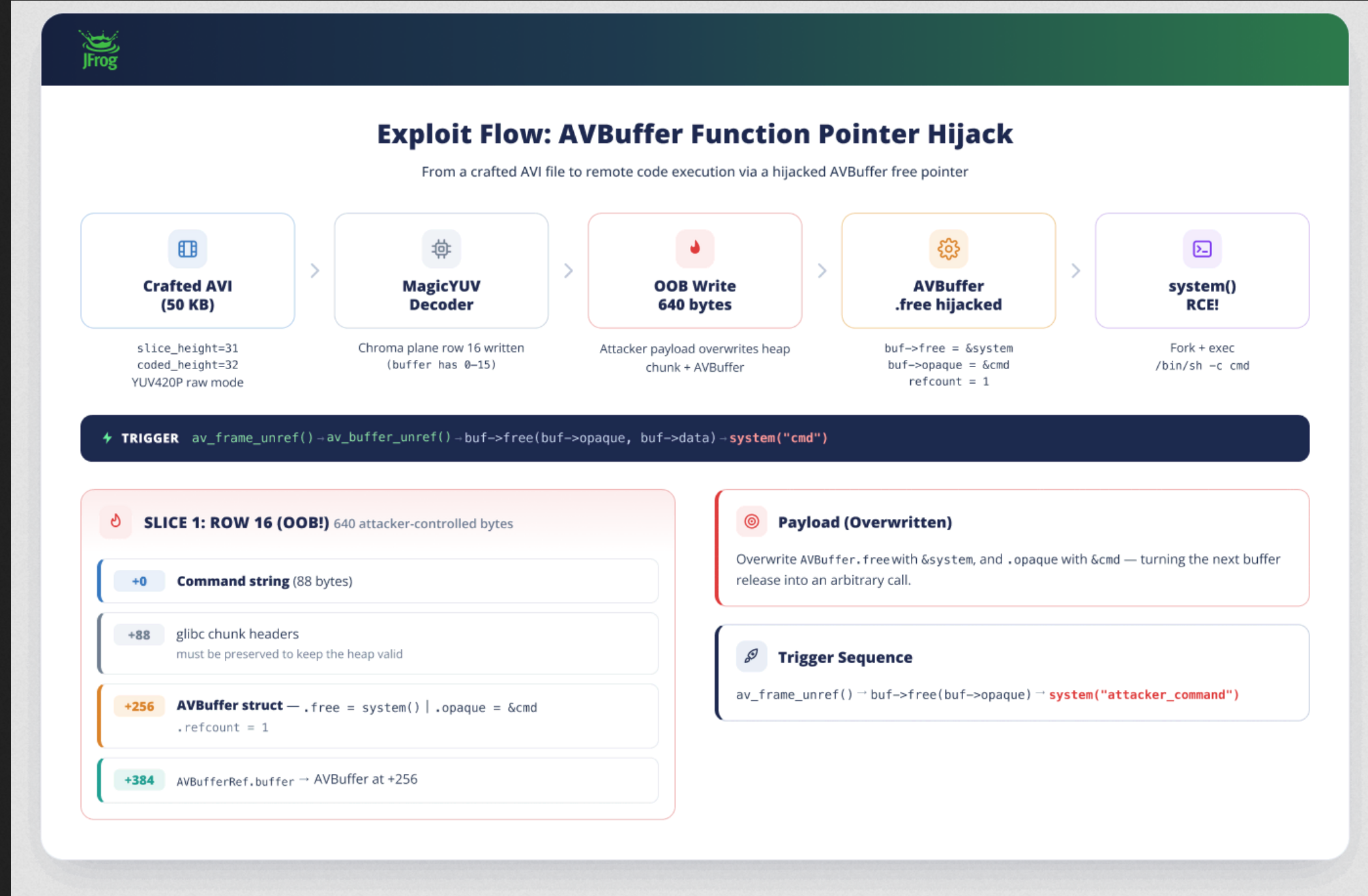
A single corrupted video file can sometimes be dangerous even before execution. The new PixelSmash vulnerability in FFmpeg vividly demonstrates this severe threat. Routine video processing can easily cascade into a complete server crash or unauthorized code execution. Experts assigned this issue the identifier CVE-2026-8461. It carries a critical CVSS 3.1 score of 8.8. Researchers discovered this flaw within the MagicYUV decoder. This specific component resides in libavcodec. Libavcodec serves as the primary FFmpeg library for video encoding and decoding.
How the Exploit Functions
Malicious files crafted in AVI, MKV, and MOV formats can trigger the attack. The exploit succeeds if the target application utilizes FFmpeg with the MagicYUV decoder enabled. PixelSmash stems from a fundamental error during the processing of specific video frame segments. The decoder and the memory allocation mechanism calculate color data height differently. Consequently, this discrepancy allows the software to write data far beyond the designated memory boundaries.
Invisible Background Triggers
Most alarmingly, the attack does not require direct playback of the video. It triggers silently during routine background tasks. These tasks include generating thumbnails or scanning a media library. Automatically uploading a file to a cloud service can also execute the payload.
Impact on Media Servers and Applications
Security specialists from JFrog recently explained how a critical FFmpeg vulnerability turns media files into weapons. In their demonstration, a malicious AVI file entered the Jellyfin media library. The server automatically executed the ffprobe tool to extract file metadata. Subsequently, the vulnerability allowed arbitrary command execution under the Jellyfin service account.
This specific scenario requires Address Space Layout Randomization (ASLR) to be disabled. ASLR acts as a critical defense that obscures memory data locations. Importantly, CVE-2026-8461 cannot natively bypass an active ASLR defense. Even without executing arbitrary code, the vulnerability can inflict severe operational damage. It easily triggers a denial-of-service condition. This condition causes the vulnerable application to crash or freeze completely.
Vulnerable Platforms vs. Secure Implementations
JFrog identified numerous affected platforms and deployment scenarios. These include Kodi, OBS Studio, PhotoPrism, Emby, and Nextcloud. It also impacts background thumbnail generators for GNOME, KDE, and XFCE. Conversely, Plex demonstrated superior resilience against this emerging threat. Plex utilizes a custom FFmpeg build. They disable unnecessary decoders and enforce a strict whitelist of permitted components.
Mitigation and Defense Strategies
The FFmpeg project patched the PixelSmash vulnerability in version 8.1.2. They officially released this critical update on June 17. Jellyfin has already updated its internal FFmpeg version to protect users. Meanwhile, PhotoPrism is preparing to block these dangerous file formats entirely.
Developers and system administrators must take immediate action to mitigate this risk. They should urgently update FFmpeg. They must also patch any applications bundling the library internally. Furthermore, administrators must prevent automated scanners from processing media content from untrusted sources. Finally, security teams must ensure that ASLR remains active across all production systems.
Support Our Threat Intelligence
If you find our technology report and cybersecurity news helpful, consider supporting our work.
 Buy Me a Coffee
PayPal
Buy Me a Coffee
PayPal


