The DxSale Liquidity Drain: Exploiting Legacy Web3 Architecture
The Awakening of Dormant Exploits
Legacy tools within the cryptographic ecosystem can remain dormant for years. Subsequently, a solitary vulnerability transforms them into a source of catastrophic losses. This exact scenario plagued DxSale, a prominent launchpad for meme tokens. Specifically, adversaries drained approximately 7.3 million dollars from its historic liquidity pools on the BNB Chain.
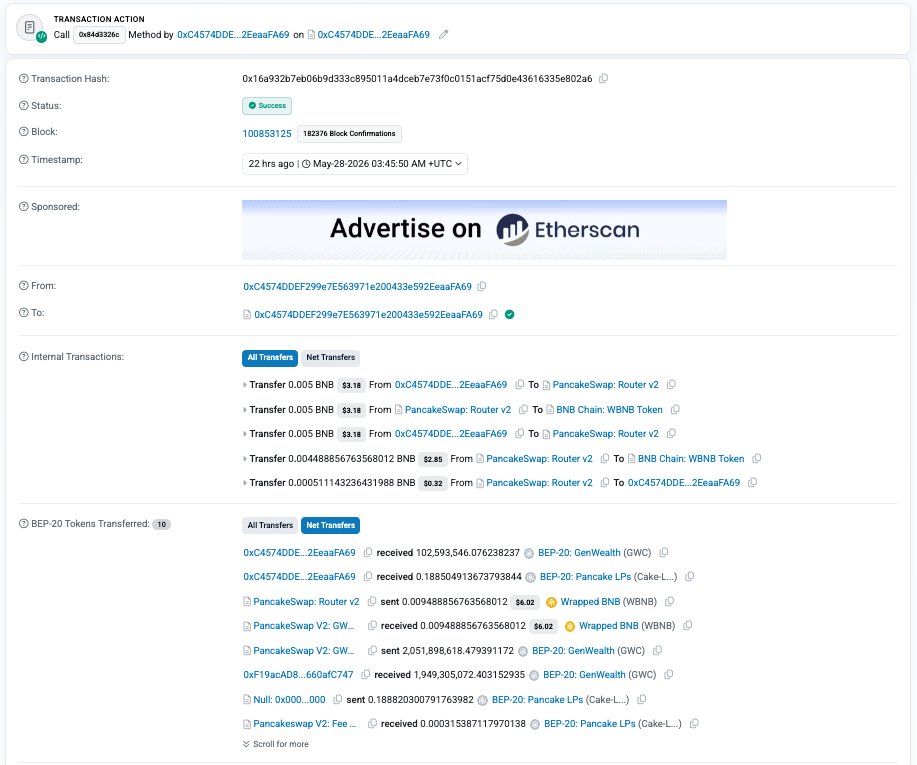
According to security analytics from PeckShield, the exploit impacted roughly 1,400 distinct liquidity providers. The perpetrator’s address, 0xC457, transferred 1.87 million dollars worth of BNB into two primary repositories. Afterward, the actor dispersed the capital across multiple Binance deposit destinations.
Historical Pools and Covert Transitions
Developers heavily utilized DxSale back in 2021 to secure token liquidity. Blockchain analyst Tahax posits that these legacy vaults still harbored assets from projects established years ago. Furthermore, his data indicates the malicious wallet emerged shortly before the assault. It originally acquired its funding through the Bybit cryptocurrency exchange. Eventually, the actor routed a portion of the purloined assets through obfuscation infrastructure to hinder tracking efforts.
Ownership Manipulation Telemetry
Tahax also disclosed that the contract owner covertly transferred administrative authority 269 days ago. Remarkably, the team never publicly announced this transition. Consequently, a sequence of ownership modifications unfurled across dozens of transactions. This chain persisted until control rested with the wallet that initiated the massive BNB extraction.
Deconstructing the Vulnerability Matrix
The Coinsult platform attributes the compromise to an unfortunate intersection of features. Specifically, it blended a privileged fee-modification mechanism with legacy asset-locking functions. Therefore, this lethal combination successfully transformed “locked” deposits into a fully withdrawable balance.
| Exploited Element | Vulnerability Impact | Affected Architecture |
| Fee-Modification Feature | Administrative privilege abuse | First-Generation Vaults (2021) |
| Atomic Transactions | Cross-chain execution manipulation | BNB Smart Chain (BSC) Interface |
DxSale executives counter-argued that the vulnerability exclusively threatened the first-generation vaults established in 2021. Meanwhile, the development team blamed the incident on a novel atomic transaction feature within BSC. They firmly assured users that secondary vaults and newer smart contracts remained completely safe.
The Rising Deficit in DeFi Security
Unquestionably, this security incident has intensified anxiety surrounding the decentralized finance ecosystem. According to data from DefiLlama, malicious actors plundered 59 million dollars from DeFi protocols in May. Previously, capital losses reached a staggering 634 million dollars in April. This metric represents the highest monthly deficit recorded in over a year.
Support Our Threat Intelligence
If you find our technology report and cybersecurity news helpful, consider supporting our work.
 Buy Me a Coffee
PayPal
Buy Me a Coffee
PayPal


