Active Exploitation Targets Roundcube Webmail Servers
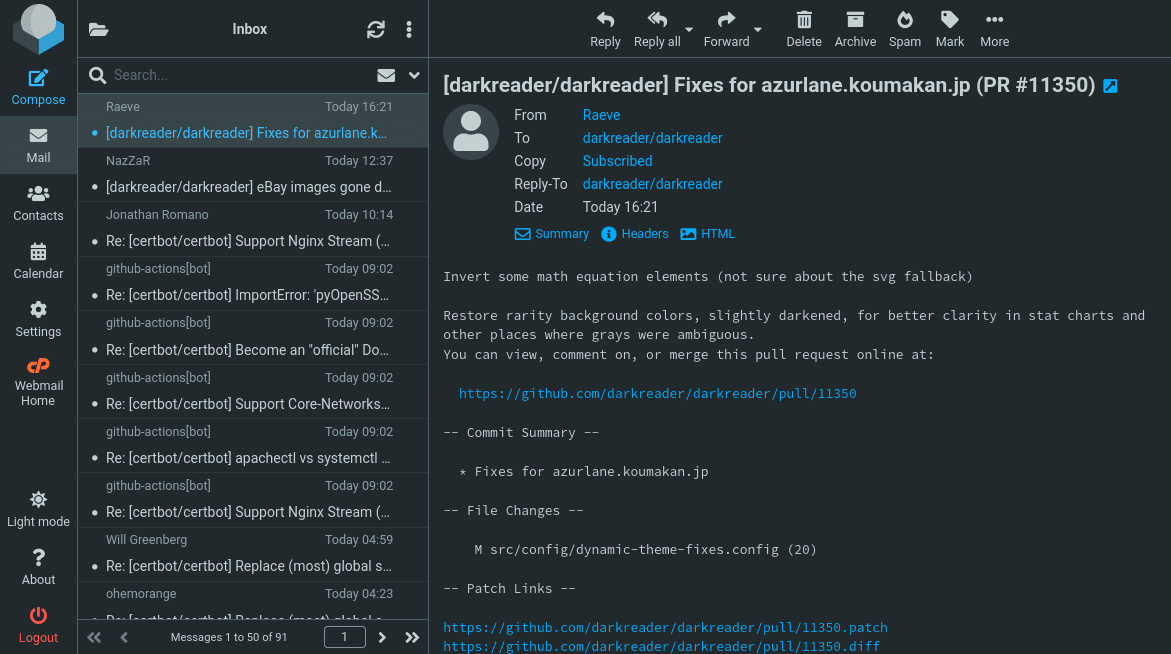
A critical vulnerability can easily outlive its official patch if system administrators fail to update their servers expeditiously. Precisely this perilous scenario is currently unfolding surrounding the widely deployed Roundcube Webmail platform. Malicious actors are now actively weaponizing a severe SQL injection vulnerability, granting them the terrifying ability to assault the email infrastructure prior to any user authentication.
On September 21, the Canadian Centre for Cyber Security drastically escalated its previous May advisory concerning Roundcube. The agency explicitly warned that CVE-2026-48842, an alarming flaw carrying a CVSS 3.1 severity rating of 8.1, is currently facing active exploitation in the wild. The authority corroborated these alarming claims utilizing open-source intelligence. However, they have not yet disclosed specific details regarding the targeted victims, the overarching scale of the campaign, or the precise identities of the attackers. You can review the updated Roundcube security advisory from the Canadian Centre for Cyber Security for comprehensive mitigation guidelines.
The Mechanics of the virtuser_query Exploit
The fundamental flaw resides deep within the integrated virtuser_query plugin, a component designed to map discrete usernames to specific email addresses via direct database queries. A catastrophic failure in handling backslash characters empowers an attacker to fundamentally alter the underlying structure of the SQL query utilizing meticulously crafted malicious input. Crucially, this vulnerable code executes before the system validates user credentials via IMAP. Consequently, the attacker requires absolutely no legitimate account access to initiate the devastating assault.
Furthermore, successful exploitation requires zero interaction from the victim, despite the CVSS framework calculating the attack complexity as high. A flawlessly executed SQL injection empowers the adversary to unilaterally intercept and manipulate queries directed at the Roundcube database, easily bypassing isolated security checks and ultimately extracting sensitive stored data. It is vital to emphasize that this specific attack vector facilitates the execution of database commands, rather than the direct, arbitrary execution of underlying system commands on the host server.
Lingering Vulnerabilities and the Urgent Need to Patch
The Roundcube development team proactively neutralized CVE-2026-48842 months ago, initially releasing patches on May 24 within versions 1.6.16 and 1.7.1. Specifically, the 1.6.x branch preceding 1.6.16, and the 1.7.x branch preceding 1.7.1, remain acutely vulnerable. Since the issuance of the initial warning, developers have successfully launched newer, vastly more secure iterations, specifically versions 1.6.19 and 1.7.4. Consequently, the development team vehemently implores administrators to upgrade their operational deployments to these latest releases immediately. Review the official announcement regarding the Roundcube security updates for specific patch notes.
Unfortunately, the potential attack surface remains breathtakingly vast. The Shadowserver Foundation currently tracks over 523,000 internet-accessible Roundcube installations globally. While these raw statistics cannot definitively pinpoint exactly how many servers remain vulnerable, have already received the patch, or function merely as deceptive honeypots for attackers, this massive figure vividly illustrates the immense number of potential targets for CVE-2026-48842.
Roundcube consistently attracts intense scrutiny from both financially motivated cybercriminals and sophisticated, state-sponsored cyberespionage syndicates. Earlier in February 2026, adversaries actively exploited two entirely separate vulnerabilities within the platform: CVE-2025-49113, possessing a near-maximum CVSS 3.1 rating of 9.9, alongside CVE-2025-68461, rated at 7.2. Moreover, during the summer, vulnerable Roundcube servers again became the primary objective of a massive cyberespionage campaign. A China-affiliated threat actor, tracked as UNK_MassTraction, aggressively besieged prominent universities across the United States and Canada, chaining multiple webmail errors to orchestrate massive credential theft and establish deep persistence on the compromised servers. This relentless, high-level interest renders persistently unpatched installations exceptionally lucrative targets.
Cybersecurity authorities universally urge administrators to immediately install the most current Roundcube iteration. However, if executing an immediate server upgrade proves operationally impossible, the Canadian Centre for Cyber Security and associated vulnerability publications strongly advise completely disabling or entirely removing the virtuser_query plugin, as this component singularly facilitates the vulnerable attack path. While the official patch has existed for an entire quarter, the grim confirmation of active, real-world exploitation instantly elevates a delayed update from a theoretical risk into an imminent, practical catastrophe.
Support Our Threat Intelligence
If you find our technology report and cybersecurity news helpful, consider supporting our work.
 Buy Me a Coffee
PayPal
Buy Me a Coffee
PayPal