Vocal Deception: The Pink Extortion Syndicate Weaponizes Social Engineering
Cyber-extortionists increasingly eschew complex digital intrusions. Instead, they initiate malicious campaigns through conventional voice dialogues. Fraudsters smoothly convince employees that they are speaking with internal IT personnel. Subsequently, they manipulate targets into submitting authentication credentials on a counterfeit webpage.
The Lineage and Redirection of Cluster CL-CRI-1147
Rebranding and Infrastructure Overlap
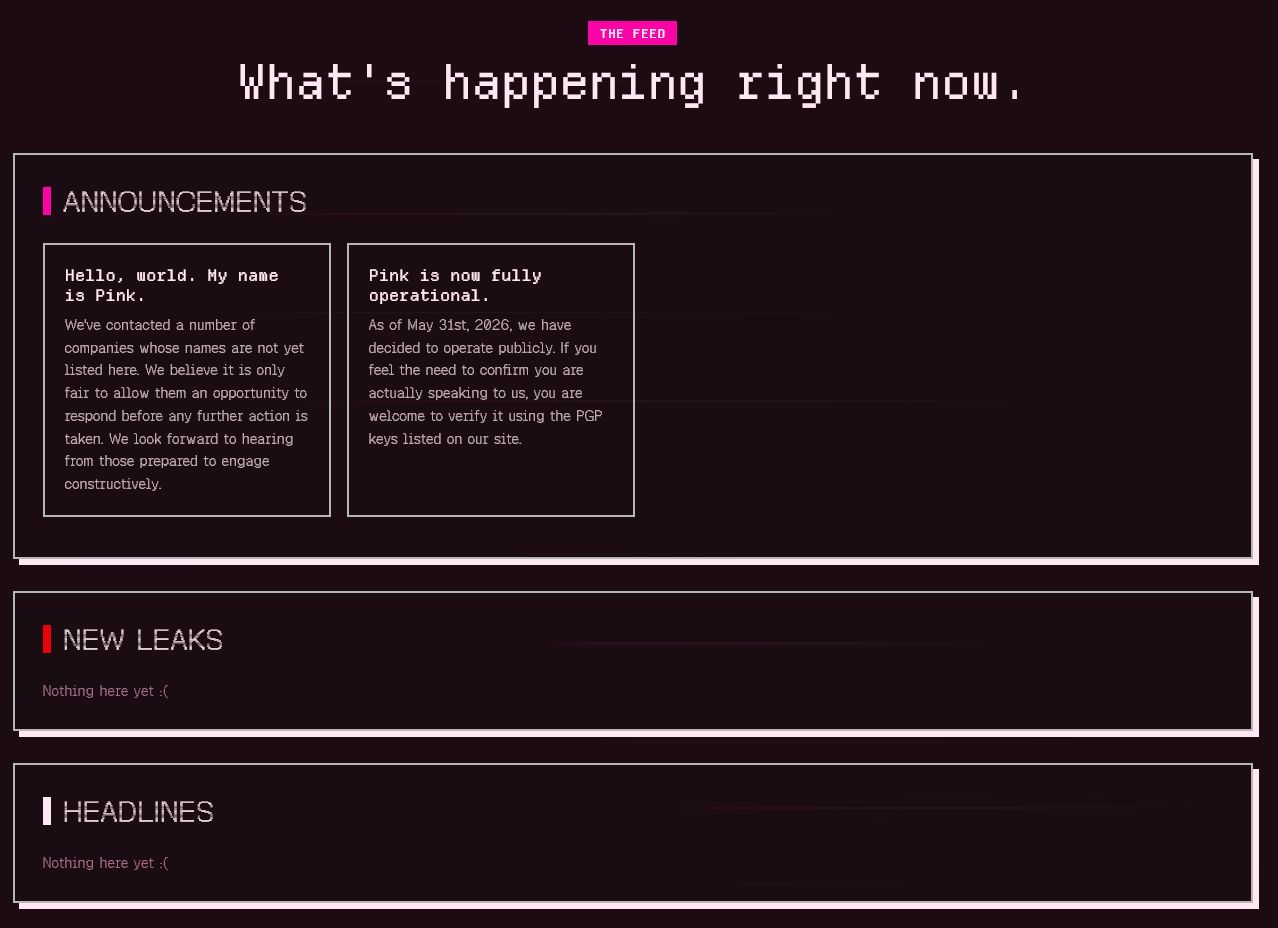
Security analysts at Unit 42 recently exposed an extortion syndicate designated as Pink. This threat collective is systematically monitored under the taxonomy CL-CRI-1147. According to forensic telemetry, the adversaries weaponize voice phishing to secure initial ingress into enterprise networks. Following a successful breach, they rapidly exfiltrate proprietary data and transition to aggressive blackmail.
Concurrently, Google Threat Intelligence suggests that Pink represents a tactical rebranding rather than a novel adversarial entity. The enterprise theorizes a chronological lineage. Specifically, following the dissolution of the BlackFile brand in May 2026, the actors established Redact. Shortly thereafter, the syndicate materialized under the Pink moniker.
Google firmly links this malicious activity to the threat actor cluster UNC6671. Analysts highlight overlapping infrastructural footprints designed for credential harvesting. Furthermore, they observe a matching leak portal topology. The adversaries also deploy repetitive messaging, ironically claiming to enhance organizational security postures once victims fulfill extortion demands.
The Inception of the Leak Portal
Internal indicators suggest that the Pink data leak portal became operational on May 31, 2026. Within mere days, the profiles of alleged victims populated the repository. Interestingly, the collective explicitly denies any structural affiliation with historical cyber-crime syndicates.
Unit 42 associates the Pink collective with the broader “Com” cyber-criminal ecosystem. This decentralized underworld encompasses disparate threat groups specializing in sophisticated social engineering, account hijacking, and aggressive monetization. Methodologically, this emergent activity closely mirrors historical operations executed by Bling Libra, famously known as ShinyHunters. Similarly, it mirrors the CL-CRI-1116 cluster tied to BlackFile and Redact.
Execution Vectors and Network Exfiltration
Bypassing Authentication Layers
The standard execution vector begins with an adversarial voice call. The operator masquerades as an internal helpdesk technician. Consequently, they persuade the target to input sensitive tokens into a fraudulent domain. The criminals then hijack the corporate profile, successfully bypassing multi-factor authentication barriers.
Upon securing ingress, Pink rapidly queries and exfiltrates intelligence from corporate cloud repositories, operational environments, and databases. The targeted architectures include prominent platforms such as SharePoint and OneDrive. Subsequently, the adversaries weaponize the hijacked account to broadcast extortion demands. They distribute these notes directly via email and internal Microsoft Teams channels.
Ultimata and Network Constraints
- The 72-Hour Window: In a specific case documented by Unit 42, protracted silence stalled a previous extortion dialogue. On June 1, 2026, the adversary re-established contact using a complimentary email service. The handler provided a new qTox identifier alongside a hyperlink to the Pink leak portal. Crucially, the actor referenced the exact data inventory harvested during the initial breach. The syndicate imposed a strict seventy-two-hour ultimatum to force rapid financial compliance.
- Domain Architecture: Architecturally, Pink continuously recycles second-level domains across disparate corporate victims. Conversely, they customize third-level subdomains to mirror specific target organizations precisely. Unit 42 reports that the adversaries host these malicious phishing assets utilizing the infrastructure of DDoS-Guard.
Confirmed malicious domains include passkeyadd[.]com, passkeydeploy[.]com, and deploypasskey[.]com. Investigators also cataloged specific network IP addresses tied to landing page hosting, account compromise, and ransom note delivery. During the active exfiltration phase, network logs exposed explicit user-agent strings. Specifically, they detected Microsoft.Graph.Client/5.62.0, python-requests/2.28.1, and python-requests/2.33.1.
Defensive Recommendations for Enterprise Perimeters
Consequently, corporate network defenders must rigorously scrutinize inbound support communications. Security teams must validate inquiries from individuals claiming account lockouts. Similarly, they must verify internal IT dispatches demanding urgent multi-factor authentication updates. Vigilance regarding workspace access confirmations remains paramount to preventing catastrophic social engineering incursions.
Support Our Threat Intelligence
If you find our technology report and cybersecurity news helpful, consider supporting our work.
 Buy Me a Coffee
PayPal
Buy Me a Coffee
PayPal


