Parrot OS 7.3 Released with Enhanced Performance and Optimized Architecture
When an ecosystem boasts a mature and comprehensive array of utilities, the most profound advancements often stem not from the introduction of novel tools, but rather from the acceleration and streamlining of existing operational workflows. Embracing this philosophy, the latest iteration of the security-centric Linux distribution, Parrot 7.3, focuses squarely on execution performance, a meticulously overhauled desktop menu, and significantly condensed installation images.
Architecture-Specific Performance Optimizations
The developers have thoroughly re-engineered both the Home and Security editions, introducing a dedicated repository stocked with packages explicitly optimized for modern processor architectures. On compatible hardware, computationally intensive tasks exhibit a remarkable performance velocity increase ranging from 20% to 50%. These accelerated builds primarily target shared libraries, language runtimes, and resource-heavy applications such as FFmpeg, Inkscape, and NumPy. Conversely, critical network services and command-line shells preserve their legacy architectural baselines to ensure unwavering backward compatibility.
Crucially, these optimized packages are deployed solely at the explicit discretion of the user. During the installation phase, the system cross-references the underlying CPU capabilities and restrains the downloading of incompatible variants. Routine security patches maintain absolute operational priority, while the isolated repository effectively mitigates any potential compilation conflicts between divergent builds.
Streamlined Desktop Experience and Menu Orchestration
The most palpable enhancements manifest within the desktop environment’s application management paradigm. Parrot has supplanted its legacy shell scripts with two compact, lightweight binaries written in Go, which efficiently govern application execution, request administrative privileges, and update desktop shortcuts. Consequently, all accessible utilities are now elegantly aggregated within a singular, intuitive menu interface, empowering users to install missing components with a solitary click.
Vagrant Integration and Environment Replication
To facilitate predictable and repeatable laboratory configurations, the official Parrot OS 7.3 release notes highlight the inclusion of factory-sanctioned Vagrant boxes for the Home and Security editions on amd64 architectures. These configurations allow security professionals to rapidly provision uniform, pristine environments for pedagogical instruction, rigorous testing, and seamless collaborative engineering. Furthermore, the development team has judiciously pruned pre-installed software bundles, thereby reducing the overhead of deployment images.
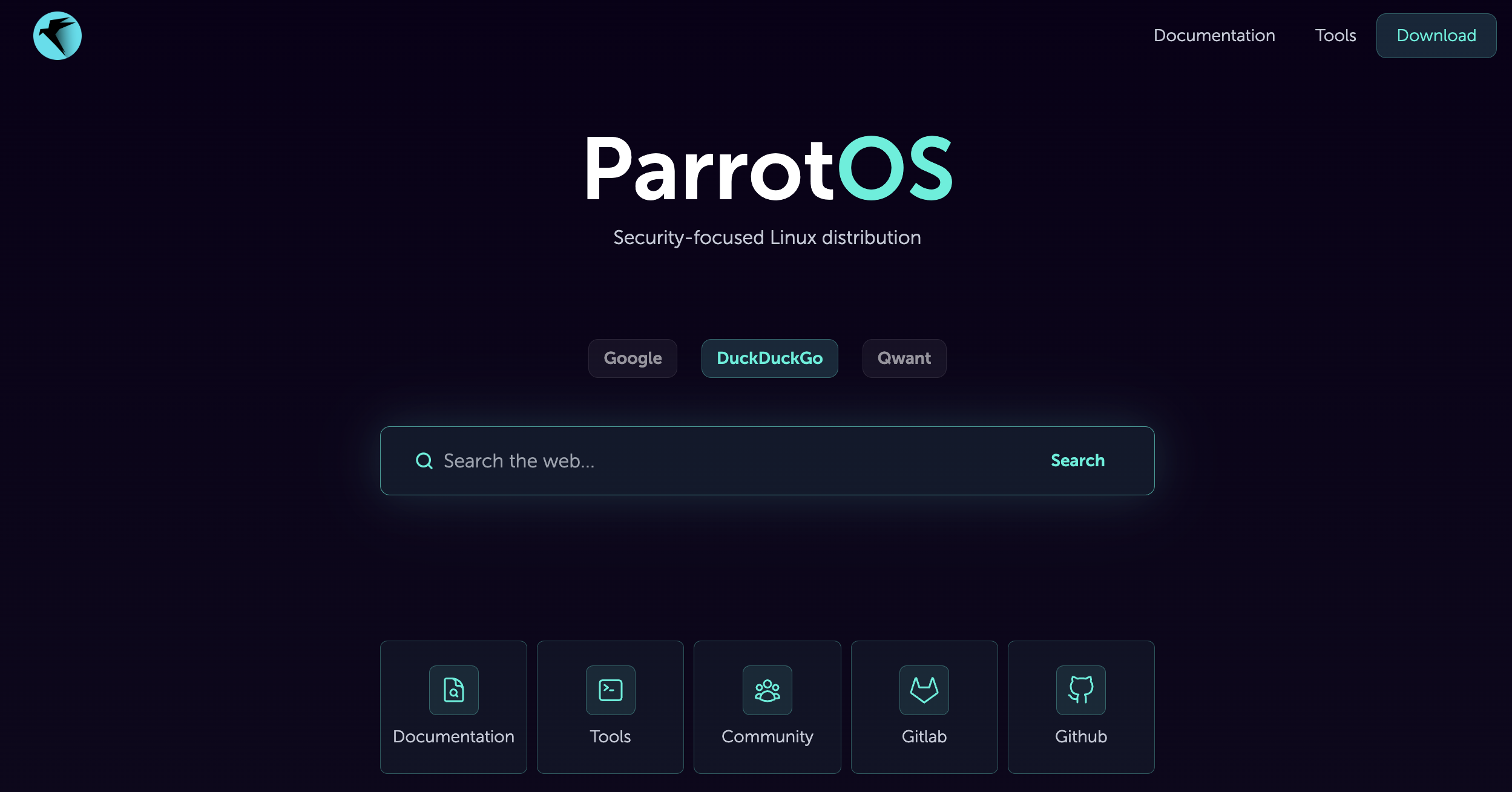
Within the browser ecosystem, Firefox introduces an unblemished landing page featuring privacy-respecting search integrations via DuckDuckGo, Qwant, and Google, alongside direct channels to official documentation and recent security publications. True to the project’s foundational ethos, this portal strictly eschews telemetry and data harvesting. Under the hood, this milestone release upgrades the Linux kernel to version 7.0.9 and incorporates the latest revisions of core security frameworks, including Metasploit, Ghidra, sqlmap, and bettercap.
Support Our Threat Intelligence
If you find our technology report and cybersecurity news helpful, consider supporting our work.
 Buy Me a Coffee
PayPal
Buy Me a Coffee
PayPal


