The Digital Disappearance: Sovereign Laundering Erases the Kelp DAO Trail
The Velocity of Capital Exfiltration
The elite perpetrator behind one of the year’s most catastrophic cryptocurrency exploits successfully obscured the trail of stolen capital. Specifically, the adversary laundered hundreds of millions of dollars within mere weeks following the Kelp DAO network intrusion. This rapid asset movement drastically diminishes any realistic prospects for financial recovery.
Quantifying the Bleeding
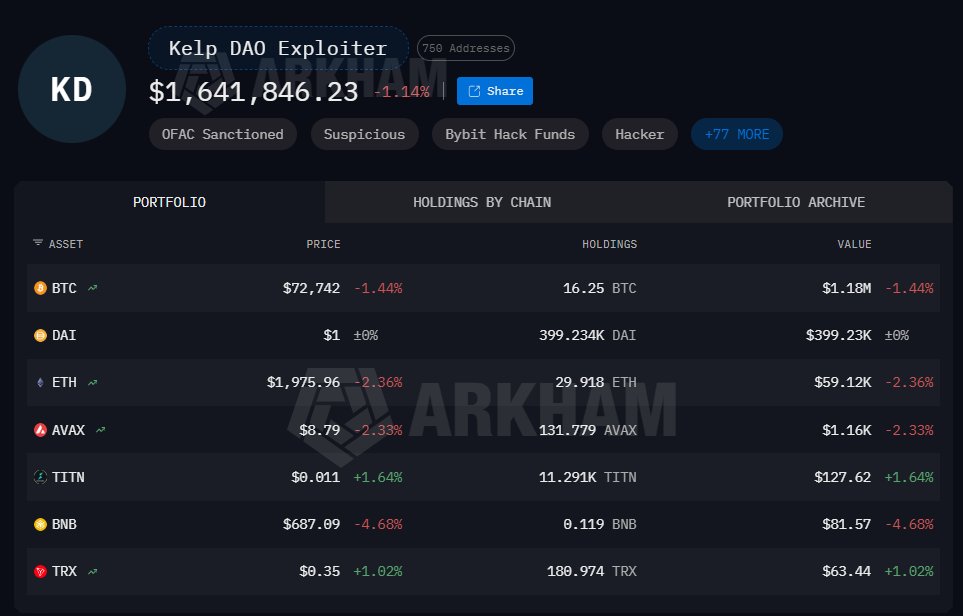
According to cryptographic telemetry from Arkham and peer blockchain analysts, the malicious actor successfully processed approximately 220 million dollars. Conversely, the Arbitrum Security Council managed to freeze 71 million dollars before the perpetrator could access it. Presently, a meager 1.7 million dollars remains traceable within the primary exploit wallet.
The original Kelp DAO breach materialized on April 18. During the exploit, the adversary exfiltrated 116.5 thousand rsETH tokens, yielding a staggering 293 million dollar deficit. Consequently, this single event heavily inflated the aggregate asset theft statistics for April.
The Architecture of Obfuscation
A pseudonymous blockchain analyst known as Specter revealed that the laundering operation spanned multiple distinct phases. First, the threat actor routed the illicit digital assets into the Bitcoin network using the Wasabi mixing protocol. Subsequently, the funds migrated back into the Ethereum ecosystem.
Finally, the operator funneled the assets through Tornado Cash to thoroughly erase their origin. Therefore, this multi-layered routing structure creates immense friction for investigators tracking the flow of funds.
Judicial Arbitration and Recovery Pipelines
Its ultimate disposition of the frozen 71 million dollars remains a subject of intense legal dispute. Previously, a United States judiciary body and project governance operators approved transferring the assets to an Aave-controlled multi-signature wallet. This arrangement aims to systematically remediate the losses endured by rsETH stakeholders. Consequently, a New York tribunal will convene in the coming days to formally arbitrate the ownership rights.
Remediating Token Liquidity
Concurrently, Kelp DAO announced the successful conclusion of its intensive five-week restoration program last week. The development collective restored full functionality to the rsETH token architecture. This milestone followed the integration of the final asset tranche into the cross-chain LayerZero infrastructure.
Industry-Wide Realignment and Protocol Friction
Undeniably, global cryptocurrency losses experienced a sharp contraction during May. According to data from CertiK, losses plunged to 68.3 million dollars compared to the massive deficits of the previous month. Nevertheless, structural anxieties regarding decentralized finance security remain high.
Therefore, several prominent projects are aggressively auditing their cross-chain operational security. Specifically, Solv Protocol, Tydro, and Kelp DAO chose to abandon legacy configurations. These organizations are migrating their infrastructure to Chainlink’s Cross-Chain Interoperability Protocol (CCIP).
Infrastructure Asymmetries Disclosed
Conversely, LayerZero clarified back in April that the underlying protocol did not suffer from any architectural flaws. Instead, engineers attributed the exploit entirely to severe configuration errors within Kelp DAO’s own deployment. Crucially, the developers noted that the project relied on a solitary verification pathway. They maintained this configuration despite explicit warnings regarding the inherent risks of such a centralized framework.
Support Our Threat Intelligence
If you find our technology report and cybersecurity news helpful, consider supporting our work.
 Buy Me a Coffee
PayPal
Buy Me a Coffee
PayPal


