iOS 27 Introduces Impersonation Risk Detection
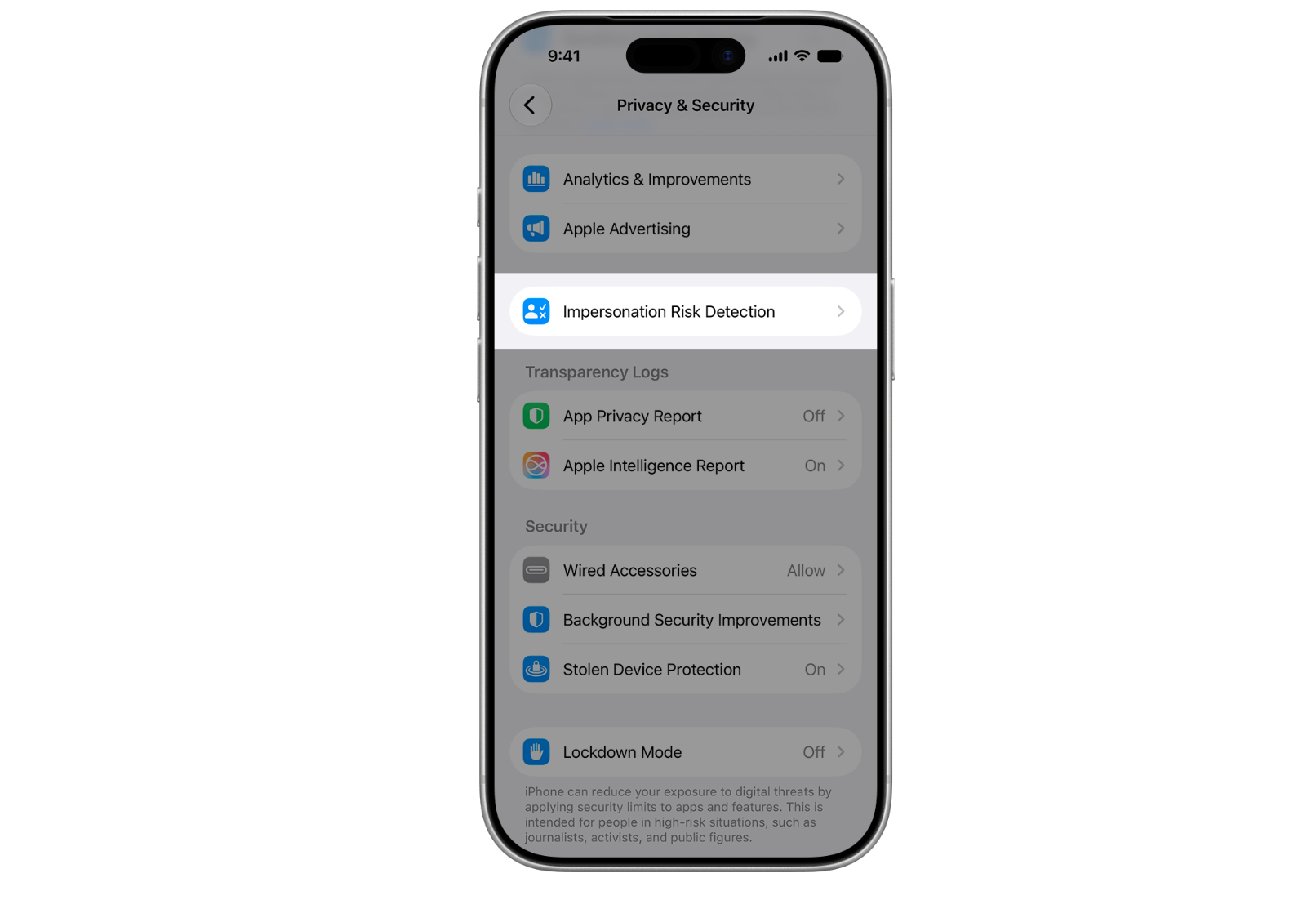
The iPhone has acquired a formidable defense against attacks that circumvent traditional device compromise: iOS 27 now intelligently detects subtle indicators that a legitimate owner is being actively coerced into transferring funds, altering passwords, or executing other high-risk actions. Apple recently detailed the Impersonation Risk Detection feature, a sophisticated mechanism engineered to thwart active social engineering schemes.
This novel safeguard fortifies a glaring vulnerability within conventional authentication paradigms. While Face ID, complex passcodes, and two-factor verification successfully confirm the owner’s identity, they remain fundamentally incapable of determining whether the individual is acting under duress or manipulation. A cunning fraudster might masquerade as a banking official, a government representative, or a trusted acquaintance, dictating specific actions over the telephone that the victim unwittingly executes on their personal device with seemingly flawless authorization.
The Trust Insights Framework Architecture
The Impersonation Risk Detection system operates through the innovative Trust Insights framework. Any supported third-party application can solicit a real-time risk assessment during sensitive operations, such as preceding a financial transaction, an account login, or a critical security parameter modification. The system subsequently returns one of three distinct threat levels: Unknown, Medium, or High. It is crucial to note that the former merely signifies an absence of detected deceptive markers, rather than a definitive guarantee of operational security.
To formulate this assessment, the iPhone meticulously analyzes the behavioral context, the precise timing of actions, and foundational sensor data. Apple specifically highlights critical signals such as active screen broadcasting sessions and the approximate volume of recently received or transmitted calls and correspondence. Furthermore, it evaluates the overarching activity of the Apple Account, incorporating recent application downloads and content purchases.
Importantly, the contents of Photos, Messages, and Mail remain entirely exempt from this analytical scrutiny. The raw data invariably remains localized on the device, transmitting only the finalized risk evaluation externally. Apple may synthesize this with supplementary Apple Account signals before delivering the ultimate risk tier to the soliciting application. The developer never receives the call history, correspondence, screen broadcasting status, or any other granular data upon which the model constructed its deduction. For further technical specifications, you can review how Apple details the Trust Insights framework architecture.
Developer Integration and Privacy Safeguards
The application independently determines the appropriate response to a Medium or High alert. A developer might opt to display a prominent warning, demand supplementary identity verification, intentionally prolong the operational delay, relegate the action for manual review, or integrate the result into their proprietary anti-fraud architecture. However, Apple strongly advises against utilizing the Trust Insights evaluation as the sole justification for automatic, unilateral account suspension.
During WWDC26, the corporation demonstrated that Trust Insights extends far beyond mere financial transactions. The versatile framework flawlessly monitors account manipulations, the transmission of messages and sensitive documents, authorization granting, and interactions with premium computational resources, including artificial intelligence. Solicitating this assessment requires an active internet connection and may consume several seconds to finalize.
The architecture intrinsically restricts the volume of information transmitted back to Apple itself. The corporation merely ascertains the broad category of the action, such as an authentication attempt or a payment authorization, without ever receiving the operation’s specific contents. In strict accordance with its privacy policy, Apple remains entirely oblivious to which specific application initiated the assessment request. Within the system settings, the user can transparently review recent queries and selectively revoke access for individual applications.
Combating the Evolution of Social Engineering
This formidable defense necessitates active integration by the application developer; therefore, merely installing iOS 27 does not magically transform Impersonation Risk Detection into a universal, omnipresent fraud filter. Furthermore, the user must explicitly authorize the transmission of signals to applications within the Privacy and Security configuration. Any modification to these overarching permissions or individual application access may require up to 24 hours to take effect, a deliberate safeguard that prevents a malicious actor from hastily disabling the mechanism during an active coercive conversation.
This revolutionary approach emerges amidst the escalating complexity of modern social engineering. Throughout 2026, fraudsters have increasingly orchestrated multi-stage schemes centered around phone calls, compromised messages from acquaintances, counterfeit support personnel, and highly persuasive AI deepfakes. Ultimately, Trust Insights strives not to unmask the counterfeit identity of the interlocutor, but rather to analyze the behavioral cadence of the device owner at the precise moment when psychological persuasion morphs into tangible, dangerous action.
Support Our Threat Intelligence
If you find our technology report and cybersecurity news helpful, consider supporting our work.
 Buy Me a Coffee
PayPal
Buy Me a Coffee
PayPal


