Debian 13.6 Released: Crucial Security and UEFI Fixes
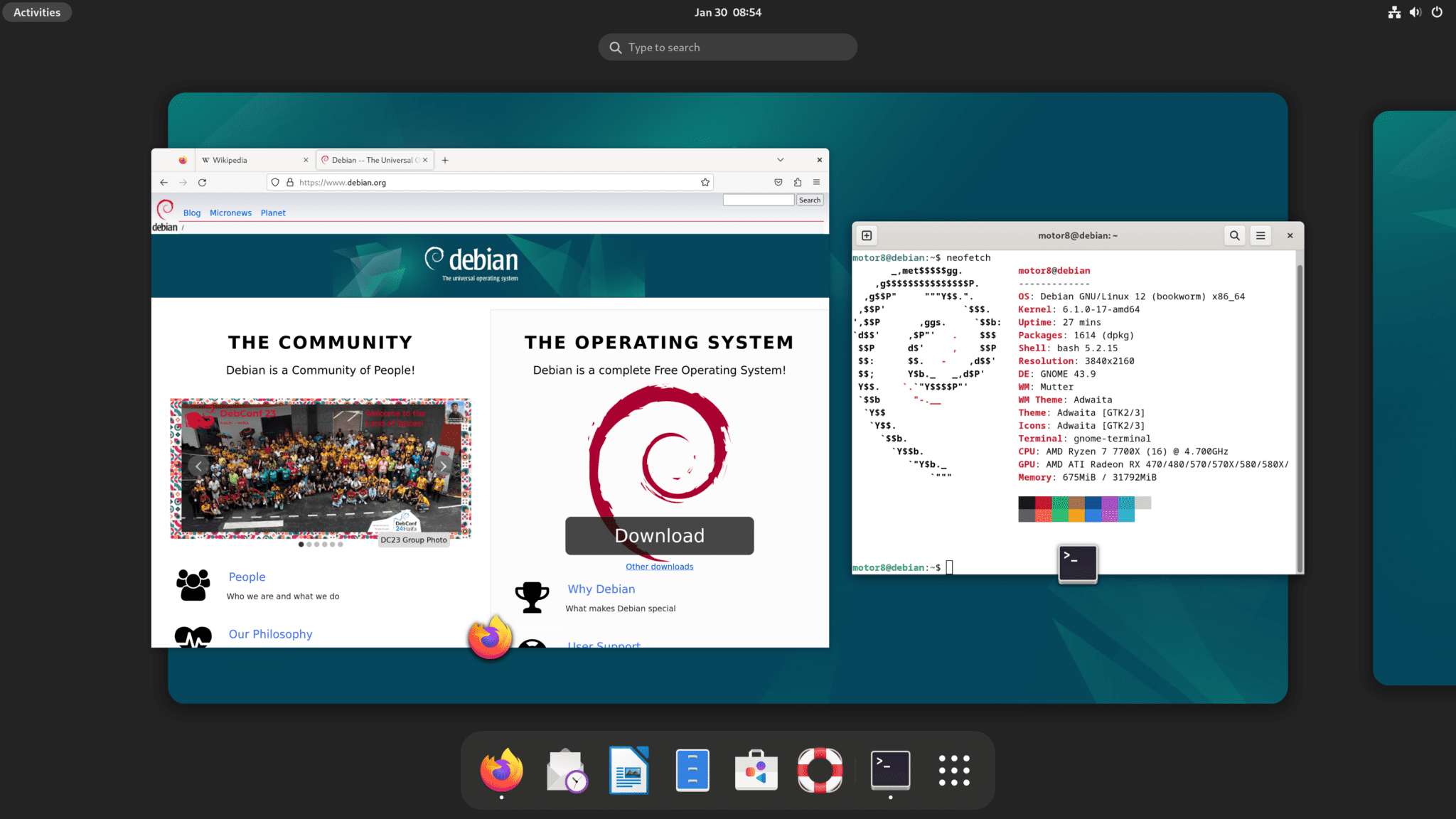
Predictability and Stability Refined
A stable distribution is cherished above all for its unwavering predictability. Debian 13.6 reinforces this virtue beautifully. It introduces a substantial array of remedies for the Linux kernel, server software, and virtualization facilities. On July 11, 2026, the Debian Project unveiled the sixth point release of Debian 13 “trixie”. Yet, this release did not arrive entirely without its share of surprises.
The Purpose of Debian 13.6
Debian 13.6 is not regarded as a novel iteration of the operating system. Rather, the release aggregates previously disseminated security updates. It also resolves critical anomalies and offers pristine installation media. Existing systems can be seamlessly upgraded via the conventional APT package manager.
Pivotal UEFI Secure Boot Alterations
One of the most pivotal alterations concerns UEFI Secure Boot. The fwupd utility has been elevated to version 2.0.20. This empowers systems to install updated certificates and certificate revocation lists directly via the firmware. The certificate heavily integrated by hardware manufacturers since 2013 has expired. Absent a firmware update, future bootloaders bearing the new signature may fail to initialize on hardware with Secure Boot active.
Fortifying Core Services and Virtualization
Furthermore, this release addresses severe vulnerabilities in the Apache HTTP Server. It successfully corrects issues such as memory corruption, arbitrary file reads, cross-site scripting (XSS), and denial-of-service (DoS) exploits. Similarly, Curl has been fortified to prevent the unauthorized exposure of credentials, tokens, and stale cookies during redirections and specific network operations. QEMU was likewise updated to a stable revision, introducing crucial corrections for virtual environments.
Broad Security Patches and the GeoIP Reversion
Key security enhancements encompass the Linux kernel, OpenSSL, Chromium, Firefox ESR, Nginx, Redis, PostgreSQL 17, Thunderbird, Wireshark, Python 3.13, and various other packages. Intriguingly, Debian has reverted its GeoIP database to its December 2019 state due to licensing restrictions on newer GeoLite iterations. Consequently, system administrators seeking real-time geolocation mapping must acquire data directly under a GeoLite license.
Immediate Recommendations for Administrators
Administrators are urged to transition their systems to Debian 13.6. You should run the traditional commands apt update and apt upgrade. On systems utilizing Secure Boot, it is highly recommended to proactively install manufacturer-provided CA, KEK, and DBX updates. Doing so will successfully avert boot failures following the certificate transition.
Support Our Threat Intelligence
If you find our technology report and cybersecurity news helpful, consider supporting our work.
 Buy Me a Coffee
PayPal
Buy Me a Coffee
PayPal


