The Automated Vulnerability Surge: AI Diagnostics and the Remediation Bottleneck
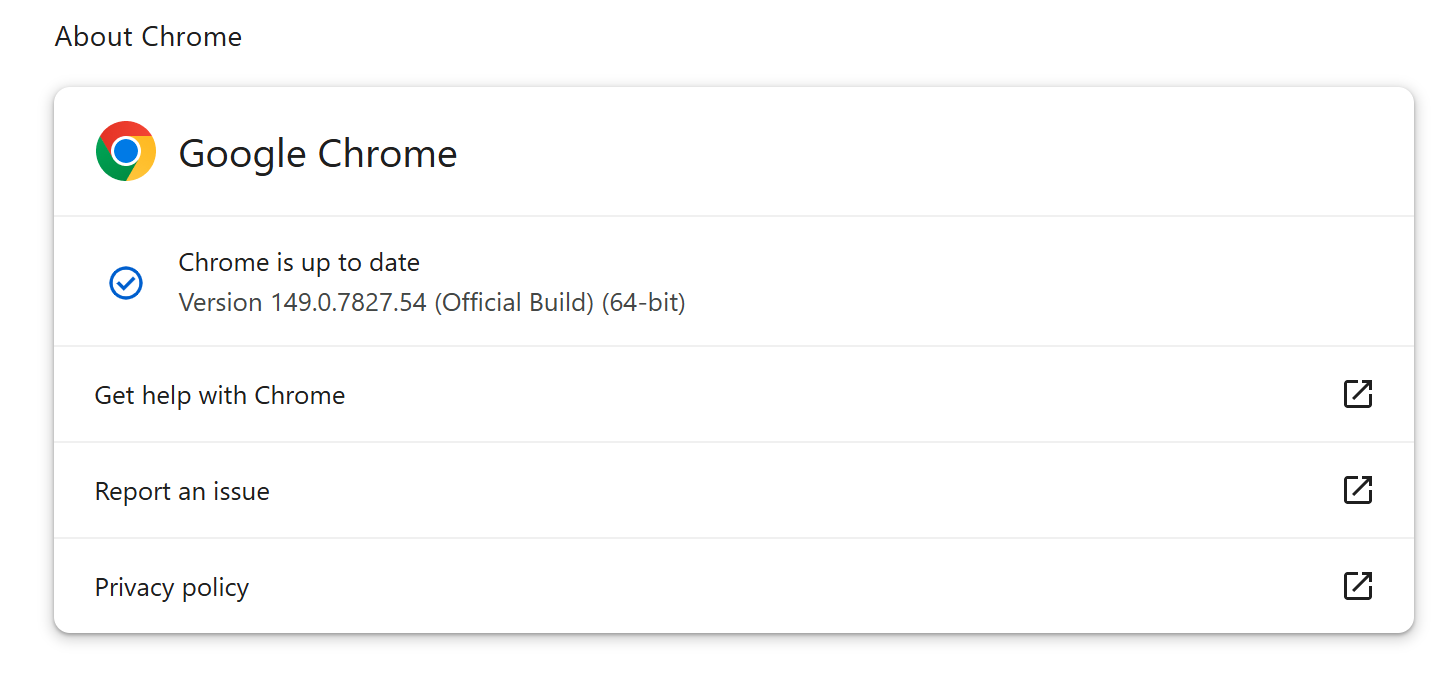
Artificial intelligence agents excel at identifying legacy software vulnerabilities rapidly and economically. However, the subsequent remediation lifecycle still demands arduous human intervention. Maintainers must manually validate findings, replicate system failures, and author code patches. Furthermore, distributing these updates across production networks requires significant time. Two recent developments vividly illustrate this systemic friction. Specifically, an autonomous agent discovered twenty-one zero-day defects within FFmpeg. Concurrently, Google deployed Chrome 149, introducing a record-breaking 429 security hotfixes.
The Ubiquity of the Multimedia Vulnerability Surface
Understanding the Scale of FFmpeg
FFmpeg warrants meticulous scrutiny due to its ubiquitous global distribution. Indeed, this multimedia framework underpins countless software suites and physical devices. These platforms routinely ingest, slice, transcode, or render video streams. Moreover, enterprise media services, container images, Python packages, and embedded firmware all rely on this library. Consequently, an unpatched defect can linger silently for decades. It spreads relentlessly across nested dependencies, downstream builds, and hardware architectures.
The Compute Metrics of the Incursion
Autonomous agents engineered by depthfirst spearheaded this specific vulnerability hunt. Specifically, the automated engine audited approximately 1.5 million lines of legacy C source code. Ultimately, it unmasked twenty-one verified zero-day exposures. Additionally, researchers provided a reproducible exploit primitive for each vulnerability. These test streams ensure engineers can trigger the flaw reliably. Remarkably, depthfirst estimates the entire analytical compute run cost a mere 1,000 dollars.
The Failure of Traditional Auditing
Shockingly, several defects survived within the codebase for up to two decades. For instance, a critical stack overflow within the service description table logic originated in 2003. This flaw evaded detection for twenty-three years. Therefore, this revelation exposes a troubling reality for the open-source community. Despite continuous fuzzing and standard static analysis, dangerous vulnerabilities eluded modern security checkers.
Deconstructing the Discovered Exploits
Memory Corruption Patterns
Most of these newly uncovered defects involve classic memory corruption. Specifically, the software triggers heap or stack overflows when processing malformed inputs. As a result, the application executes read or write operations beyond allocated memory boundaries. This vulnerable inventory includes format parsers, demuxers, and decoders. Notably, the TS demuxer and the VP9 decoder suffer from these precise flaws.
Categorization and Proof-of-Concept Distribution
Several flaws already possess official CVE tracking designations. In fact, investigators published nine identifiers, spanning from CVE-2026-39210 to CVE-2026-39218. Meanwhile, engineers mitigated the remaining bugs within the source repository. These fixes currently await formal administrative numbering. To assist defenders, depthfirst distributed a diagnostic proof-of-concept repository to allow organizations to audit their installations.
Google Chrome’s Unprecedented Security Patching
Volumetric Record Breaking
Simultaneously, Google distributed Chrome version 149 to the global ecosystem. This monolithic update introduced 429 security patches, marking an unprecedented single-release volume for the browser. Furthermore, over one hundred vulnerabilities carried critical or high-severity risk ratings. The most frequent error classes included use-after-free anomalies and input validation failures.
Sandbox Escapes and Financial Bounties
The most perilous defect within this release bears the identifier CVE-2026-10881. Crucially, this flaw maintains an alarming CVSS score of 9.6. It directly compromises ANGLE, the foundational graphics layer powering Chrome across diverse platforms. Consequently, a malicious webpage can execute arbitrary read-and-write operations outside permitted boundaries. Successful exploitation allows adversaries to escape the browser sandbox entirely. Thus, attackers execute commands with full operating system privileges, earning the discovering researcher a 97,000-dollar bounty.
The Reality of Internal Identification
However, observers should not attribute this massive patch volume solely to third-party machine learning tools. Google’s internal defensive teams discovered a vast majority of these high-severity flaws. For example, outside researchers contributed only ten of ninety high-severity bugs. Similarly, internal specialists uncovered nineteen of the twenty-two critical exposures. Instead, artificial intelligence alters the defensive landscape by expanding triage capabilities, allowing teams to process standardized findings rapidly.
Redefining the Parameters of Bug Reporting
Restructuring Bounty Submissions
Consequently, Google modified its vulnerability reward criteria for Android and Chrome this spring. This policy update followed an unprecedented influx of AI-generated bug reports. The corporation now demands concise, actionable proof-of-concept exploits over lengthy narrative descriptions. Generative models easily author pages of persuasive prose. Yet, engineering teams require precise, reproducible primitives to act efficiently. They need the exact file, script, or command that triggers the code failure immediately.
Historical Precedents in Automated Auditing
Significantly, FFmpeg frequently serves as a testbed for automated bug hunting. Last year, Google’s Big Sleep agent exposed multiple defects within the codebase. Several of these entries now populate the official FFmpeg advisory page under the BIGSLEEP hallmark. Furthermore, Anthropic’s Mythos model unmasked a sixteen-year-old flaw within H.264 decoding logic. According to Anthropic, multiple bugs discovered by Mythos achieved integration into the FFmpeg 8.1 branch.
Beyond Multimedia: The Linux Kernel Experiments
This paradigm extends far beyond multimedia codebases. For instance, an autonomous agent recently identified a remote code execution vulnerability within Redis. This authenticated flaw emerged in version 7.2.0 and escaped human detection for over two years. Additionally, a parallel study revealed that AI agents successfully generated functional exploits for over half of one hundred real Linux kernel flaws, completely outperforming traditional fuzzing tools.
As illustrated, conventional fuzzing bombards an application with random, malformed input streams. This methodology effectively exposes crashes, hangs, and basic parsing anomalies. Nevertheless, complex logic defects demand a deep structural understanding of the application architecture. Automated tools must comprehend interconnected code paths and specific input layouts. Therefore, modern AI utilities attempt to parse entire source repositories to generate viable crash hypotheses and functional test primitives.
Defensive Action Items and Remediation Guidance
Mandatory FFmpeg Infrastructure Auditing
Therefore, FFmpeg operators must secure updated builds from the main repository branch immediately. Alternatively, users should ingest downstream security updates from their respective operating system distributors. Organizations handling untrusted RTSP streams or AV1 payloads over RTP must prioritize this remediation. Crucially, standard system package audits are insufficient. FFmpeg remains heavily concealed inside application containers, Python wheels, and hardware firmware.
Executing Chrome Update Sequences
Similarly, users should update their Chrome installations without delay. For Linux environments, the validated safe deployment is version 149.0.7827.53. Meanwhile, Windows and macOS architectures require versions 149.0.7827.53 or 149.0.7827.54. If automatic updates are active, verify the installation by restarting the browser application.
The Human Cost of Automated Discoveries
Ultimately, automated analysis has driven down the financial cost of vulnerability discovery. However, the manual labor of remediation remains incredibly expensive. Engineers must still interpret reports, replicate anomalies, isolate root causes, and author patches. Furthermore, teams must run regressions, distribute binaries, and recompile containerized dependencies. This immense administrative burden falls heavily on a small group of open-source maintainers. These individuals must now manually process an overwhelming volume of machine-generated findings.
Legacy patching cadences cannot sustain this massive influx of data. Therefore, organizations can no longer defer dependency remediation. Compressed patch lifecycles, automated updates, and rapid component compilation now form the baseline of modern cyber defense. In short, an adversary can deploy a machine for 1,000 dollars to harvest dozens of latent exploits from ubiquitous, overlooked libraries.
Support Our Threat Intelligence
If you find our technology report and cybersecurity news helpful, consider supporting our work.
 Buy Me a Coffee
PayPal
Buy Me a Coffee
PayPal


