Critical ACFE Privilege Escalation Flaw Sparks Urgent WordPress Patch
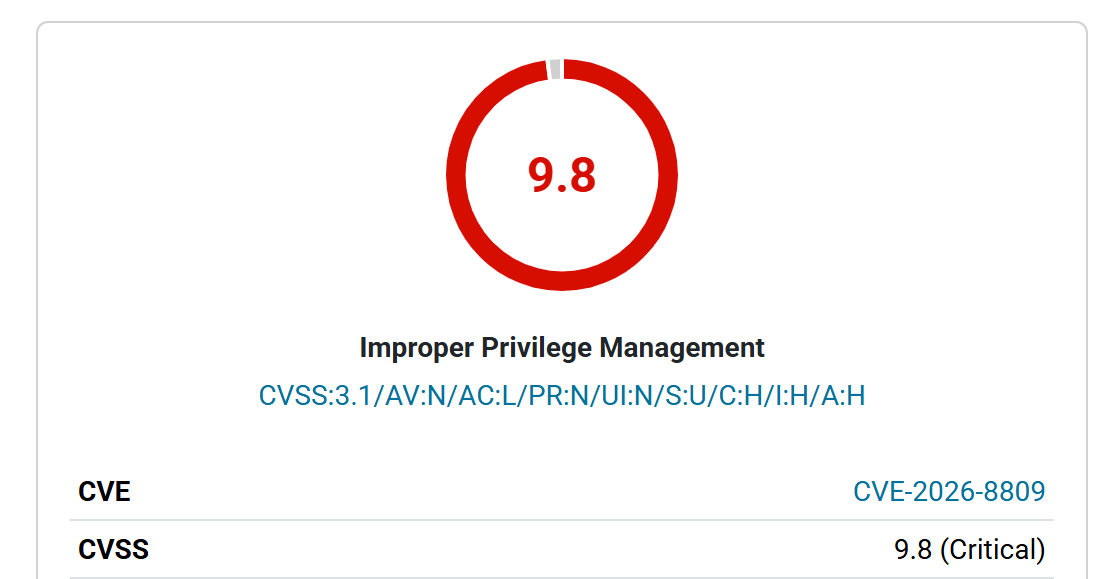
Security researchers recently discovered a severe vulnerability in a popular WordPress optimization tool. Specifically, investigators identified a critical ACFE privilege escalation flaw tracked as CVE-2026-8809. The security defect impacts Advanced Custom Fields: Extended, an all-in-one enhancement suite for website administrators. This utility provides a powerful administration framework with a wide range of optimization improvements. Because the extension has over 100,000 active installations, thousands of websites face immediate exposure. Consequently, site owners must install the latest updates to block an unauthorized WordPress admin account creation exploit.
The Validation Bypass Mechanism
The underlying flaw stems from improper input validation within the core form processing code. Specifically, the vulnerability exists inside the after_validate_save_post() function. During form submissions, this component unconditionally trusts the attacker-controlled _acf_post_id POST parameter. Furthermore, the application fails to perform any identity checks or integrity verifications on this value. Therefore, an unauthenticated user can manipulate the parameter to select a cleanup branch. This specific execution pathway silently discards validation errors unless they are prefixed with acfe:.
Suppressing Security Capability Guards
Disabling the Allow-List Protection
As a result of this error, an attacker can suppress the built-in system defenses. For instance, the script bypasses the role allow-list verification error added by acfe_field_user_roles::validate_front_value(). Additionally, the exploit bypasses the administrator-role capability guard error added by acfe_module_form_action_user::validate_action().
Bypassing User Insertion Restrictions
Consequently, the internal wp_insert_user() function executes without any safety boundaries. The system then processes the request using an attacker-supplied administrator role argument. This automated sequence results in the creation of a new administrator-level user account. Ultimately, this ACFE privilege escalation flaw grants the attacker absolute dominance over the compromised WordPress network.
Target Conditions and Remediation Guidelines
However, an attacker cannot target every website running the extension. New exploitation requires a public ACFE frontend form configured with a Create User action mapping a role field. If your website matches these conditions, you must take defensive actions immediately.
To secure your platform, follow these vital steps:
- Apply the Patch: Upgrade your system to patched version 0.9.2.6 right away.
- Audit Active Forms: Review all public frontend forms to ensure role mapping configurations are secure.
Fortunately, the developers released this secure update to address the dangerous defect. Enforcing this quick patch cycle completely neutralizes the validation bypass vector.
Support Our Threat Intelligence
If you find our technology report and cybersecurity news helpful, consider supporting our work.
 Buy Me a Coffee
PayPal
Buy Me a Coffee
PayPal


