Windows 11 Secure Boot: 2026 Expiration Warning
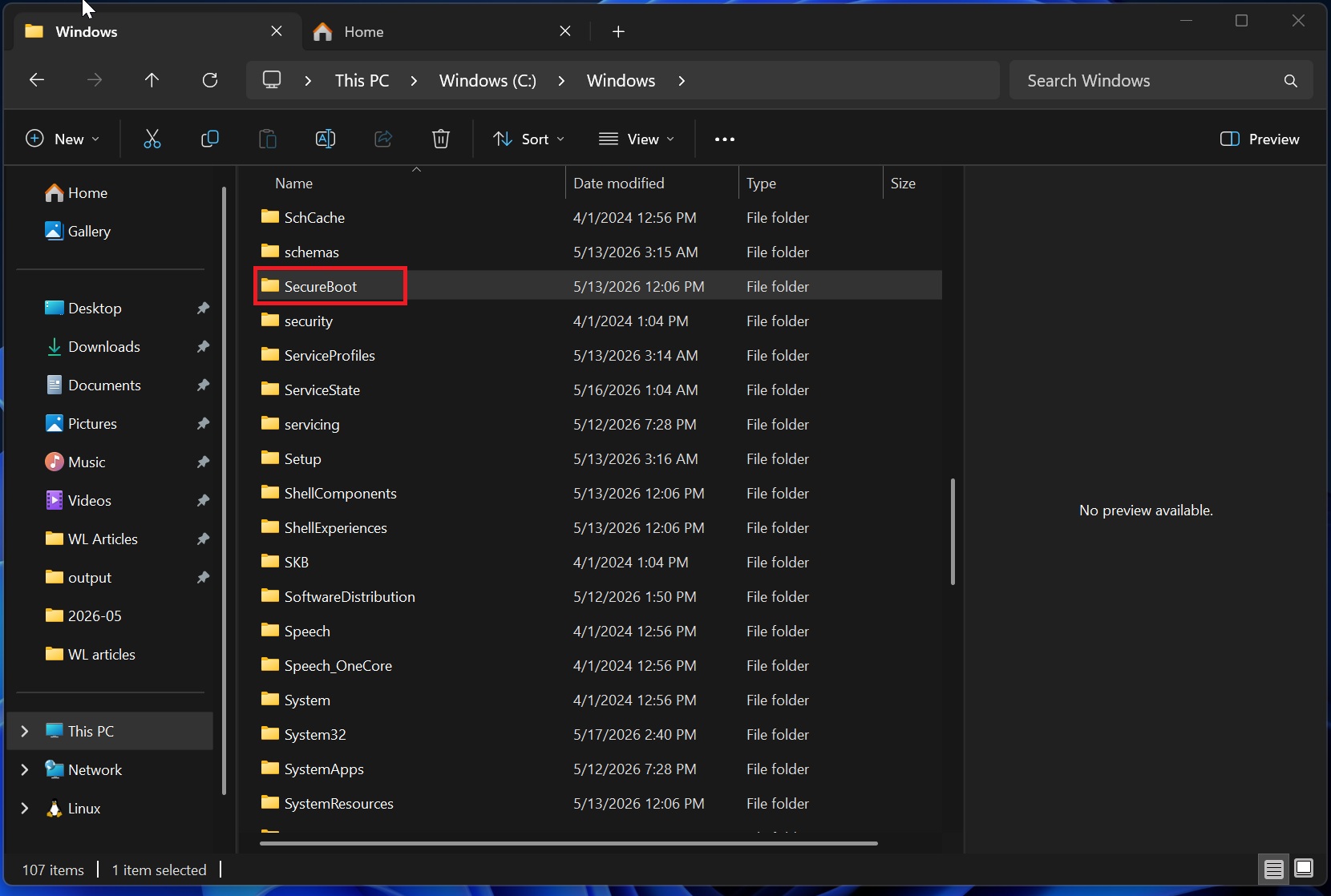
Microsoft has issued a cautionary directive to proprietors of Windows 11 ecosystems: failure to transition computational hardware to the modernized Secure Boot cryptographic certificates prior to June 2026 will not precipitate catastrophic boot failures; however, it will induce a gradual, systemic degradation of critical defensive architectures designed to repel pre-boot malware vectors. To elucidate the technical nuances of this transition, Microsoft recently convened a comprehensive inquiry and response seminar, which was subsequently chronicled by the publication Windows Latest.
The underlying architectural concern centers on the Secure Boot protocol. This foundational mechanism authenticates the cryptographic integrity of executables initializing concurrently with the hardware. Because this validation sequence executes prior to the instantiation of the Windows kernel, Secure Boot is instrumental in neutralizing insidious bootkit malware constructs, such as the notorious BlackLotus.
The ancestral Secure Boot cryptographic certificates, which have safeguarded Windows architectures since 2011, are scheduled to expire unequivocally in June 2026. For several years, Microsoft has been systematically orchestrating the migration of endpoints to the modernized 2023 certificate hierarchy. The enterprise detailed the operational mechanics of this architectural shift during the recent engineering seminar.
The primary takeaway for the conventional consumer base is fundamentally reassuring. A Windows 11 terminal will not be rendered permanently inoperable—a “brick”—should the proprietor neglect the impending deadline. The operating system will sustain standard initialization and functional execution. Nonetheless, the integrity of the pre-boot environment will profoundly deteriorate; Microsoft will cease the distribution of critical boot-component patches and updated revocation indices (DBX) to non-compliant endpoints, thereby eliminating the telemetry required to interdict novel malicious bootloaders.
To ascertain the current operational status of the Secure Boot architecture, practitioners may consult the native Windows Security dashboard. Navigate to the “Device Security” node and isolate the “Secure Boot” parameter. A verdant icon signifies optimal compliance. Conversely, an amber or crimson indicator denotes a vulnerable state, prompting remedial actions delineated adjacently by the operating system.
Microsoft explicitly cautioned that the certificate migration sequence is executed with extreme conservatism, as it directly manipulates the low-level Unified Extensible Firmware Interface (UEFI) housed upon the motherboard. On specific hardware configurations, the procedure may necessitate multiple sequential system reboots. Enterprise engineers clarified that this behavioral pattern is standard: Windows initially stages the cryptographic payloads; subsequently, the UEFI firmware commits the structural modifications; finally, the system initializes the modernized bootloader.
Practitioners are not required to manually suspend BitLocker drive encryption prior to the upgrade sequence. According to Microsoft, the migration protocol autonomously recognizes the encrypted volume state and dynamically re-binds the cryptographic keys, ensuring that Windows Hello and adjacent secure enclaves resume seamless operation post-reboot. Complications are predominantly restricted to intricate corporate network topologies or scenarios involving concurrent firmware flashes that alter foundational Platform Keys (PK).
On legacy computational architectures utilizing ancestral Basic Input/Output Systems (BIOS), the migration utility will remain dormant, as such hardware intrinsically lacks the physical capacity to support the Secure Boot protocol. Similarly, if an endpoint possesses a UEFI architecture but the Secure Boot parameter remains deactivated within the firmware settings, Microsoft will deliberately withhold the automated certificate deployment. The enterprise instituted this defensive logic to mitigate the profound variance across original equipment manufacturer (OEM) firmware designs: while select motherboards gracefully accept certificate updates while the feature is disabled, others may suffer catastrophic boot failures.
For enterprise scale deployments, Microsoft strongly advises against executing the upgrade simultaneously across the entire fleet topology. Prudence dictates an initial validation sequence across a representative sample of hardware configurations, given the sprawling heterogeneity of global motherboard and firmware variants. Systems administrators can monitor the certificate deployment lifecycle via native Windows Event Logs, specialized Microsoft PowerShell cmdlets, and integrated Mobile Device Management (MDM) suites.
Distinct operational friction awaits organizations leveraging Preboot Execution Environment (PXE) network deployment topologies. Microsoft clarified that this specific infrastructure precludes the simultaneous provisioning of dual bootloaders to a client terminal. Consequently, enterprise architects must meticulously orchestrate the migration, ensuring that modernized boot images are deployed strictly after the target endpoints have successfully ingested the 2023 cryptographic certificates.
Server architectures will similarly demand elevated manual intervention. Diverging from the automated, phased deployment strategy executed across conventional Windows 11 endpoints, Windows Server environments are excluded from the standard Microsoft rollout mechanism. Server administrators are mandated to manually provision the modernized certificates utilizing explicit PowerShell directives.
Furthermore, Microsoft issued a preemptive warning regarding future macro-updates to the Windows operating system: these iterations will progressively mandate the presence of boot components cryptographically signed by the 2023 hierarchy. While the imminent Windows 11 26H2 release is anticipated to bypass this strict prerequisite, subsequent installation wizards will proactively halt the upgrade sequence to prevent stranding the endpoint in a non-bootable state.
The modernized certificate hierarchy is engineered to provide security assurances well into the next decade: the root certificate anchoring the 2023 chain maintains validity until 2038. Concurrently, Microsoft is actively strategizing for the subsequent epoch; heading into the 2030s, next-generation hardware must inevitably transition to cryptographic certificates fortified against the theoretical capabilities of post-quantum computing. For contemporary practitioners, the paramount directive remains straightforward: proactively audit the Secure Boot configuration within Windows and execute the necessary upgrades well in advance of the critical deadline.
Support Our Threat Intelligence
If you find our technology report and cybersecurity news helpful, consider supporting our work.
 Buy Me a Coffee
PayPal
Buy Me a Coffee
PayPal


