VaultJacking: Exploiting Google Sync Infrastructure via Intercepted PINs
The Genesis of the VaultJacking Attack Vector
A solitary numeric PIN can transform Google’s password repository into an unsecured gateway. Consequently, the emerging VaultJacking phishing methodology demonstrates a profound flaw in identity management. This strategy proves that even passkeys fail when an adversary compromises the core synchronization mechanism.
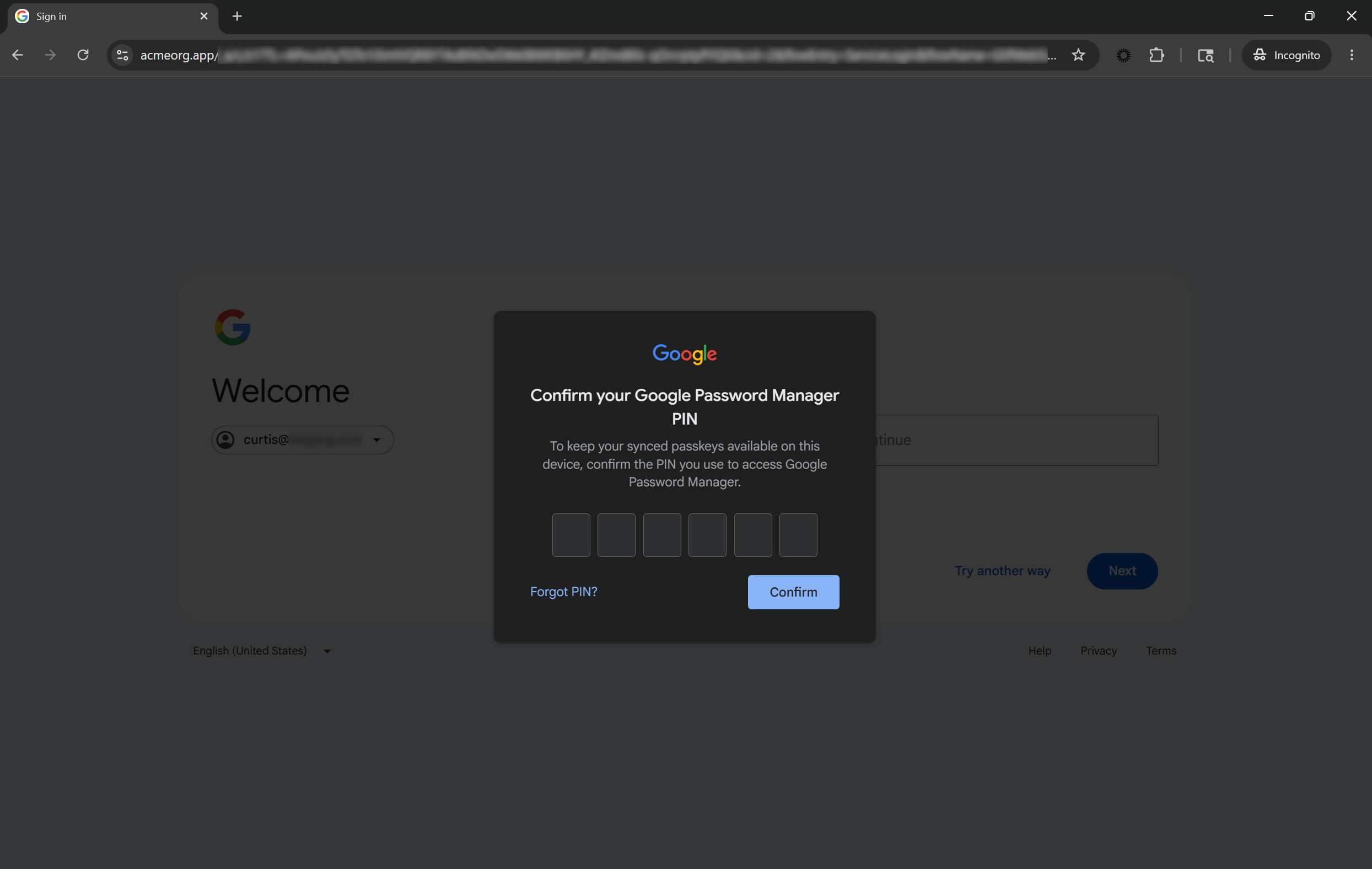
Specifically, security analysts at PhishU discovered that this vector utilizes an Adversary-in-the-Middle framework. Subsequently, the threat actors redirect the user to a deceptive Google login interface. During this session, attackers harvest core credentials, active session cookies, and the six-digit security PIN.
The Mechanics of Cryptographic Exfiltration
Fundamentally, the captured PIN serves as the foundational cornerstone for the entire intrusion sequence. Armed with this code, the malicious operators smoothly append their rogue hardware to the user’s trusted device registry. Following this enrollment, the automated system distributes the private cryptographic key of the trusted security domain. Ultimately, the adversaries utilize this specific key to seamlessly decrypt all cached credentials and stored passkey configurations.
In contrast to standard phishing campaigns that isolate individual services, VaultJacking executes a total repository dump. Therefore, a single breach exposes synchronized repositories across multiple external platforms. Consequently, threat syndicates acquire immediate access to primary email servers, financial institutions, enterprise architectures, and cryptocurrency accounts.
The Failure of WebAuthn Perimeter Defenses
Remarkably, PhishU confirms that this malicious scheme functions seamlessly against accounts reinforced with physical security keys. Admittedly, the underlying WebAuthn hardware protocols maintain their structural integrity. The native domain-binding architecture continues to protect authentication attempts targeting isolated individual domains. Instead, VaultJacking systematically bypasses this defensive layer by targeting the broader storage synchronization pipeline.
Upon mastering the account PIN, the attackers register a secondary cryptographic passkey under their direct control. Subsequently, they authenticate into the target infrastructure and link their rogue hardware through a malicious proxy environment. Meanwhile, the victim receives virtually zero real-time warnings during this unauthorized device enrollment. The platform merely distributes generic notification emails without presenting an interactive confirmation prompt on existing trusted screens. Furthermore, if the adversaries already command the primary inbox, they can effortlessly suppress these automated security alerts.
Comparative Ecosystem Risks and Corporate Mitigation
Financial analysts explicitly attribute this vulnerability to Google’s permissive structural architecture. Specifically, the ecosystem allows novel hardware connections via a fragile short PIN code. In contrast, Apple’s iCloud Keychain requires explicit, mandatory authentication from an established trusted device. Consequently, this defensive friction significantly minimizes the utility of any intercepted credential tokens.
Accordingly, PhishU advises enterprise security administrators using Google Workspace to meticulously audit device registration logs. Therefore, security operation centers must treat any unverified device registration as a definitive indicator of compromise. Additionally, segregating professional and personal web profiles within Chrome drastically compresses the potential blast radius of an exploit.
Support Our Threat Intelligence
If you find our technology report and cybersecurity news helpful, consider supporting our work.
 Buy Me a Coffee
PayPal
Buy Me a Coffee
PayPal


