The Deflate Collapse: Active Exploitation Threatens SolarWinds Serv-U Infrastructure
Adversaries are actively weaponizing a critical vulnerability within the SolarWinds Serv-U managed file transfer platform. Remarkably, threat actors require neither valid credentials nor administrative privileges to execute the exploit. Instead, a solitary, meticulously constructed web request suffices to induce an immediate system crash. Consequently, the United States Cybersecurity and Infrastructure Security Agency (CISA) issued an urgent advisory regarding CVE-2026-28318. This high-severity defect allows remote attackers to trigger a catastrophic denial-of-service condition seamlessly.
Deconstructing the Serv-U Ecosystem
Enterprises routinely deploy Serv-U to orchestrate secure data exchanges across both Windows and Linux environments. Specifically, the software architecture underpins managed file transfers by hosting critical FTP, FTPS, SFTP, HTTP, and HTTPS network services. Through these core pathways, organizations transmit sensitive internal telemetry and communicate with external stakeholders.
Mechanics of the Deflate Exploitation Vector
Fortunately, SolarWinds distributed a remediation hotfix designated as Serv-U 15.5.4 Hotfix 1 on June 4, 2026. According to engineering dispatches, the architectural breakdown stems from unconstrained resource consumption. The vulnerability triggers when the server processes a crafted HTTP POST request containing a specific Content-Encoding: deflate header configuration. Subsequently, this payload forces the underlying Serv-U service to terminate abruptly, completely bypassing native authentication checkpoints.
Technically, this offensive vector demands minimal sophisticated expertise and requires zero user interaction. If administrators cannot immediately deploy the official firmware patch, SolarWinds recommends enacting provisional defensive perimeters. First, defenders should restrict network access exclusively to trusted, whitelisted IP addresses. Second, organizations must aggressively block incoming POST requests that carry the compromised content-encoding attribute. Crucially, the vulnerable file-transfer subsystem does not require this functionality for standard production operations.
Global Exposure and Mandatory Compliance Mandates
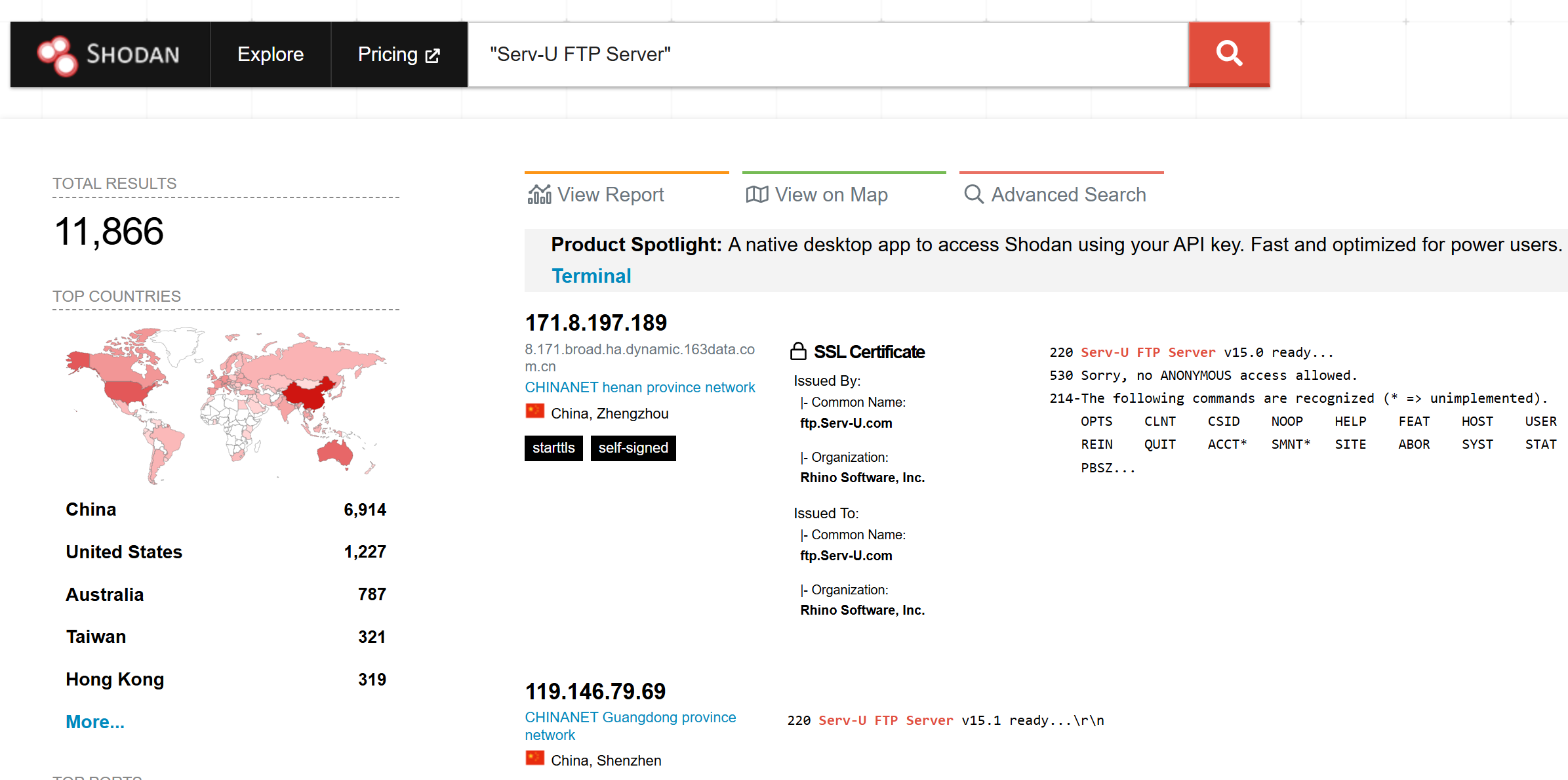
Presently, telemetry from Shodan indicates that over 12,000 raw Serv-U instances remain exposed to the public internet. Concurrently, Shadowserver detects roughly 3,100 visible deployments globally. However, the precise ratio of patched to vulnerable networks remains entirely ambiguous.
Days after the hotfix release, CISA formally integrated CVE-2026-28318 into its Known Exploited Vulnerabilities (KEV) catalog. Therefore, United States federal civilian agencies must neutralize this exposure before June 19 under the strict mandates of Binding Operational Directive (BOD) 22-01.
Although this regulatory directive legally binds only federal entities, CISA strongly urges all commercial enterprises to fortify their parameters. The agency explicitly warned that identical classes of service defects frequently serve as convenient initial access vectors. Ultimately, leaving these architectures unpatched invites severe systemic risks across critical enterprise infrastructure.
An Enduring Target for Advanced Threat Actors
Historically, the Serv-U platform has repeatedly attracted the attention of sophisticated cybercrime syndicates and state-sponsored groups. For instance, the notorious Clop ransomware collective weaponized CVE-2021-35211 in 2021 to breach fortified corporate networks. Simultaneously, a Chinese threat cluster designated as DEV-0322 actively deployed that identical flaw as a zero-day exploit.
Furthermore, threat actors aggressively leveraged a separate path traversal defect within Serv-U in June 2024. Over recent years, federal investigators documented eleven unique SolarWinds vulnerabilities enduring live exploitation. Alarmingly, ransomware syndicates successfully repurposed multiple entries from this list to advance their digital extortion campaigns.
Support Our Threat Intelligence
If you find our technology report and cybersecurity news helpful, consider supporting our work.
 Buy Me a Coffee
PayPal
Buy Me a Coffee
PayPal


