Hardcoded Key in Shinobi CCTV Exposes the Camera Database
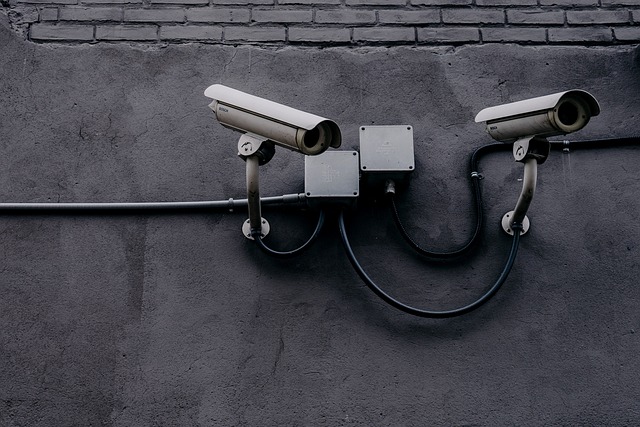
Researchers have discovered a key embedded in the code of the Shinobi video surveillance system, through which an outsider could gain access to the user database and camera settings without a login or password. The critical vulnerability CVE-2026-82448 affects installations with a network-accessible inter-node communication service. The description was published on August 29, 2026, and the fix is designated by commit 5a76c74f.
What Shinobi Does and Why This Matters
Shinobi turns one’s own computer or server into a network video recorder. The program connects IP cameras, saves recordings, and allows one to watch streams through a browser. Therefore, access to the database affects not only user accounts but the configuration of the entire surveillance system. The advisory confirms the ability to read and alter user records and camera settings, while arbitrary database queries create a risk of disrupting the service.
Severity and Scope
The problem was discovered by researcher Sadik Erturk. VulnCheck rates the vulnerability at 9.3 on the CVSS 4.0 scale, and the GitHub advisory record cites the same score. Exploitation requires neither an account nor any action by the system’s owner. However, the attacker must have network access to the vulnerable service specifically; a single accessible site with a login form is not enough.
Where the Flaw Lives
The error resides in the Child Nodes mechanism, which allows video processing to be distributed across several machines. Additional nodes connect to the main server and execute database queries through it. According to the developer’s documentation, node communication uses port 8288 by default, and the feature itself is configured separately. Consequently, one cannot regard every installed copy of Shinobi as automatically vulnerable to such an attack.
How the Attack Works
The key served as a pass for trusted nodes, but the developer left the value directly in the source code. An attacker could present the known key when establishing a WebSocket connection, then send arbitrary SQL queries. The server accepted commands through the standard message handler for additional nodes, allowing a foreign connection to address the database as a trusted participant in the system.
Not Necessarily a Full Server Takeover
Access to the database, however, cannot automatically be equated with full seizure of the operating system. The old official installer did indeed offer to run Shinobi as root, the user with maximal privileges. Such a mode heightens the possible damage when executing system commands, yet the CVE-2026-82448 advisory describes arbitrary database queries and does not confirm a separate chain for seizing the server with root rights.
The Fix and What Owners Should Do
In the description of the developer’s fixes, the inter-node communication problem is listed alongside other security errors, including system command execution and access-control violations. For CVE-2026-82448, the fix boundary is commit 5a76c74f3977661ff3f9fd55a260db352c0b19c0. Owners should verify that the installed build includes the corresponding patch and that a custom secret key is set in the node communication settings.
Until updating, one should close access to the Child Nodes port for outside addresses and disable the service if it is not needed. An additional password before the web interface will not protect a separately accessible port 8288 if the connection to it bypasses the secured web login. In the advisories examined, there is no confirmation of attacks on real installations nor any estimate of the number of affected servers.
Support Our Threat Intelligence
If you find our technology report and cybersecurity news helpful, consider supporting our work.
 Buy Me a Coffee
PayPal
Buy Me a Coffee
PayPal


