Oracle PeopleSoft Zero-Day Exploit: ShinyHunters Attack
The Hidden Threat Within Utility Modules
Colossal corporate networks frequently suffer breaches through obscure utility modules. Indeed, these quiet systems harbor valuable employee, student, and client archives for decades. Recently, the notorious ShinyHunters syndicate announced a devastating cyberattack. They actively exploited a critical zero-day vulnerability within Oracle PeopleSoft. Consequently, these threat actors infiltrated over 100 prominent organizations. They accomplished this widespread compromise by targeting 300 vulnerable platform iterations.
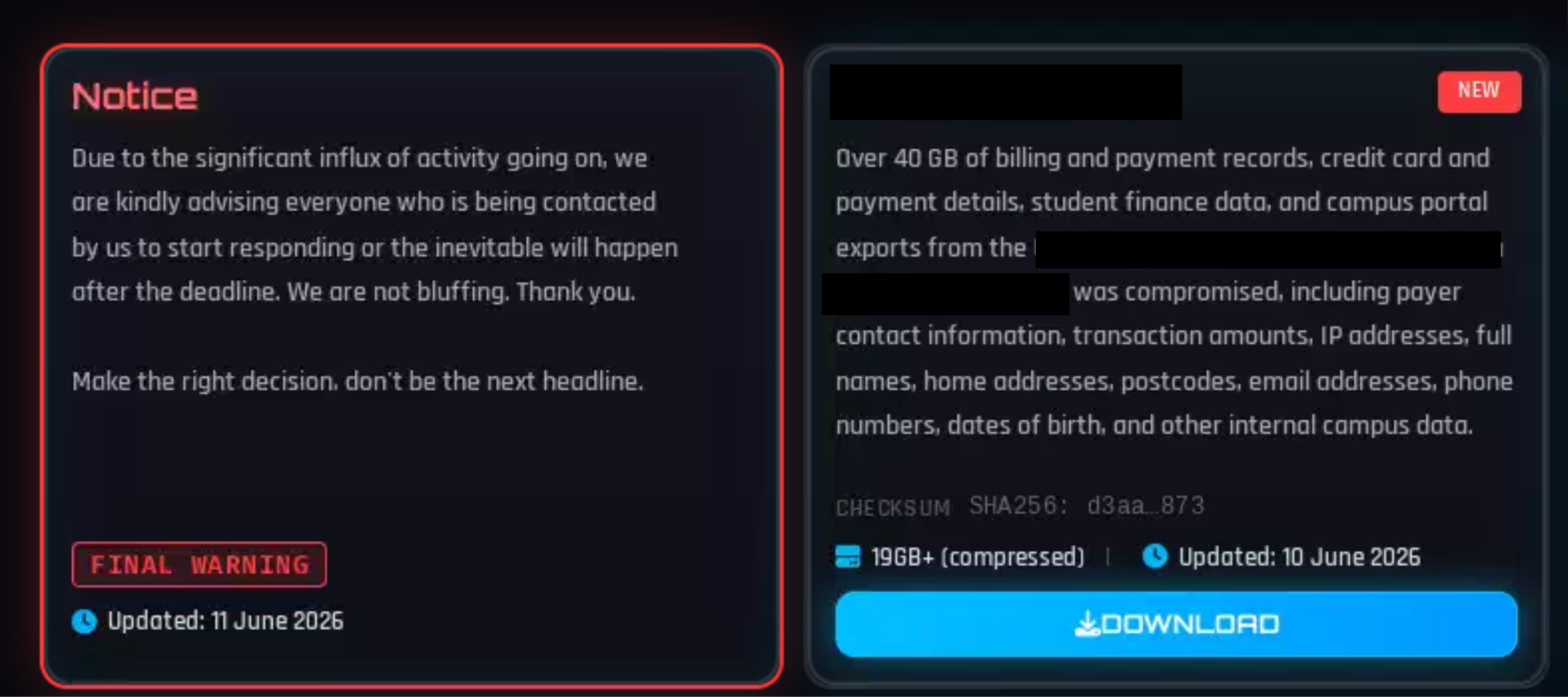
University of Nottingham Faces Massive Data Theft
The University of Nottingham emerged as the initial confirmed casualty. The attackers ruthlessly extracted 40 gigabytes of sensitive information. Specifically, they stole personal details and financial records from countless current and former students. Initially, the university materialized on the ShinyHunters leak portal on Tuesday, June 9. Later that exact afternoon, the perpetrators maliciously published the stolen archives.
Google Threat Intelligence Identifies the Exploit
Furthermore, Google Threat Intelligence validated malicious activity mirroring the exploitation of CVE-2026-35273. This severe flaw commands a terrifying 9.8 CVSS score. Specifically, the malicious campaign operated between May 27 and June 9. Subsequently, investigators alerted numerous global entities possessing vulnerable network configurations. Interestingly, American institutions comprise the vast majority of these potential victims. Moreover, the higher education sector constitutes a staggering 68 percent of the targets.
The Catastrophic Impact of CVE-2026-35273
Countless global enterprises utilize PeopleSoft for critical administrative functions. They manage human resources, payroll, supply chains, and academic registries through this software. Unfortunately, the CVE-2026-35273 vulnerability grants unauthenticated assailants terrifying capabilities. An attacker simply requires fundamental HTTP network access. Consequently, they can entirely compromise the PeopleSoft Enterprise PeopleTools architecture. Ultimately, this exploit surrenders absolute platform dominance to the malicious actors.
Urgent Mitigation and Remediation Strategies
Following the data leak, the University of Nottingham promptly acknowledged the catastrophic breach. Meanwhile, Oracle rapidly distributed an emergency out-of-band security bulletin. Currently, experts remain uncertain regarding the availability of a definitive software patch. However, Mandiant executive Charles Carmakal confirmed that Oracle provided immediate risk mitigation strategies. He anticipates the arrival of a comprehensive security update shortly.
Immediate Actions for Vulnerable Organizations
Before the official patch arrives, administrators must implement Oracle’s emergency guidelines immediately. First, security teams must evaluate PeopleSoft exposure across all external networks. Second, engineers should aggressively restrict all incoming HTTP traffic. Furthermore, organizations must meticulously scrutinize system logs recorded between May 27 and June 9. Finally, security personnel should prioritize auditing databases containing sensitive personal and financial assets.
Support Our Threat Intelligence
If you find our technology report and cybersecurity news helpful, consider supporting our work.
 Buy Me a Coffee
PayPal
Buy Me a Coffee
PayPal


