GreatXML BitLocker Bypass: Windows Defender & WinRE Exploit
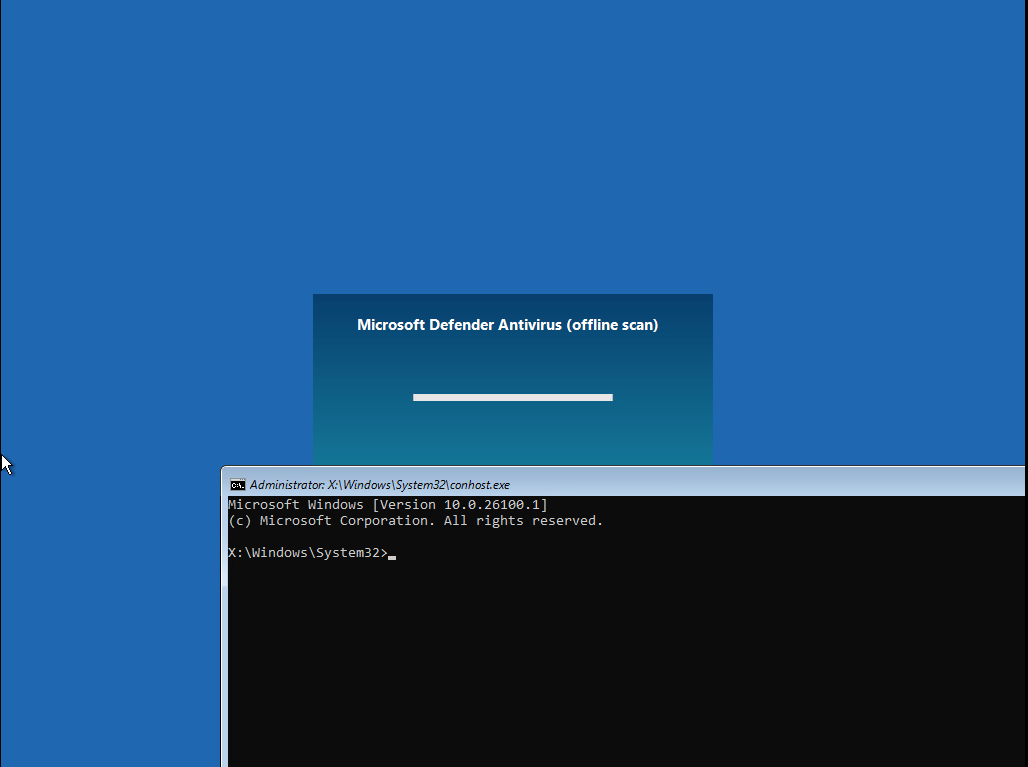
Full-disk encryption safeguards data only until the recovery environment emerges as a catastrophic weak link. Recently, the infamous cybersecurity researcher, Nightmare Eclipse, unveiled a novel Windows vulnerability. They dubbed this flaw GreatXML. Specifically, this critical exploit bypasses BitLocker. It achieves this through the Windows Defender Offline Scan mechanism and the Windows Recovery Environment (WinRE).
The GreatXML Vulnerability Explained
This predicament primarily afflicts specific scenarios. It targets systems that have previously executed a Windows Defender Offline Scan. According to the discoverer, the computer languishes in a profoundly vulnerable state after such an inspection. Consequently, an adversary with physical access can easily infiltrate the encrypted volume. They can accomplish this without requiring a password or recovery key.
Rather than shattering the cryptographic foundation itself, this incursion systematically abuses trusted boot sequences. First, the assailant strategically deposits a meticulously crafted `unattend.xml` file. You can review these technical intricacies directly within the GreatXML repository. Next, they place this file alongside a modified Recovery directory within the root of the recovery partition. Subsequently, the attacker compels the system to boot into WinRE. They often use a simple Shift + Restart maneuver to trigger this.
Exploiting the Recovery Environment
The recovery environment then processes this malicious configuration. Ultimately, it launches a highly privileged command shell. This shell grants unfettered access to the BitLocker-protected partition.
Furthermore, a distinct peril arises from the purported persistence of this vulnerable state. Nightmare Eclipse asserts a frightening reality. Any system subjected to a Windows Defender Offline Scan becomes inexorably susceptible. This applies even if the scan occurred merely once. However, for workstations where this feature remains dormant, the exploitation pathway seems ambiguous. The author describes a forced or simulated autonomous scan somewhat vaguely.
Mitigation and Future Threats
Currently, GreatXML lacks an official CVE designation. Furthermore, Microsoft has yet to publicly acknowledge this severe predicament. Therefore, this vulnerability poses an exceptionally acute danger to misplaced laptops. It also threatens environments where unauthorized individuals might obtain physical proximity to the hardware.
Pending the release of official patches, system administrators must act decisively. They should monitor Microsoft updates vigilantly and restrict physical access to sensitive devices. Additionally, organizations must audit their utilization of WinRE. They need to comprehensively reevaluate their policies regarding Windows Defender Offline Scans. Finally, enterprises relying heavily upon BitLocker must act now. They must urgently incorporate recovery environment attacks into their comprehensive threat models.
Support Our Threat Intelligence
If you find our technology report and cybersecurity news helpful, consider supporting our work.
 Buy Me a Coffee
PayPal
Buy Me a Coffee
PayPal


