Januscape CVE-2026-53359 KVM Vulnerability
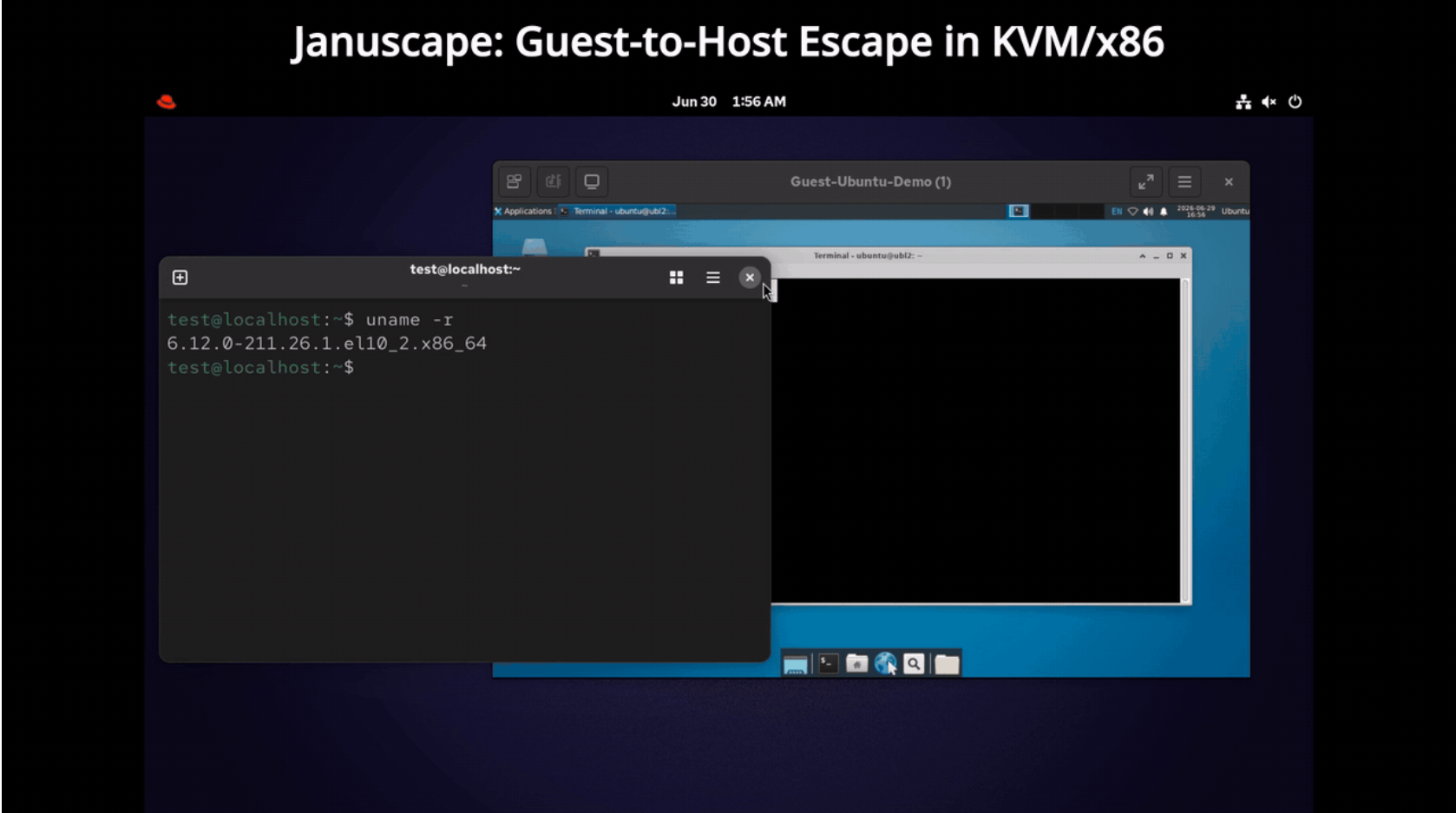
While a virtual machine is fundamentally designed to remain isolated from its physical host, a critical flaw within the Linux Kernel-based Virtual Machine (KVM) allowed a guest operating system to breach this boundary and compromise the host kernel. Dubbed the Januscape vulnerability and tracked as CVE-2026-53359, this security defect lay dormant within the codebase for approximately 16 years, jeopardizing x86-based architectures powered by both Intel and AMD processors.
The underlying flaw resides in the shadow page table mechanism utilized by KVM during nested virtualization. Specifically, the hypervisor scanned for reusable pages solely by their memory address without validating their intended purpose. Consequently, KVM could inadvertently allocate a page of an entirely different type, fracturing internal linkages and inducing a use-after-free condition.
A publicly available proof-of-concept demonstration triggers a fatal host kernel panic. Consequently, a guest virtual machine operating with root privileges can completely incapacitate the underlying physical infrastructure, taking down all co-hosted virtual instances. The researcher who discovered the flaw, Hyunwoo Kim, also disclosed a private exploit variant capable of executing arbitrary code with root privileges on the host. Since the exploit code remains restricted, the verified public demonstration presently manifests strictly as a Denial of Service (DoS). For those interested in the technical breakdown, the Januscape repository provides further insight.
Executing this attack necessitates root access within the guest environment alongside enabled nested virtualization. No interaction with QEMU or other user-space components is required, as the vulnerability resides entirely within the KVM kernel space. Multi-tenant servers that permit untrusted clients to instantiate their own nested virtual environments face the most severe risk exposure.
Remediation was integrated into the main Linux kernel branch on June 19 of this year. Developers introduced a robust page-role verification check to ensure KVM only repurposes a page when both its address and specific role align perfectly. Subsequently, patched stable kernels including versions 7.1.3, 6.18.38, 6.12.95, 6.6.144, 6.1.177, 5.15.211, and 5.10.260 were officially deployed on July 4.
System administrators overseeing x86 KVM hosts are strongly urged to inspect their package changelogs to confirm their respective distributions have backported the fix from commit 81ccda30b4e8. If an immediate kernel upgrade is unfeasible, nested virtualization should be promptly deactivated by setting the parameter kvm_intel.nested=0 or kvm_amd.nested=0. Notably, ARM64-based systems remain completely unaffected by the Januscape flaw.
Support Our Threat Intelligence
If you find our technology report and cybersecurity news helpful, consider supporting our work.
 Buy Me a Coffee
PayPal
Buy Me a Coffee
PayPal


