Attested TLS Vulnerability Exposes Secure Cloud Data
The Illusion of Cloud Trust
Trust in secure cloud computing inherently begins with verifying the true recipient of transmitted data; however, a novel formal verification has revealed that the Attested TLS protocol occasionally fails to provide an accurate assurance.
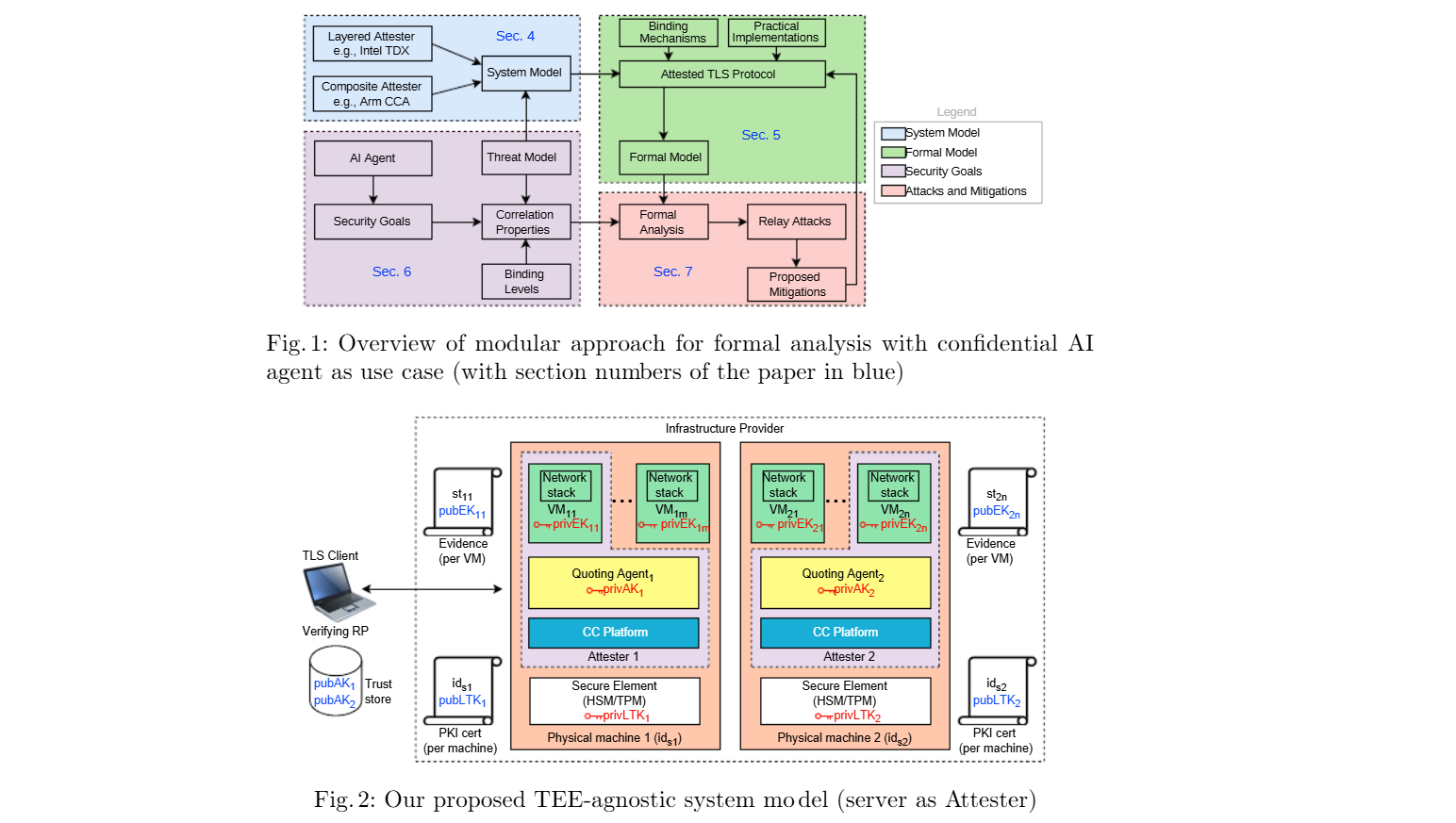
Attested TLS seamlessly integrates a secure TLS connection with remote attestation, mandating that a server cryptographically demonstrate to the client its execution within an authentic, unaltered trusted execution environment. Researchers from the Technical University of Dresden, IBM, and the University of Namur scrutinized seven distinct methodologies designed to bind this proof to the active connection, only to discover that not a single one successfully prevents traffic relay attacks.
Anatomy of the Traffic Relay Attack
Under this specific attack vector, a client receives a perfectly valid confirmation from a trusted server or AI agent, yet subsequently encrypts sensitive data for a completely different, malicious entity. While the protocol diligently verifies the integrity of the software environment, it fails to securely bind this validation to the specific server instance and the unique cryptographic key protecting user data post-handshake.
Affected Software Implementations
The authors rigorously evaluated both theoretical models and four production-ready implementations. They exposed this architectural vulnerability within WhatsApp’s Private Processing, Contrast, Cocos AI, and a demonstration project designed by the Confidential Computing Consortium. For Cocos AI, versions ranging from 0.4.0 through 0.8.2 remain vulnerable, though the source reports no active exploitation in production environments.
Severity Score and Security Deficiencies
This security defect has been designated as CVE-2026-33697, receiving a high-severity score of 7.5 out of 10 under the CVSS 3.1 framework. The defense mechanisms proposed by the authors confirm the correct server identity exclusively during the nascent stages of the connection, failing to guarantee that subsequent data streams continue to flow to that identical system. Consequently, comprehensive protection is currently non-existent.
Recommended Remediation Steps
Security experts strongly recommend that developers abandon attestation during the initial connection setup. Instead, they should transition to verification protocols executed after the handshake concludes, ensuring that the data transmission key is fully established. For a deeper academic analysis of this cryptographic flaw, the publication on Attested TLS CVE-2026-33697 high-severity vulnerability outlines the precise structural failures.
Support Our Threat Intelligence
If you find our technology report and cybersecurity news helpful, consider supporting our work.
 Buy Me a Coffee
PayPal
Buy Me a Coffee
PayPal


