GPT-6 Sol and Luna Arrive With Prices Cut in Half
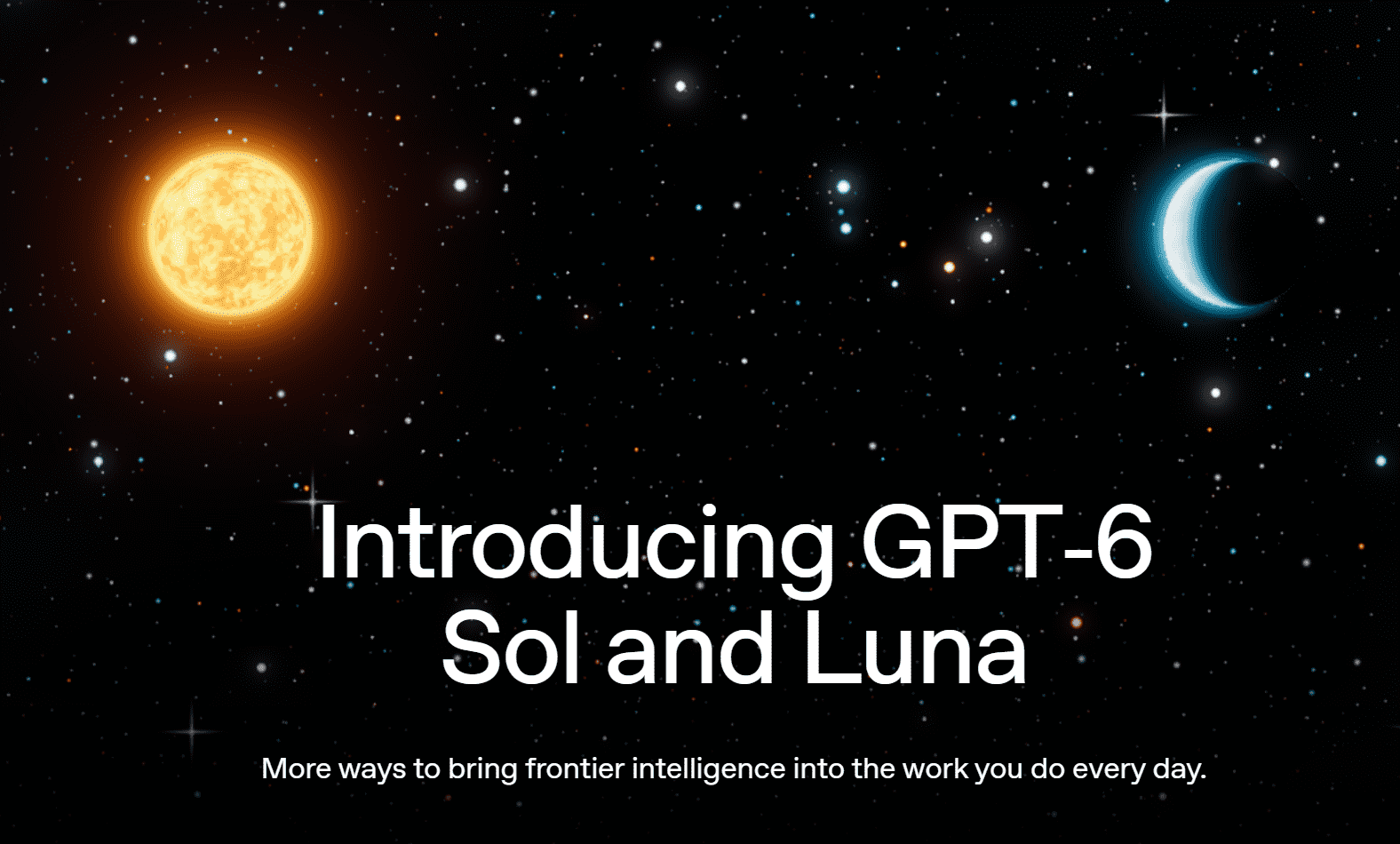
On September 22, OpenAI began rolling out GPT-6 Sol and GPT-6 Luna for Codex and ChatGPT Work. Sol is built for complex code and tasks in which the AI works through tools step by step, while Luna targets frequent, clearly defined requests. In the ordinary ChatGPT chat, the new models remain unavailable for now. OpenAI logged the rollout in its ChatGPT changelog.
Gradual Rollout Across Subscription Tiers
The models are gradually reaching Plus, Pro, Business, Enterprise, and Edu subscribers. Free and Go users will gain access to Luna in the desktop app. Availability depends on the rollout stage and workspace settings, and Enterprise administrators will need to enable the new models themselves. The earlier GPT-5.6 Sol, Terra, and Luna remain in the list for now.
Lower Pricing for Developers
The chief change for developers is price. The model catalog lists GPT-6 Sol at $2 per million input tokens and $10 per million output tokens. GPT-6 Luna costs $0.10 and $0.50 respectively. Compared with the previous pricing, both Sol’s input and output have grown twice as cheap. For Luna, input has likewise halved, while output has dropped from $1.20 to $0.50 per million tokens. As of this check, however, the general API pricing page does not yet contain line items for the new models.
Credit Costs for Codex Subscribers
For Codex subscribers, usage is tallied in credits. The rates for Sol come to 50 credits per million input tokens and 250 per million output tokens; for Luna, 2.5 and 12.5 credits. The estimated number of messages within a subscription does not serve as a hard limit: a long task involving tools can consume more resources than a short request.
What OpenAI Claims About Quality
OpenAI states that Sol handles programming better than GPT-5.6 Sol, conveys facts more accurately, and formulates answers more clearly. For Luna, the company highlights concise summaries, information extraction, and small coding tasks. Detailed test results for the new models, from which the quality gains could be independently assessed, do not appear in the OpenAI materials examined so far.
Shared Capabilities
Both models accept text and images, can call functions, search for information on the web and in files, and work with a computer. The stated context window comes to 1.05 million tokens, with a maximum response length of 128,000 tokens. GPT-6 Astra remains the family’s most powerful model, while Sol and Luna let developers choose a price point suited to the complexity of the work.
Support Our Threat Intelligence
If you find our technology report and cybersecurity news helpful, consider supporting our work.
 Buy Me a Coffee
PayPal
Buy Me a Coffee
PayPal


