FBI Breach May Have Exposed Its Secret Hacking Unit
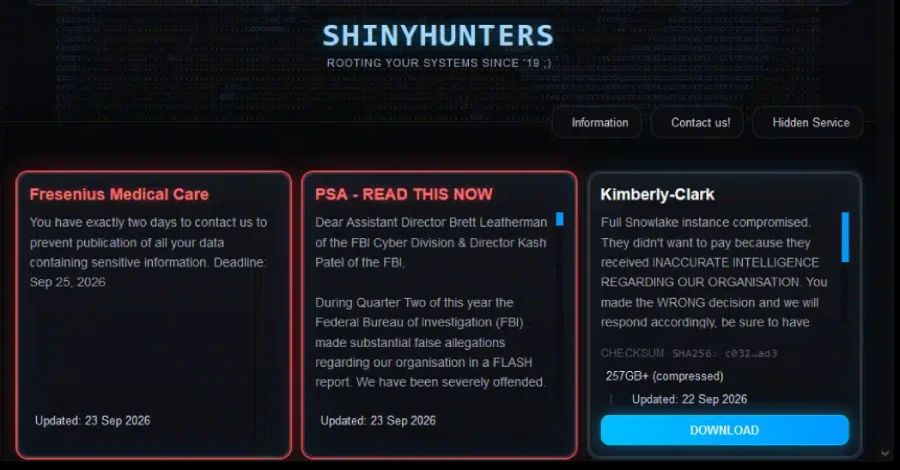
Hackers claiming to have stolen the FBI’s personnel data may have reached people from one of the bureau’s most closely guarded divisions. Within the trove appeared staff of the Remote Operations Unit (ROU), the team that itself develops tools for hacking computers and mobile devices.
ShinyHunters claims to have obtained information on current and former FBI employees, as well as candidates for positions at the bureau. The group handed journalists a sample of roughly 5,000 records containing names, home addresses, phone numbers, and data about relatives. Part of the information could be cross-checked against open sources.
What the FBI Has Confirmed
The group itself claims to have stolen 2 to 3 terabytes of information. On September 23, the FBI confirmed it was investigating claims of a compromise of FBIJobs.gov and a possible leak of employee personal data, detailed in its official statement. The bureau has not yet established whether the point of entry lay within its own infrastructure or with a third-party contractor.
A Claimed New PeopleSoft Zero-Day
By ShinyHunters’ account, entry was gained through a previously unknown Oracle PeopleSoft vulnerability, which the group says it discovered and turned into a working attack tool on its own. This is a zero-day vulnerability, meaning no public fix existed for it at the time of the attack. Oracle and the FBI have not yet independently confirmed this scenario.
An Unusual Motive
The motive behind the attack also looks unusual. ShinyHunters states that it is not demanding money but is seeking a correction to an FBI warning about the group’s activity published this past spring. In May, the bureau had already warned American educational institutions about ShinyHunters’ attacks and the group’s methods of pressuring victims.
Records Tied to a Secret Hacking Team
An especially sensitive find concerns records connected to the Remote Operations Unit. The division sits within the FBI’s technical apparatus and is responsible for building or acquiring tools for covert access to other people’s devices. Public information about ROU’s makeup is exceedingly scarce, though the unit itself has surfaced in Department of Justice documents in years past.
The danger of such a leak extends far beyond an ordinary personnel-database compromise. By linking names to divisions, positions, home addresses, phone numbers, and relatives, attackers could assemble a map of the personnel involved in the bureau’s most sensitive operations. Such a trove would interest not only cybercriminals but foreign intelligence services as well.
It was precisely employees of this secretive hacking unit who turned up among the records journalists were able to identify in the 404 Media investigation into the FBI breach. Journalists have not publicly disclosed the names or other personal details of ROU personnel.
What Remains Unconfirmed
ShinyHunters has not yet published the full trove, so the claimed volume and composition of the stolen information remain unconfirmed. The FBI’s investigation continues, and the central question now concerns not only the scale of the leak but also how precisely the stolen personnel data allows the bureau’s internal structure and the composition of its secretive divisions to be reconstructed.
A Familiar Name in Cybercrime
The ShinyHunters brand has already weathered several high-profile arrests and takedowns of underground marketplaces. Even so, ShinyHunters continues to carry out major attacks even after law-enforcement strikes against its members and infrastructure.
A few months before the FBI story, the ShinyHunters name was linked to another enormous leak. After the attack on the education platform Canvas, the data of up to 275 million people was reportedly involved, with the attackers claiming to have subsequently deleted the stolen information.
The situation looks especially notable set against the FBI’s own technical operations. In January 2025, the bureau remotely hacked 4,200 computers across the US to remove the Chinese PlugX malware. Now, people from the very unit specializing in operations of that kind find themselves at risk of exposure.
Support Our Threat Intelligence
If you find our technology report and cybersecurity news helpful, consider supporting our work.
 Buy Me a Coffee
PayPal
Buy Me a Coffee
PayPal