The BlackToad Chronology: Masking Malware Through Network Severance
The Blind Spot Inversion
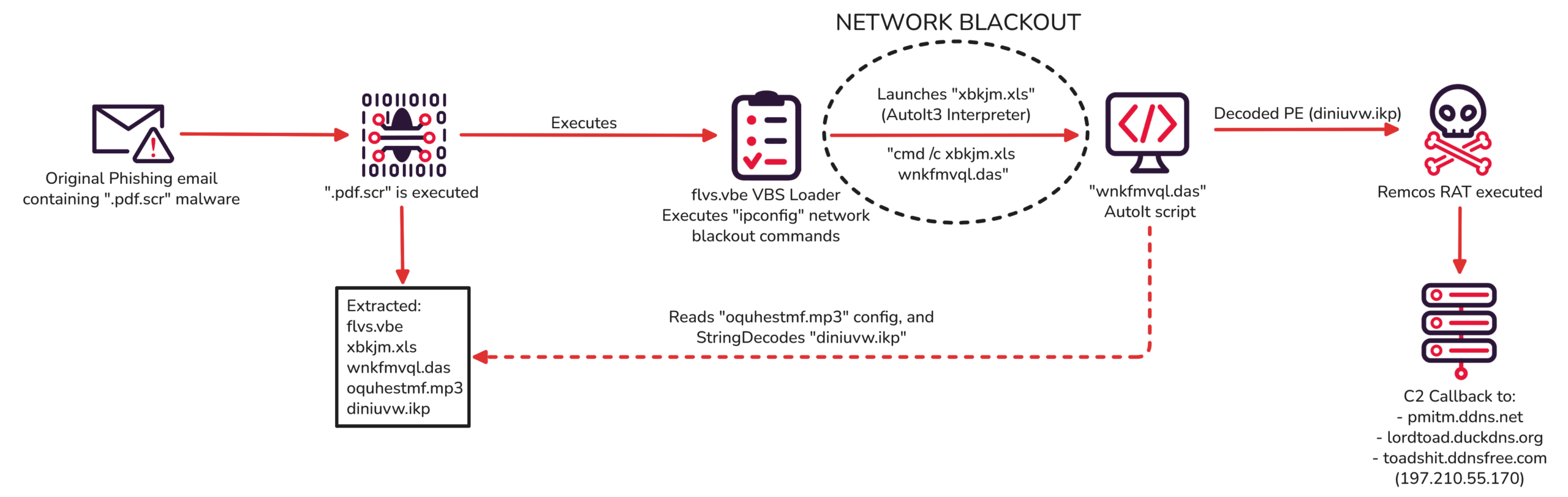
Cyberadversaries recently devised a deceptive tactic to conceal digital infections from defensive systems. Specifically, they temporarily disconnect the internet on the target computer for several seconds. During this transient connectivity gap, the malware successfully executes its subsequent offensive stage. Consequently, local network security tools fail to monitor the unfolding event.
Anatomy of the Phishing Vector
Security specialists at JUMPSEC discovered this intricate scheme during a routine client assessment. Initially, a phishing email targeted one of their corporate partners. Furthermore, the communication utilized the Thai language and masqueraded as a standard financial document.
Tactical File Hosting
The electronic mail contained an embedded image linking directly to an external MediaFire repository. This clever maneuver effectively reduces initial suspicion from automated mail filters. Therefore, the threat actors skillfully maintained the malicious payload outside the corporate mail infrastructure.
Extension Spoofing Tactics
The downloaded asset deceptively disguised itself as a harmless document. Specifically, the file concluded with a double extension, namely .pdf.scr. Because Windows naturally conceals extensions for recognized file types, users only perceived the .pdf portion. Thus, the victim readily misidentified the executable as a benign document. In reality, the .scr suffix indicates an executable screensaver file that operates like any standard program.
Deconstructing the Payload Chain
The downloaded binary operated as a self-extracting WinRAR archive. Upon execution, the archive extracted multiple components into the system. However, the majority of these files merely served as superficial decoys. Instead, a core VBScript orchestrated the primary infection sequence.
An Intellectual Breakdown
Paradoxically, the operator made a remarkably elementary blunder. Let us examine their methodology closely.
The initial script contained excessive dead code and redundant function calls. Nevertheless, analysts revealed a highly concise architecture once they stripped away the obfuscation. The script systematically assembled the string cmd.exe character by character to evade static signature detection. Subsequently, it executed system commands directly through the command-line interface.
Network Disconnection Orchestration
The defining characteristic of this infection chain involved precise network manipulation. Before launching the primary payload, the script executed the ipconfig /release command. This maneuver intentionally severed the local network interface. Immediately after the malware initialized, the script restored connectivity using the ipconfig /renew command.
Cloud Verification Evasion
This sequence effectively crafts a brief blind spot for modern endpoint security systems. These tools typically rely on active cloud reputation services to evaluate unknown binaries. Consequently, the most suspicious behavioral markers occur while the workstation remains entirely isolated. By the time network connectivity returns, the next stage of the malware is already active.
The AutoIt Bloatware Phase
Following the initial execution, the attack seamlessly transitioned to an AutoIt script. The adversaries utilized an authentic AutoIt3 interpreter but renamed the binary with an .xls extension. Furthermore, they bloated the malicious script to an artificial size of 88 megabytes using junk comments. Once analysts removed this artificial padding, the actual payload size shrank to a mere 65 kilobytes.
Configuration Matrix
The script actively audited the local environment to detect sandboxes or analysis tools. Subsequently, it extracted operational settings from a file disguised with an .mp3 extension. In truth, this file contained an INI-formatted configuration layout. The internal parameters dictated persistence mechanisms, an autostart registry key named WindowsUpdate, and a remote download link.
The Remcos Core Delivery
The final payload materialized as Remcos, a notorious remote administration tool. Cybercriminals routinely deploy this software to conduct espionage and harvest sensitive corporate data. Within the decrypted configuration file, specialists identified specific command-and-control server addresses. They also extracted the Rmc-QDZ9C5 mutex alongside the selfish botnet identifier.
Attribution and Infrastructure Mapping
JUMPSEC tracks this specific malicious cluster under the moniker BlackToad. Currently, analysts assess that the group originates from a larger Nigerian cybercrime network. Unit 42 historically tracks this broader ecosystem as SilverTerrier. Nonetheless, BlackToad maintains its own distinct command infrastructure and specialized packers.
Dynamic Redundancy
The command domains pmitm.ddns.net, lordtoad.duckdns.org, and toadshit.ddnsfree.com all mapped to a single IPv4 address. Specifically, they pointed to 197.210.55.170 using port 50240. The actors registered these domains across diverse dynamic DNS providers. Consequently, they established excellent operational redundancy if a single provider terminates their service.
Mobile Telephony Exploitation
Infrastructure telemetry also pointed directly toward Nigerian mobile networks, specifically MTN Nigeria and Airtel Nigeria. Additionally, some digital traffic routed through a bulletproof hosting provider known as Pfcloud. Analysts believe the operators likely hosted their command server via a mobile connection rather than standard infrastructure.
Broad Campaign Evidence
Subsequent samples discovered via VirusTotal demonstrated identical extension masquerading techniques. These assets included files like IMG00090878900.pdf.scr. Significantly, one sample retained a specific SLIP prefix within its naming convention. This naming pattern indicates a broader, systematic campaign against multiple targets rather than an isolated event.
Parallel Operations
Furthermore, JUMPSEC connects BlackToad to activities that resemble the BoredFluff campaign. Security teams previously documented BoredFluff targeting hospitality personnel via fraudulent reservation inquiries. The overlaps in infrastructure and decoy themes make this correlation highly plausible. However, BlackToad distinguishes itself through its unique network-severance technique.
Strategic Defensive Implications
The primary danger of this campaign does not stem from the Remcos payload itself. Security teams already recognize this tool quite well. Instead, the profound threat lies in the novel delivery mechanism. The network utility commands seem entirely routine to standard monitoring tools. Yet, they successfully shield the malicious code during its critical execution window.
Remediation Guidelines
JUMPSEC strongly advises organizations encountering these indicators to hunt for Remcos signatures actively. This malware typically records keystrokes and harvests system credentials. Moreover, it actively monitors clipboard data and facilitates unauthorized data exfiltration.
Support Our Threat Intelligence
If you find our technology report and cybersecurity news helpful, consider supporting our work.
 Buy Me a Coffee
PayPal
Buy Me a Coffee
PayPal


