Cryptographic Paradigm Shift: Google Officially Launches Device Bound Session Credentials
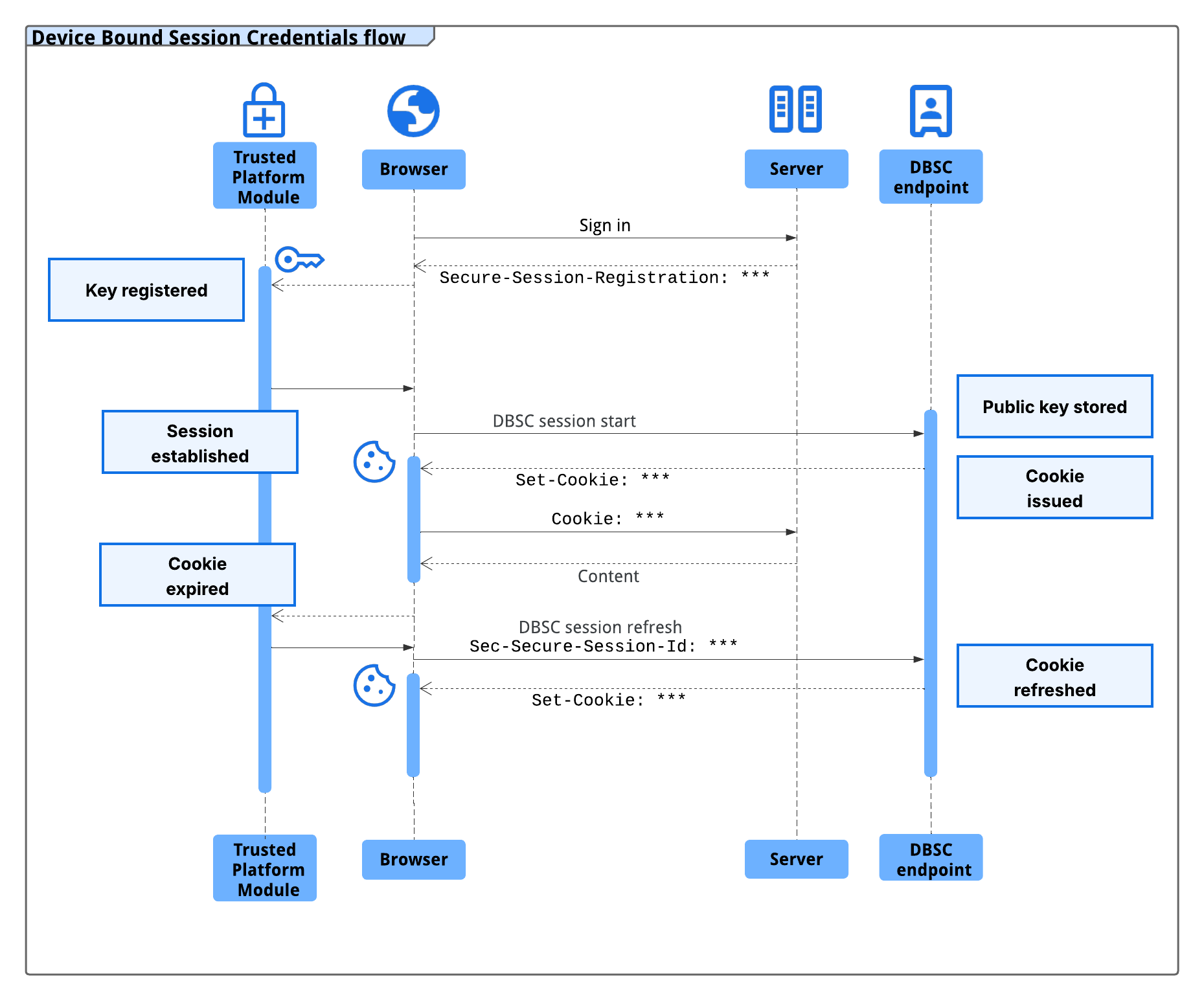
Google historically initiated testing for an advanced hardware-anchored authentication security framework. Consequently, this architecture formally debuts under the designation Device Bound Session Credentials (DBSC). Importantly, the mechanism requires proactive implementation by independent web administrators. Following successful platform adaptation, stolen session cookies become completely useless to external threat actors. Therefore, illicit credentials cannot facilitate unauthorized account takeovers.
The Vulnerability of Software-Only Perimeters
Users frequently introduce malicious extensions or software payloads into their local ecosystems accidentally. Subsequently, these hostile applications harvest cached session tokens from browser memory spaces. Cybercriminals effortlessly bypass traditional password barriers using these extracted credentials. Furthermore, malicious networks have rapidly industrialized this vector into a lucrative bulk-resale market.
Crucially, standard operating systems lack the native capacity to prevent token extraction through software defenses alone. Historically, defensive teams relied on post-compromise abuse heuristics to mitigate session hijacking. Regrettably, sophisticated adversaries bypass these reactive detection scripts with ease. Conversely, DBSC transforms web defense by shifting from passive observation to active prevention. Ultimately, the protocol guarantees that leaked data packets offer zero utility to unauthorized operators.
The Infrastructure of Cryptographic Device Binding
The protocol cryptographically anchors an authentication session to a singular physical endpoint. Specifically, it utilizes onboard hardware security elements like Windows TPM or macOS Secure Enclave. These specialized modules generate unique, non-exportable cryptographic key pairs.
Seamless Background Orchestration
Subsequently, the issuance of new session cookies requires Google Chrome to prove possession of the private key. Because remote adversaries cannot exfiltrate this physical key hardware, stolen tokens invalidate instantly.
Moreover, this configuration empowers web developers to deploy specialized backend evaluation APIs. This transition to hardware-bound persistence maintains absolute frontend compatibility. Meanwhile, the browser handles complex cryptographic rotations entirely in the background. Therefore, web applications interface with standard cookies normally.
Strategic Provisioning and Documentation Protocols
Web administrators aiming to maximize account isolation must review Google’s open-source engineering blueprints. Subsequently, technicians must deploy compatible authentication policies on backend production servers. Implementing this defense comprehensively neutralizes session hijacking vulnerabilities.
Technical Specification Matrices
- W3C Architecture Framework: DBSC Technical Specification
- Chrome Engineering Reference: DBSC Platform Documentation
Support Our Threat Intelligence
If you find our technology report and cybersecurity news helpful, consider supporting our work.
 Buy Me a Coffee
PayPal
Buy Me a Coffee
PayPal


