The Evolutionary Stratagem of Void Dokkaebi: Analyzing the Cythonized Mutation of InvisibleFerret
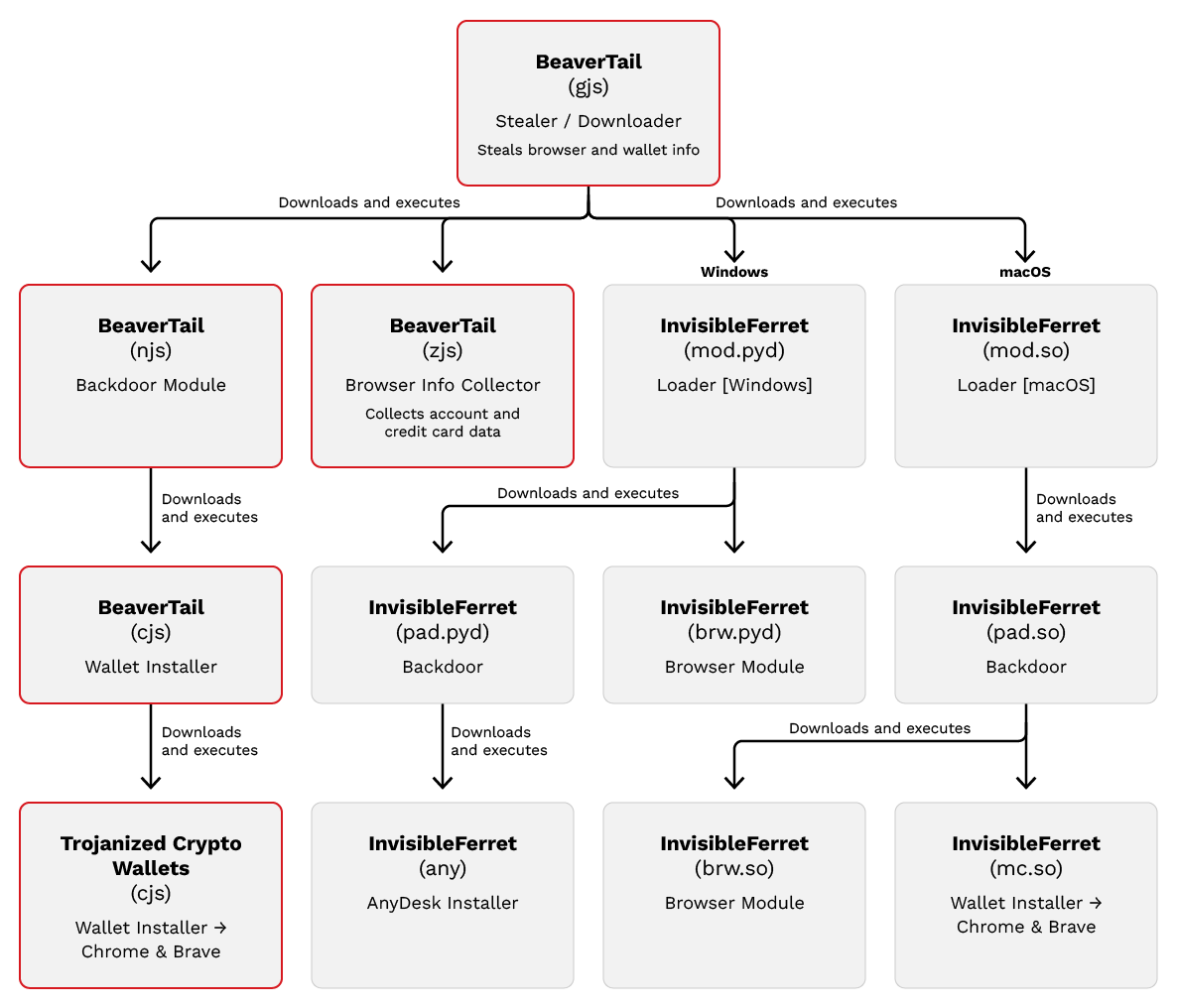
The state-sponsored North Korean threat syndicate designated as Void Dokkaebi has fundamentally recalibrated the delivery architecture of its flagship backdoor, InvisibleFerret, systematically elevating its defensive evasion capabilities. The adversaries have abandoned the distribution of raw, human-readable Python scripts—which are highly susceptible to rapid static analysis and string-based telemetry signature verification. Instead, the cell has migrated its malicious logic into compiled native modules, a maneuver explicitly engineered to render legacy behavioral heuristics and traditional detection paradigms obsolete.
Operating under the well-documented alias Famous Chollima, Void Dokkaebi maintains a persistent, predatory focus on software engineers. The threat matrix leverages sophisticated social engineering schemas, masquerading as corporate recruiters representing prominent cryptocurrency and artificial intelligence conglomerates. Under the pretext of a technical interview or code-assessment exercise, victims are coerced into downloading and executing weaponized repositories. This infiltration vector poses an acute, systemic hazard to developers who command administrative access to decentralized financial infrastructure, cryptographic signing keys, continuous integration/continuous deployment (CI/CD) pipelines, and internal corporate staging environments.
Technical Deconstruction: The Cython Inversion Pipeline
Forensic investigations spearheaded by the TrendAI Research division have unmasked the core evasive mechanism: the deliberate obfuscation of InvisibleFerret utilizing the Cython compiling framework. This specific software translation utility transmutes high-level Python source code into native, intermediate C or C++ structures, subsequently compiling the output into platform-specific machine code binaries.
- Windows Deployments: The weaponized modules manifest as compiled Dynamic Link Libraries possessing a
.pydfile extension. - macOS Deployments: The implants are compiled into Shared Object files utilizing the
.soarchitecture.
Because these native modules are structurally incapable of self-initialization, the threat actors introduce a multi-stage infection routine. The perimeter chain deploys a minimalist, ephemeral Python bootstrapper script whose solitary mandate is to load the binary extension into memory and trigger the execution of the obfuscated payload.
This architecture introduces a profound diagnostic bottleneck for security engineering teams. Relying exclusively on the evaluation of cleartext Python configurations yields negligible defensive intelligence. While command-and-control (C2) network domains and static socket port parameters can occasionally be carved from the binary string matrices of the compiled .pyd or .so files, critical segments of runtime telemetry are dynamically injected into the environment by the transient staging script. Absent the capture of this ephemeral loader, a comprehensive reconstruction of the adversary’s network infrastructure remains mathematically improbable.
Functional Convergence: The Evolution of BeaverTail and Ecosystem Subversion
Simultaneously, the secondary component of this campaign, BeaverTail, has undergone a significant architectural transformation. Historically relegated to basic credential harvesting and the subsequent staging of InvisibleFerret, BeaverTail has evolved to encompass functional redundancies that mirror the advanced utility suite of InvisibleFerret itself. The contemporary variant possesses native modules optimized to extract browser database structures, exfiltrate private keys from cold and hot digital currency wallets, ingest secondary remote binary payloads, and inject fraudulent browser extensions into the victim’s profile directories.
Concurrently, InvisibleFerret retains its lethal, high-privilege feature matrix. The implant continues to facilitate unrestricted interactive remote access, monitor operating system clipboard matrices, execute low-level keylogging hooks, and actively sweep local file systems for cryptocurrency wallet metadata. On the macOS platform, a specialized sub-module is tasked with the surreptitious substitution of official extensions within Chrome and Brave browser environments—specifically targeting preeminent decentralized finance applications such as MetaMask, Coinbase Wallet, and Phantom.
To ensure the persistent execution of these counterfeit extensions, the adversaries systematically downgrade the target’s local Chrome installation on macOS devices. This strategic regression represents a deliberate effort to circumvent Google’s mandatory transition toward the Manifest V3 framework—an ecosystem specification designed to curtail the aggressive system permissions typically exploited by malware to manipulate cryptocurrency transactions. By reverting the terminal to legacy browser builds supporting Manifest V2, the threat actors successfully secure an unhindered operational canvas for script injection and data manipulation.
Artifact Extraction and Structural Remediation
Despite this sophisticated pivot toward compiled binaries, the InvisibleFerret architecture remains bounded by discernible forensic footprints. The compilation process inadvertently embeds distinct build traces, localized module identifiers, plaintext error strings, and absolute paths originating from the author’s development environment. These structural anomalies equip incident response teams with the telemetry required to reverse-engineer sections of the internal code taxonomy, track emerging variants, and map the overarching boundaries of the adversary’s infrastructure.
Furthermore, threat intelligence suggests that this migration to the Cython platform remains a work in progress. Forensic analysis of a recently recovered component exposed uncompiled code remnants and syntactically incomplete routines, causing the module to terminate prematurely with execution exceptions during runtime testing. This structural inconsistency confirms that Void Dokkaebi is actively refining the interoperability between the BeaverTail and InvisibleFerret deployment tracks.
Consequently, organizations managing software development resources with access to blockchain gateways, code-signing certificates, or automated build pipelines must immediately update their log monitoring telemetry. Detection strategies must expand beyond raw Python script monitoring to scrutinize the introduction of unauthorized Python extension files (.pyd and .so). Heightened analytical focus should be dedicated to isolating transient initialization scripts, unauthorized modifications targeting browser extension directories, and anomalous, un-orchestrated regressions of browser application versions across enterprise endpoints.
Support Our Threat Intelligence
If you find our technology report and cybersecurity news helpful, consider supporting our work.
 Buy Me a Coffee
PayPal
Buy Me a Coffee
PayPal


