Operation FlutterBridge: Sophisticated Malware Masquerades as Legitimate macOS Utilities
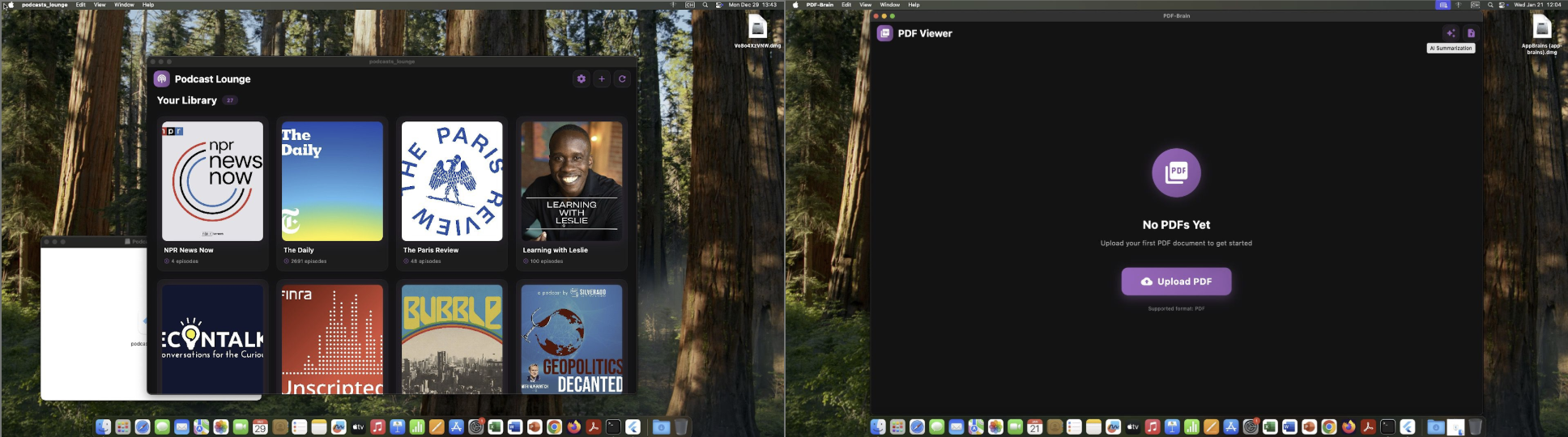
Cybercriminals have devised an insidious method to infiltrate macOS environments. Specifically, they disguise malicious payloads within seemingly innocuous applications. Beneath the elegant aesthetics of podcast players and PDF readers lies a dual-threat mechanism. Consequently, this hidden utility serves intrusive advertisements while granting adversaries unrestricted remote access.
The Genesis of Operation FlutterBridge
Palo Alto Networks recently exposed a highly coordinated campaign designated as Operation FlutterBridge. According to threat telemetry, the threat cluster CL-CRI-1089 orchestrates this operation. Previously, investigators linked this group to the JSCoreRunner lineage.
Perpetrators aggressively promote compromised software like PodcastsLounge, PDF-Brain, and PDF-Ninja through malicious Google advertisements. Furthermore, they subvert advertising vetting processes by exploiting verified corporate profiles. These accounts bear distinct characteristics of shell corporations, including AdsParkPro LTD and Advantage Web Marketing LLC.
Exploiting Trust and Notarization
Superficially, these applications operate with total legitimacy and flawlessly execute their promised features. For instance, PodcastsLounge serves as a fully functional podcast utility. Meanwhile, PDF-Brain and PDF-Ninja seamlessly process document files.
This authentic facade heavily relies on valid Apple Developer ID certificates. Moreover, the software easily cleared Apple’s automated notarization checks. At the time of forensic evaluation, multiple threat samples completely evaded detection on VirusTotal.
The Architecture of FlutterShell
The paramount danger of this threat, known as FlutterShell, resides within its underlying architecture. Crucially, the primary malicious payload does not rest inside the application binary. Instead, the software dynamically retrieves the payload from an external command server using a WebView wrapper.
Because of this design, threat operators alter program behavior without compiling new software iterations. Therefore, embedded capabilities empower actors to execute arbitrary shell scripts, manipulate files, audit directories, and harvest environmental variables.
Browser Interception and Data Exfiltration
Primarily, adversaries deploy FlutterShell to subvert and control Google Chrome sessions. The malware clandestinely manipulates search configurations and new tab defaults. Subsequently, it reroutes local web traffic through an attacker-controlled advertising network.
Additionally, the PDF-Brain and PDF-Ninja applications introduce a more severe exfiltration vector. Their integrated artificial intelligence summarization engine silently forwards entire document contents to an external server prior to processing. Consequently, while consumers receive a concise summary, threat actors covertly capture absolute copies of the proprietary documents.
Persistent Threats and Future Outlook
Palo Alto Networks confirms that Operation FlutterBridge has maintained active operations since late 2025. Indeed, security teams continuously document live telemetry throughout 2026.
Security researchers anticipate the rapid evolution of next-generation FlutterShell variants. Furthermore, they warn that this identical evasion strategy will likely manifest across parallel campaigns targeting both macOS and Windows architectures.
To mitigate these exposures, operators must acquire software exclusively from official repositories. Concurrently, users must meticulously audit the system permissions requested post-installation. Ultimately, blind reliance on digital advertisements, aesthetic interfaces, and valid developer signatures no longer guarantees environmental sanctity.
Support Our Threat Intelligence
If you find our technology report and cybersecurity news helpful, consider supporting our work.
 Buy Me a Coffee
PayPal
Buy Me a Coffee
PayPal


