LegacyHive: Unpatched Windows Privilege Escalation Exploit Publicly Disclosed
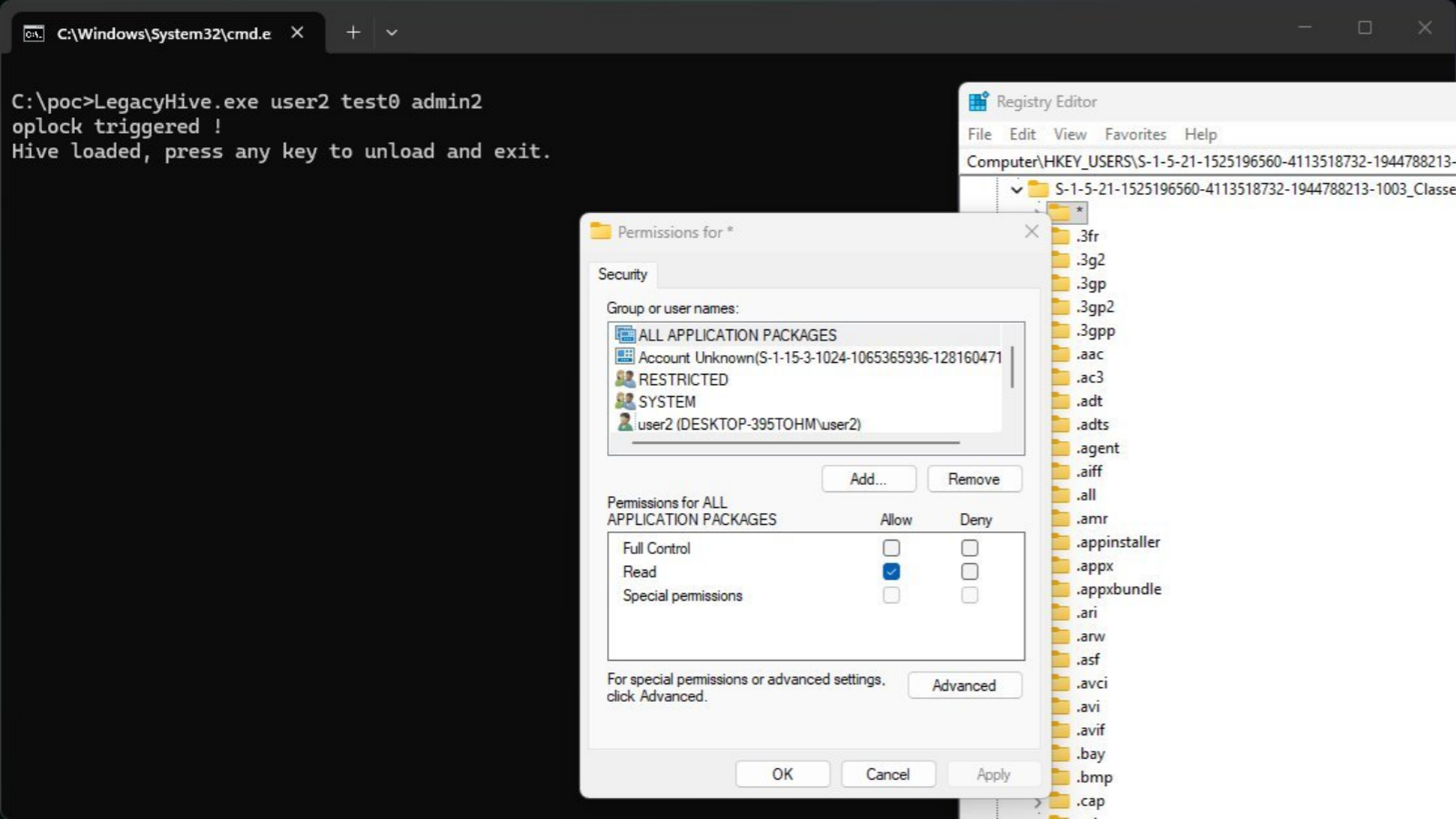
Renowned cybersecurity researcher Nightmare-Eclipse has once again disclosed an unpatched local privilege escalation vulnerability affecting Windows 10 and 11. Orchestrated as a calculated act of retaliation, the researcher deliberately timed the public disclosure to immediately follow Microsoft’s July 2026 Patch Tuesday. This strategic timing denied the tech giant any opportunity to integrate a remediation into its monthly security cycle, which otherwise would have neutralized the flaw prior to public exposure.
Inside the LegacyHive Vulnerability
The newly unveiled exploit primarily facilitates local privilege escalation. Designated as LegacyHive, the vulnerability remains actively exploitable even on systems fully updated with the July 2026 security patches. According to the disclosure, the vulnerability resides within the Windows User Profile Service, stemming from an exploitable flaw in how registry hives are loaded.
The functional, albeit neutered, proof-of-concept code has been published on the LegacyHive GitHub repository. However, owing to the severe security implications, the publicly released version has been intentionally mitigated. In contrast, the original, undisclosed version achieves elevation without requiring any supplementary user credentials.
Exploit Prerequisites and Impact
The current, modified proof-of-concept demands specific pre-conditions: it requires the credentials of an additional standard user and a tertiary username to trigger successfully. Upon a triumphant execution of the exploit, the target user’s registry hive is mounted under the current user’s HKCR path. Far from being confined to consumer versions of Windows 10 and 11, the vulnerability also compromises several iterations of Windows Server.
Given these prerequisites, the exploit requires prior local execution capabilities, rendering direct remote exploitation impossible. Nevertheless, such vulnerabilities pose a severe threat to enterprise environments, where workstations are typically restricted to standard user privileges. Should an adversary leverage this flaw to secure elevated rights, the potential for lateral movement and systemic destruction increases exponentially.
A Retaliatory Campaign Against Microsoft
This release is widely characterized as a retaliatory campaign. Earlier this year, Nightmare-Eclipse publicly exposed several critical Windows vulnerabilities, including local privilege escalation flaws and methods to bypass Microsoft BitLocker encryption. These zero-day disclosures sparked intense debate within the cybersecurity community.
Microsoft reprimanded the researcher for failing to adhere to responsible, coordinated disclosure guidelines, arguing that publishing unpatched vulnerabilities and functional exploit code needlessly magnifies risks for end-users. Conversely, Nightmare-Eclipse asserted that prior communications with Microsoft had broken down, citing a frustrating and unproductive dialogue as the direct catalyst for the public disclosures, though specific details remain elusive.
Escalating Hostility and Registry Bans
In the wake of these controversies, the researcher’s GitHub, GitLab, and Microsoft Security Response Center (MSRC) accounts were suspended. Undeterred, the researcher established fresh accounts to continue disseminating zero-day exploits. The relationship between Microsoft and the researcher is palpably hostile.
It is highly anticipated that Nightmare-Eclipse will continue to unleash more unpatched exploits. For Microsoft, unless they reform their communication channels and bug bounty incentives with external researchers, such rogue disclosures are bound to proliferate.
Support Our Threat Intelligence
If you find our technology report and cybersecurity news helpful, consider supporting our work.
 Buy Me a Coffee
PayPal
Buy Me a Coffee
PayPal


