Jscrambler Supply Chain Attack Analysis
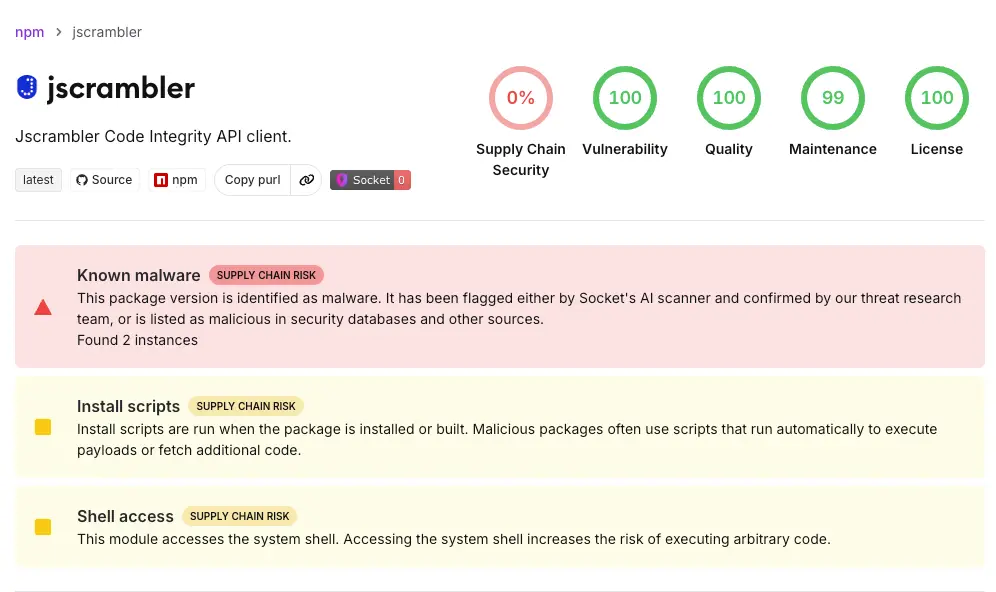
The Initial Compromise and Detection
A stolen package registry key enabled a cybercriminal to execute a severe jscrambler supply chain attack. They successfully uploaded five infected versions of the npm package. These rogue versions contained the highly dangerous IronWorm malware payload. Security experts from multiple firms rapidly investigated this alarming incident.
Socket detected the initial malicious release a mere six minutes after its publication. Subsequently, they directly linked four additional releases to this specific campaign. Furthermore, their analysis revealed an evolution in the attack methodology. Later versions relocated the malicious loader. The attackers moved it from the preinstall script directly into the core code.
Unveiling the IronWorm Payload
Meanwhile, JFrog identified the malicious payload as IronWorm. Additionally, they uncovered a terrifying self-propagation mechanism. This worm leveraged stolen npm tokens to spread autonomously. SafeDep confirmed the absence of injected files within the official public repository. They also revealed a disturbing capability to load eBPF code directly into the Linux kernel. Finally, StepSecurity recorded unauthorized outbound connections. These rogue transmissions consistently targeted two distinct IP addresses alongside the Tor network.
Impacted Versions and Scope
The compromised iterations include versions 8.14.0, 8.16.0, 8.17.0, 8.18.0, and 8.20.0. The threat actor rapidly published these updates over a brief three-hour window. Ultimately, Jscrambler officially acknowledged the severe compromise of their dedicated publishing credentials. Fortunately, this cyberattack solely impacted the primary jscrambler package designed for Code Integrity. Consequently, their other software products and external plugins remain entirely unharmed.
Evolution of the Infection Method
The first three compromised versions executed the malware immediately during installation. They achieved this via a malicious preinstall hook. However, versions 8.18.0 and 8.20.0 embedded the stealthy loader directly into the main code and the command-line interface. Therefore, merely disabling installation scripts no longer provided adequate system protection. The malicious program activated instantly upon importing or launching the affected package. Moreover, the attackers specifically deployed distinct executable files carefully tailored for Windows, macOS, and Linux environments.
Extensive Data Exfiltration Targets
IronWorm aggressively hunted for valuable cloud access keys and active GitHub credentials. It also frantically sought out browser passwords, tracking cookies, and sensitive 1Password vaults. Furthermore, the malware explicitly targeted cryptocurrency wallets, corporate VPN configurations, and active messenger sessions. It even pursued valuable authentication keys for modern AI programming tools and MCP servers.
On Windows machines, the malware established deep persistence through a completely hidden scheduled task. Conversely, it utilized a discreet LaunchAgent for stealthy persistence on Apple macOS systems. Ultimately, the malware quietly exfiltrated the stolen data via the Tor network and the temporary temp.sh file-sharing service.
Self-Propagation and Mitigation Steps
JFrog researchers also determined that IronWorm actively validated the hijacked npm tokens it discovered. Subsequently, the malware maliciously selected popular packages and injected a rogue setup.mjs script into their release archives. It possessed the alarming capability to publish infected versions straight back into the public registry. Fortunately, investigators currently lack any concrete evidence regarding the successful infection of other software packages.
Immediate Remediation Required
Jscrambler promptly revoked the compromised publishing data and aggressively rotated all affected cryptographic secrets. They also explicitly marked the malicious npm versions as completely deprecated. However, vulnerable users can unfortunately still manually install them by specifying the exact version number. The security company designated version 8.22.0 as a demonstrably secure and clean software release.
Consequently, cybersecurity experts strongly urge all affected users to migrate to version 8.22.0 immediately. Administrators must rapidly purge all dangerous package versions from local lockfiles and central system caches. Furthermore, internal security teams should meticulously inspect developer workstations and automated integration build systems. Any digital keys or access tokens accessible to the malware must be considered fundamentally stolen. IT staff must immediately rotate these compromised secrets and forcibly terminate all active user sessions. Finally, users should rigorously scan Windows for hidden background tasks and check macOS for unrecognized LaunchAgents.
Support Our Threat Intelligence
If you find our technology report and cybersecurity news helpful, consider supporting our work.
 Buy Me a Coffee
PayPal
Buy Me a Coffee
PayPal


