Intel Terminates Bug Bounty Payouts Amid AI Automation Surge
The pursuit of lucrative vulnerabilities within Intel systems has unexpectedly ceased to be financially rewarding. In mid-September, the corporation replaced its paid Bug Bounty initiative with a responsible disclosure channel. Consequently, they transitioned vulnerability reporting to the Intel Vulnerability Disclosure Program hosted on Intigriti. Financial remuneration is no longer provided for hardware, software, or firmware defects.
The former program commenced operations in 2017 and opened to the public in 2018. Historically, Intel disbursed between $500 and $100,000 for verified vulnerabilities. The maximum payout applied to critical hardware flaws. The ceiling for firmware stood at $30,000, software at $10,000, and cloud services at $5,000. Compensation depended entirely on severity, report quality, and the accompanying demonstration code.
Stringent Requirements Remain Without Compensation
Despite eliminating payouts, the new framework maintains rigorous standards for submissions. A vulnerability must be original, previously undisclosed, and reproducible on a supported product iteration. Intel mandates that researchers specify the affected version and its impact on confidentiality, integrity, or availability. Submissions must include reproduction instructions, a Proof of Concept (PoC), the CWE category, and a CVSS 4.0 assessment. However, the program explicitly promises no financial rewards or bonuses.
Nevertheless, the influx of reports has not halted. By September 29, the Intigriti page displayed 25 submitted reports, with the latest applications appearing between September 27 and 29. The average initial response time was under 16 hours, while resolution and preliminary verification took less than two days. In lieu of monetary compensation, Intel offers a secure disclosure protocol and formal attribution for accepted discoveries.
The AI Influence on Vulnerability Discovery
Intel has not publicly articulated its rationale for abolishing payouts. Therefore, one cannot definitively link the company’s decision directly to artificial intelligence yet. However, this paradigm shift occurred amidst a precipitous decline in the cost of automated vulnerability scanning and report generation. Generative models now possess the capability to analyze code en masse, formulate hypotheses, and draft submissions. Conversely, the manual verification of each finding remains an expensive and protracted endeavor.
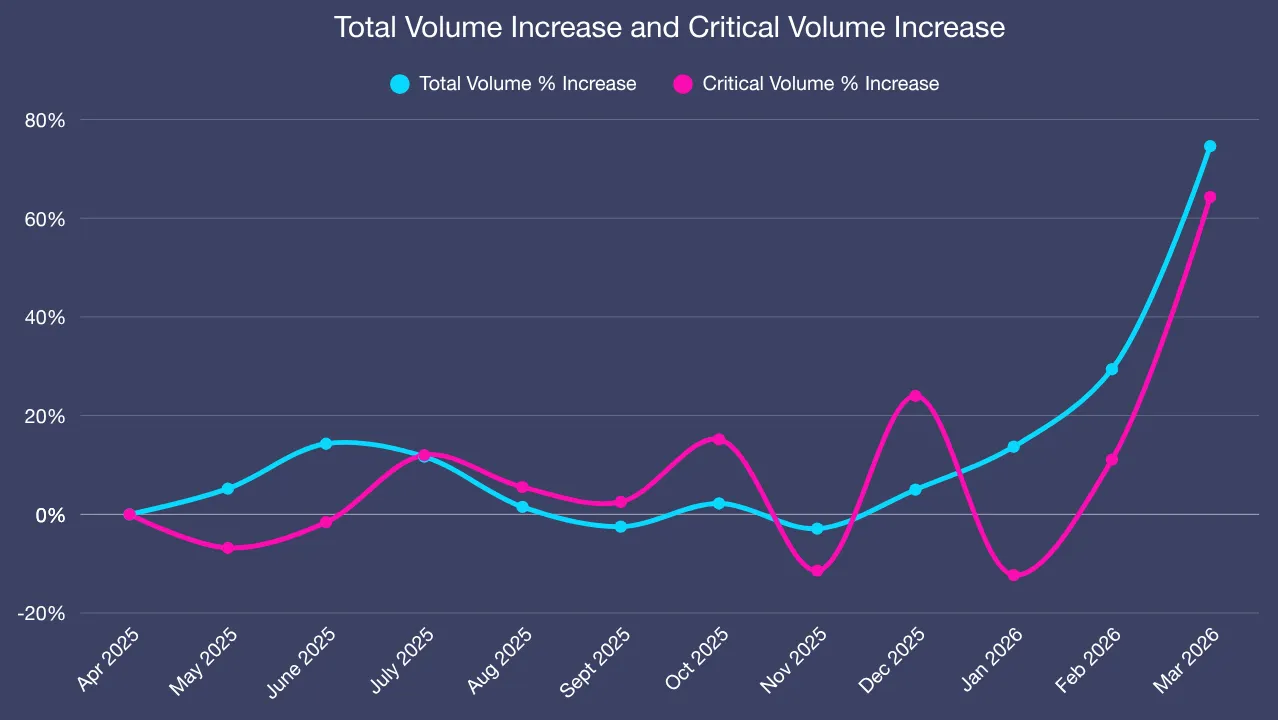
The sheer magnitude of this shift is evident in recent HackerOne statistics. In the twelve months preceding March 2026, the platform documented a staggering 76% surge in report volume. Crucially, the proportion of actionable signals remained relatively stable, indicating the issue extends beyond mere AI-generated noise. The accumulated backlog of verified yet unpatched vulnerabilities swelled by over 21 times, while critical flaws multiplied approximately 25 times.
The Evolving Economics of Bug Bounties
The underlying economics of Bug Bounty programs have already begun adapting to this unprecedented deluge. During the spring, HackerOne temporarily suspended the Internet Bug Bounty and subsequently slashed payouts. Compensation for a critical vulnerability plummeted from $9,250 to $2,257. Similarly, rewards for medium-severity issues decreased from $1,843 to $297. While the company did not explicitly cite AI as the sole catalyst, the velocity of vulnerability discovery has demonstrably outpaced the speed of verification and remediation.
Open-source projects have suffered a comparable burden. The cURL development team encountered a massive spike in reports following the proliferation of generative tools. Automated agents began identifying not only false positives but also legitimate defects. By April 2026, the project had received 87 inquiries, projecting an annualized rate of approximately 325 reports. This relentless influx had already prompted developers to vocalize concerns regarding severe cognitive overload.
Intel’s maneuver does not signal the eradication of vulnerability research. Rather, it signifies a fundamental relocation of intrinsic value. Identifying a potential defect has become exponentially cheaper and faster. Meanwhile, the tasks of confirming impact, eliminating duplicates, engineering patches, and orchestrating coordinated disclosure still necessitate human expertise. Intel continues to welcome discoveries, but the financial incentive for independent, profound analysis of their hardware and firmware has effectively vanished from this new program.
Support Our Threat Intelligence
If you find our technology report and cybersecurity news helpful, consider supporting our work.
 Buy Me a Coffee
PayPal
Buy Me a Coffee
PayPal


