Bad Epoll Vulnerability Exposes Linux Systems to Root Access
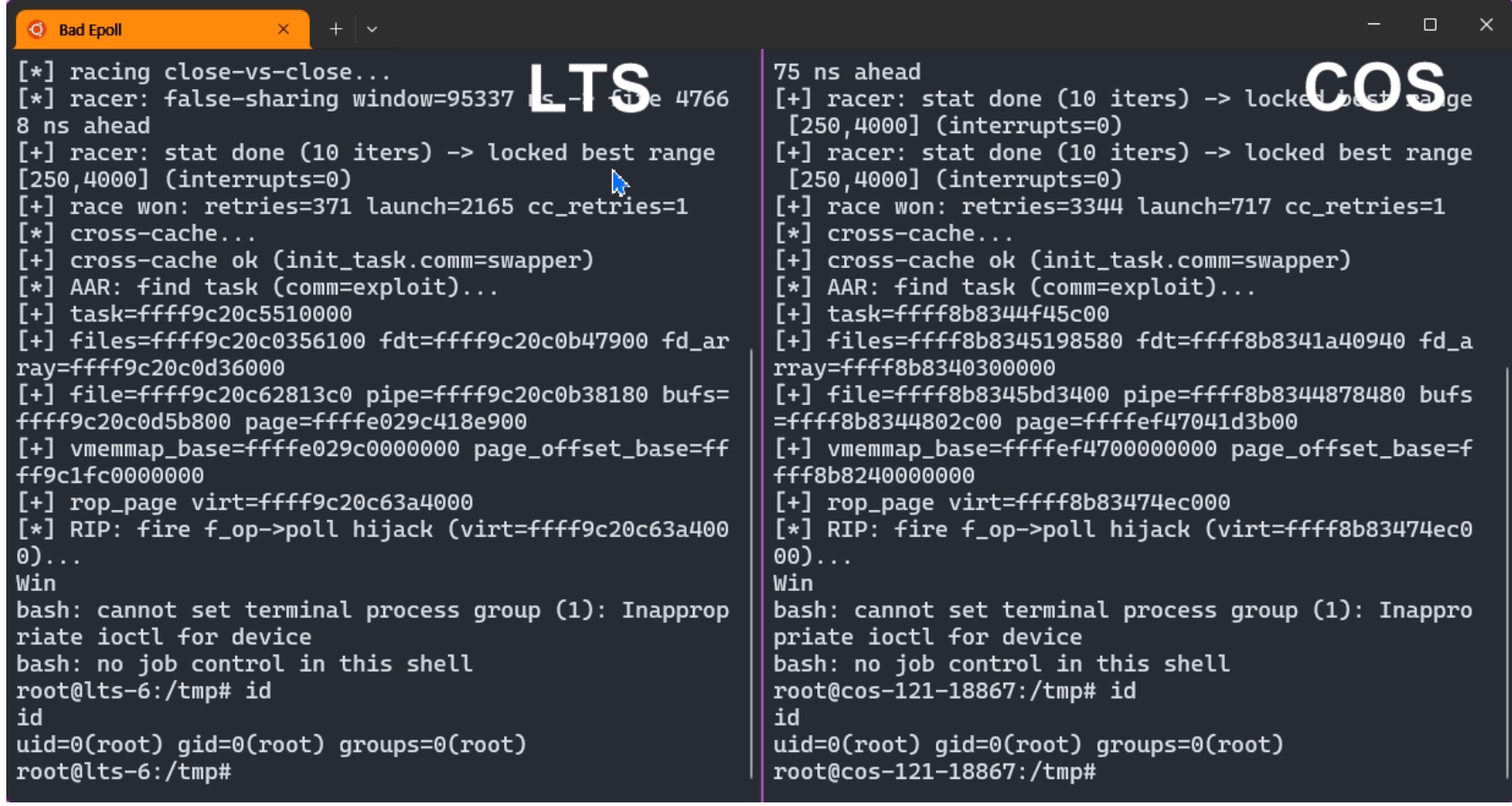
A critical vulnerability has been unearthed within the Linux kernel. This flaw empowers an ordinary user to escalate their privileges to root. It threatens not merely servers and workstations, but also Android devices. Designated as Bad Epoll and tracked under CVE-2026-46242, this threat was discovered by Jaeyoung Chung. He identified the flaw within the epoll subsystem. Subsequently, he engineered a functional exploit and submitted it to the Google kernelCTF program as a zero-day.
The Crucial Role of the Epoll Subsystem
The epoll mechanism facilitates the simultaneous monitoring of myriad files, sockets, and network connections. Consequently, servers, network services, and web browsers rely heavily upon it. Disabling epoll without crippling essential functionalities remains completely impossible. Thus, system administrators are left without simple workarounds. The sole reliable defensive measure necessitates installing a kernel patch or a distribution-specific backport.
Understanding the Use-After-Free Race Condition
Classified as a use-after-free vulnerability, Bad Epoll originates from a race condition. This condition is embedded deeply within the `ep_remove` code. In essence, two distinct sectors of the kernel concurrently attempt to purge the identical internal object. One sector liberates the memory. Meanwhile, the other sector persists in interacting with the now-freed allocation. This fleeting collision empowers an assailant to corrupt kernel memory. Ultimately, the attacker can seize control via a Return-Oriented Programming chain to spawn a root shell.
High Attack Reliability and Device Impact
The remarkable reliability of this attack heightens its inherent danger. The race condition window spans a mere six instructions. Therefore, accidental triggering is highly improbable. However, Chung exploit ingeniously widens this critical juncture. Furthermore, it reiterates attempts without precipitating a system crash. During rigorous kernelCTF testing, the researcher achieved an astounding 99% success rate on the Long-Term Support kernel. An Android exploit remains under development currently. Yet, the researcher notes that devices utilizing kernel versions 6.6 and newer present viable targets. Conversely, hardware running kernel 6.1 remains entirely unaffected.
AI Oversight and the Stealthy Nature of the Flaw
The narrative surrounding Bad Epoll is distinguished by another fascinating detail. This exact code region had previously attracted the scrutiny of the Anthropic Mythos model. That system successfully pinpointed an adjacent race condition, tracked as CVE-2026-43074. However, according to the Bad Epoll technical breakdown published by Chung, the AI likely overlooked this newer flaw. This oversight occurred owing to its exceedingly narrow temporal window. Following the remediation of the initial vulnerability, the Bad Epoll flaw typically evaded detection by KASAN. Consequently, the runtime environment failed to provide a definitive signal of the underlying issue.
Mitigation and Patching Strategies
The vulnerable code was initially introduced into the kernel in April 2023. A definitive resolution subsequently emerged on April 24, 2026. Operating systems grounded on Linux kernel 6.4 and subsequent iterations remain deeply susceptible. This remains true unless the vendor has integrated the patch into their specific branch. System administrators must diligently verify updates for their respective distributions. Package statuses fluctuate significantly even within a singular ecosystem. For instance, the Debian tracker categorizes certain branches as patched, whilst highlighting lingering risks for others.
Support Our Threat Intelligence
If you find our technology report and cybersecurity news helpful, consider supporting our work.
 Buy Me a Coffee
PayPal
Buy Me a Coffee
PayPal


