The Fractured Underground: Law Enforcement Disrupts the Iconic XSS Cybercrime Forum
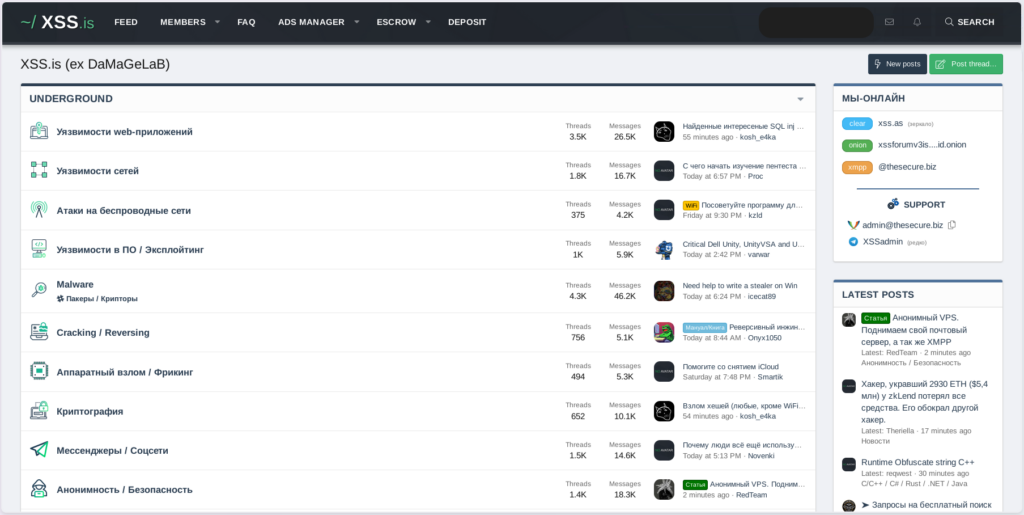
For two decades, the underground forum XSS reigned as a premier sanctuary for cybercriminals. Inside this digital enclave, actors routinely recruited accomplices and bartered illicit access. Furthermore, users frequently debated malware architectures, phishing methodologies, and fraudulent schemes. However, a decisive law enforcement intervention recently shattered this dark ecosystem. Consequently, the platform no longer functions as the centralized hub of the cybercrime underworld.
The International Takedown and Immediate Fracturing
According to threat intelligence firm Flashpoint, an international coalition seized the XSS domain on July 23, 2025. This coordinated operation united Ukrainian authorities, the French National Police, and Europol. Concurrently, French officials announced the apprehension of the forum’s long-standing administrator within Ukrainian territory. Following this catastrophic blow, the cybercriminal syndicate rapidly splintered into several adversarial factions.
From Humble Beginnings to a Monolithic Network Node
Originally, XSS emerged from the legacy DaMaGeLaB digital forum. Over time, it evolved from a mediocre platform into a foundational pillar of the digital underworld. The marketplace accommodated vendors trafficking in loaders, phishing kits, and customized malware strains.
Additionally, threat actors traded DDoS botnets, falsified documentation, and compromised network credentials. The domain also served as an administrative nerve center. Thus, malicious actors easily recruited talent, secured partnerships, and arbitrated internal transactional disputes.
The Emergence of Successor Factions
DamageLib: A Sanctuary for Purists
Following the destruction of the core infrastructure, a faction of former moderators established DamageLib. These individuals deemed the original XSS architecture deeply compromised by authorities. Therefore, they adopted a significantly more conservative operational model.
To mitigate surveillance and tracking vulnerabilities, the new administration strictly prohibited commerce, auctions, and financial transactions. Instead of fostering a marketplace, DamageLib focuses heavily on technical documentation, instructional tutorials, and theoretical debates.
Rehub: Resurrecting the Illicit Marketplace
Conversely, an alternative entity named Rehub quickly occupied the commercial vacuum. Another former XSS moderator designed this platform. He recognized that underground actors still required an environment to execute transactions.
To cultivate immediate institutional trust, Rehub immediately integrated a dedicated marketplace section. Furthermore, the founder recruited notorious cybercriminals to form the core moderation team. Currently, the forum continues to ingest fresh content and expand its active user base.
The Phantom Clone and Systemic Distrust
In early August 2025, a separate project materialized on a .pro top-level domain. This entity brazenly masqueraded as the resurrected incarnation of XSS. To simulate legitimacy, the creators deployed legacy database backups containing user profiles, discussion threads, and financial deposits.
Nevertheless, rival forums like Exploit and DamageLib greeted this clone with intense skepticism. Consequently, users widely suspect that the domain operates as a law enforcement honeypot.
The Geopolitical Deviation of XSSF
Additionally, Flashpoint documented the rise of XSSF Forum. A hacktivist collective originally spawned this group within the Telegram messaging application. This specific entity declares an explicit intent to sabotage the digital infrastructure of the European Union and Ukraine.
However, archival chatter on DamageLib suggests that this platform shares no lineage with the original XSS. Furthermore, direct offensives against Ukrainian networks fundamentally violate the traditional guidelines of the legacy community. At present, analysts cannot verify the authenticity of the platform or the identities of its administrators.
Defensive Implications of a Fragmented Landscape
Undeniably, the disruption of XSS represents a significant triumph for global authorities. Yet, the strike failed to eradicate the cybercrime ecosystem entirely. Instead of a centralized nexus, a highly fragmented environment emerged.
Within this new paradigm, threat actors migrate between platforms, alter operational rules, and recalibrate trust. For security defenders, this schism does not imply a diminished threat profile. Rather, telemetry monitoring must evolve. Teams must now track a sprawling network of emergent and adversarial communities instead of a singular entity.
Support Our Threat Intelligence
If you find our technology report and cybersecurity news helpful, consider supporting our work.
 Buy Me a Coffee
PayPal
Buy Me a Coffee
PayPal


