Tagged: Business Email Compromise
Fraudsters have turned human trust into a global, multi-million-dollar industry. The latest coordinated strike against that industry is among the largest in recent years. Operation First Light 2026 brought together law enforcement from 97...
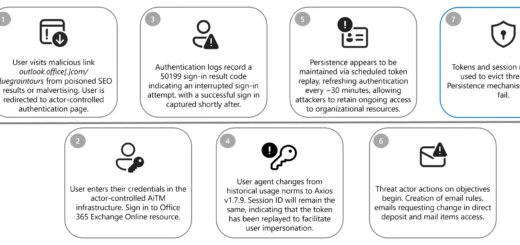
Payroll systems rarely attract attention until a single edited bank detail quietly turns a routine paycheck into a direct transfer to criminals. Researchers at BushidoToken Threat Intel have detailed a new financially motivated campaign...
A new Payroll Pirate attack is quietly draining paychecks across multiple industries. Security Risk Advisors (SRA) recently flagged active intrusions inside several monitored client networks. Notably, the campaign skips malware entirely. Instead, it hijacks...
The White House has resolved to aggressively escalate its offensive against digital malefactors. Donald Trump has enacted an executive decree compelling federal agencies to relentlessly pursue overseas fraudulent syndicates, whilst concurrently fortifying the crusade...
A coordinated international endeavor, spearheaded by the Spanish National Police and bolstered by the expertise of Europol and the Bavarian Criminal Police, has culminated in the apprehension of 34 suspected affiliates of the notorious...
The European retail chain Pepco was deceitfully coerced into transferring a substantial amount of funds to fraudsters through an intricate phishing attack, as disclosed in its official press release. The Hungarian division of Pepco...
A Nigerian citizen was apprehended in Ghana for orchestrating a sophisticated fraud scheme involving Business Email Compromise (BEC), which led to a U.S. charity organization incurring losses exceeding $7.5 million. Olusegun Samson Adejorin was...