Acoustic Infiltration: Perceived Audio Peripheral Transformed into Remote Exploitation Bridge
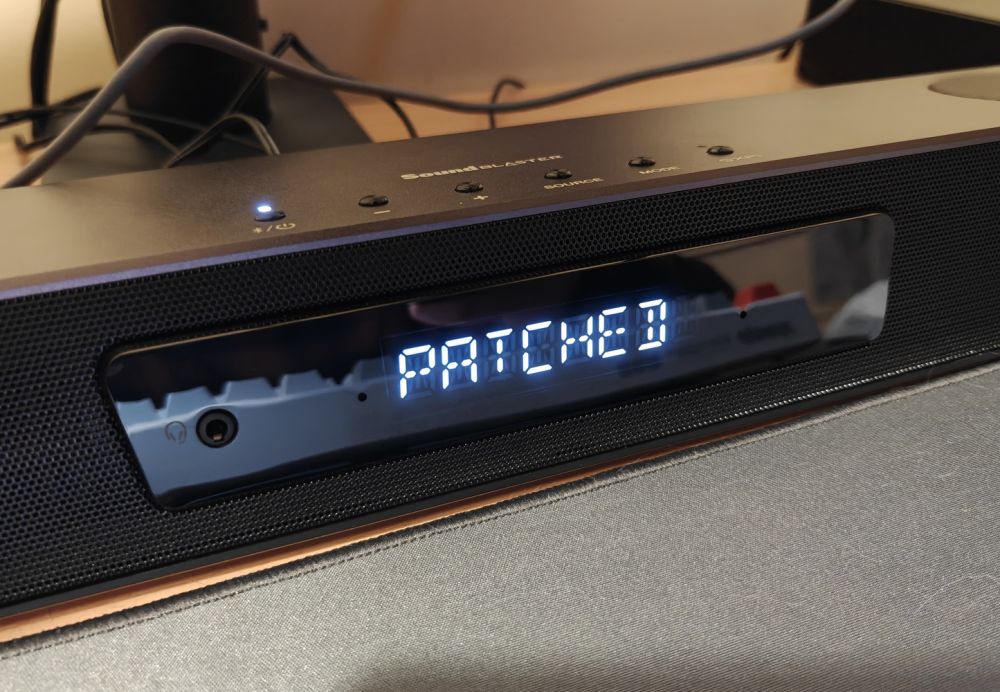
A desktop speaker tethered via USB has unexpectedly morphed into a conduit for remote system compromise. Security specialist Rasmus Moorats discovered a critical flaw in the ubiquitous Sound Blaster Katana V2X soundbar. Consequently, this architectural defect permits unauthorized adversaries to flash custom firmware over Bluetooth. Attackers can subsequently execute arbitrary commands on the host PC without ever maintaining physical contact with the hardware.
A Serendipitous Revelation of Proprietary Protocols
This systemic exposure was uncovered purely by chance. Following his acquisition of the Sound Blaster Katana V2X, Moorats sought to analyze the telemetry exchanged between the device and the workstation. His forensic evaluation quickly unveiled the Creative Transport Protocol (CTP). This proprietary framework regulates ambient lighting, equalization parameters, and auxiliary features.
Flaw analysis revealed that any rogue Bluetooth device could establish a connection with the soundbar without authentication. Furthermore, the system entirely bypasses pre-shared pairing sequences. Compounding the issue, a specific command within the protocol facilitates the uploading of arbitrary firmware. Because the manufacturer neglected to cryptographically sign the binaries, the apparatus accepts modified code without friction.
Bypassing Security Controls via Real-Time Operating Systems
Initially, the researcher deployed a benign payload. This script merely rendered the word “patched” upon the integrated chassis display. His focus then shifted to the underlying real-time operating system, FreeRTOS, which governs the peripheral. Within this environment, he identified dormant libraries designed for Human Interface Device (HID) emulation. This classification encompasses standard keyboards and mice.
By default, the native HID configurations were rigidly confined to basic playback toggles and volumetric adjustments. However, Moorats systematically reconfigured the device’s USB descriptor matrix to encompass full keyboard emulation. Consequently, the operating system recognized the audio peripheral as an auxiliary input device. This modification empowered the soundbar to transmit arbitrary keystrokes natively.
Orchestrating the Kinetic Keystroke Chain
The subsequent sequence unfolded with deterministic logic. Moorats directed a remote Bluetooth device to pass instructions to the speaker. Then, the speaker leveraged its newly minted keyboard capabilities to inject commands into the terminal of the host PC. Through this wireless vector, the specialist successfully updated the firmware, initiated a cold reboot, and executed the diagnostic string echo pwned on the connected machine.
While this proof-of-concept utilized an innocuous indicator, a malicious threat actor could easily spawn an administrative PowerShell terminal. Consequently, an attacker could download sophisticated payloads to compromise the network. Furthermore, a weaponized firmware image could permanently dismantle subsequent update mechanisms. This action effectively immunizes the malware against remediation attempts.
The Persistence of Wireless Vulnerabilities
This exposure is exacerbated by the fact that the Bluetooth transceiver remains persistently active. The radio continues to broadcast even while the device slumbers in low-power sleep cycles. Moreover, the system architecture lacks a native method to completely disable the wireless interface.
While a nominal cryptographic handshake exists for wired USB data transfers, its defenses proved fundamentally fragile. The requisite challenge-response keys can be extracted directly from the bundled desktop software. Conversely, when connections originate over the Bluetooth interface, this verification layer is completely absent.
Corporate Inertia and Spatial Constraints
The researcher initially conveyed his findings to Creative Technology but was met with absolute silence. Only following the intervention of CERT Singapore did the manufacturer offer a formal acknowledgment. Remarkably, the enterprise asserted that they do not classify this behavior as an actionable security vulnerability.
Because the vector requires physical proximity to harvest the Bluetooth signal, the attack cannot be coordinated over the public internet. Instead, an adversary must operate locally. Perpetrators must reside in an adjacent office, a neighboring domicile, or within the immediate room. Nonetheless, this revelation demonstrates that an unvetted audio asset can serve as an unexpected beachhead for system exploitation. This finding raises a critical question: how many other wireless devices harbor identical, invisible compromises?
Support Our Threat Intelligence
If you find our technology report and cybersecurity news helpful, consider supporting our work.
 Buy Me a Coffee
PayPal
Buy Me a Coffee
PayPal


