Escalating Defiance: RoguePlanet Exploit Grants Zero-Click SYSTEM Rights via Microsoft Defender Flaw
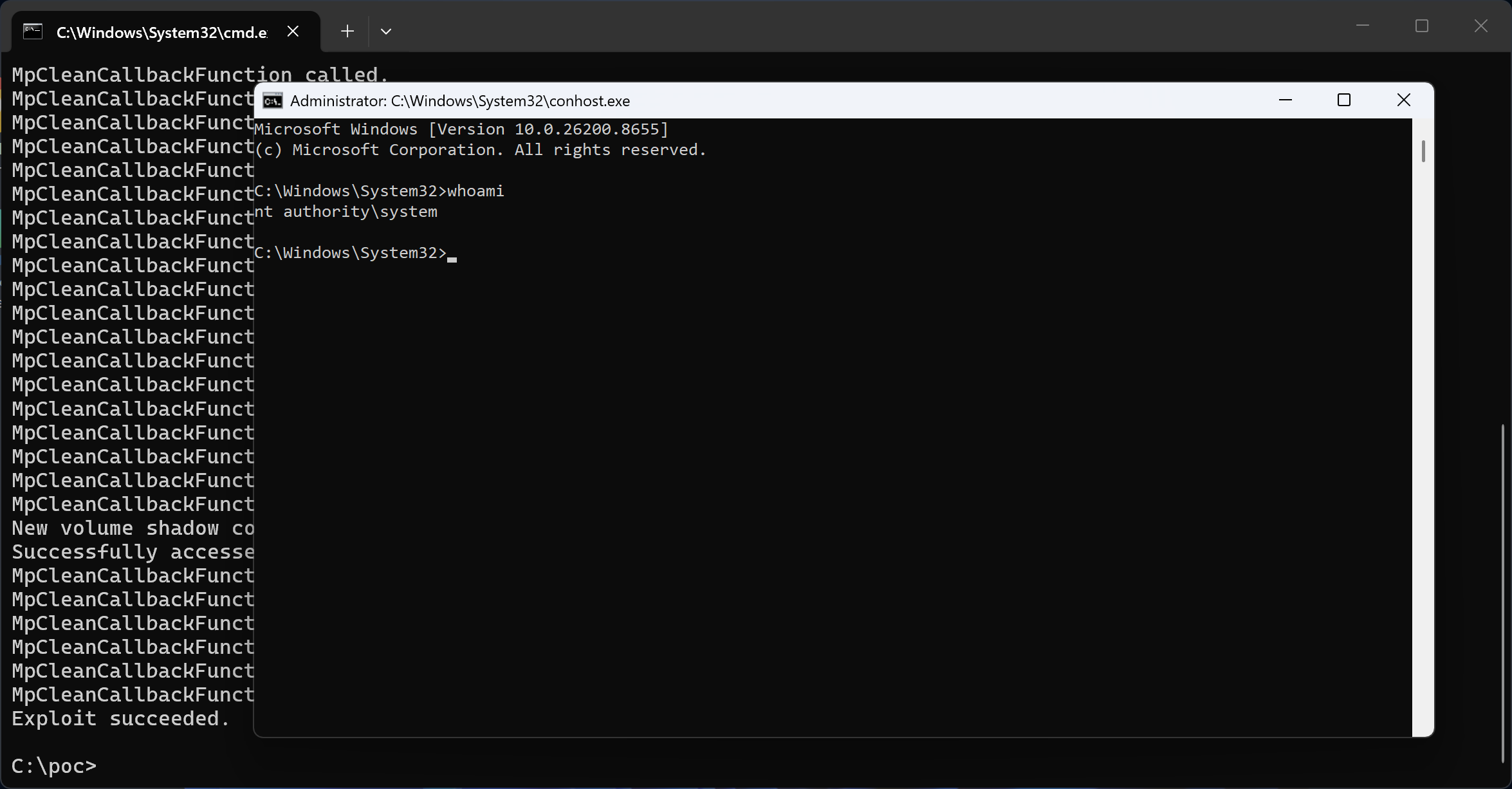
The ongoing friction between a security researcher designated as Nightmare Eclipse and Microsoft has culminated in another high-profile zero-day disclosure. Specifically, a weaponized exploit named RoguePlanet has materialized online. This utility targets Microsoft Defender to achieve local privilege escalation on fully updated installations of Windows 10 and Windows 11.
Deconstructing the Race Condition
The exploit capitalizes on a volatile race condition. This concurrency anomaly manifests when disparate software processes attempt to access shared memory resources simultaneously. Consequently, an adversary can manipulate this transient processing window to subvert application logic. A successful compromise initializes an administrative terminal operating under the absolute SYSTEM security context.
Due to repeated content takedowns on GitHub and GitLab, Nightmare Eclipse published the proof-of-concept across redundant infrastructure. Therefore, the researcher intends to preserve the visibility of the research despite corporate intervention.
Technical Validation and Structural Volatility
Cybersecurity firm ThreatLocker validated the efficacy of the RoguePlanet binary. Specifically, engineers demonstrated the compromise on a hardened Windows 11 host running the latest KB5094126 cumulative update. However, the author concedes that the exploit exhibits operational instability. Indeed, while specific hardware configurations yield deterministic failure rates, alternative environments exhibit varying degrees of success.
From Remote Interception to Local Exploitation
Historically, the researcher conceptualized this defect as a remote code execution vector. The maneuver targeted the way Defender parsed data packets transmitted across remote SMB file servers. However, in mid-May 2026, Microsoft silently refactored this underlying communication mechanism. This adjustment successfully obstructed the primary remote attack vector. Consequently, Nightmare Eclipse re-engineered the payload for local execution, admitting that remote capability remains speculative.
The Economics of Bug Bounties and Defiance
This public release marks the latest chapter in a protracted dispute regarding vulnerability monetization policies. Over the preceding months, Nightmare Eclipse systematically uncovered several critical flaws, including BlueHammer, RedSun, GreenPlasma, and YellowKey.
Microsoft resolved the latter two anomalies during the June 2026 Patch Tuesday cycle. Ironically, this remediation coincided precisely with the debut of RoguePlanet.
The corporation previously threatened legal escalation regarding activities that jeopardize client telemetry. Nevertheless, executives moderated their rhetorical posture following widespread condemnation from the research community.
Defensive Countermeasures and Remediation Status
ThreatLocker notes that enterprises employing strict application whitelisting parameters can successfully obstruct the execution of the RoguePlanet binary. At the present milestone, Microsoft has not distributed an official security patch to address this specific vulnerability. Therefore, organizations must remain hyper-vigilant and monitor endpoint telemetry for anomalous process births spawned by the antimalware subsystem.
Support Our Threat Intelligence
If you find our technology report and cybersecurity news helpful, consider supporting our work.
 Buy Me a Coffee
PayPal
Buy Me a Coffee
PayPal


