The Neutralization of Glassworm: A Coordinated Inversion of Multi-Tiered Supply Chain Infrastructure
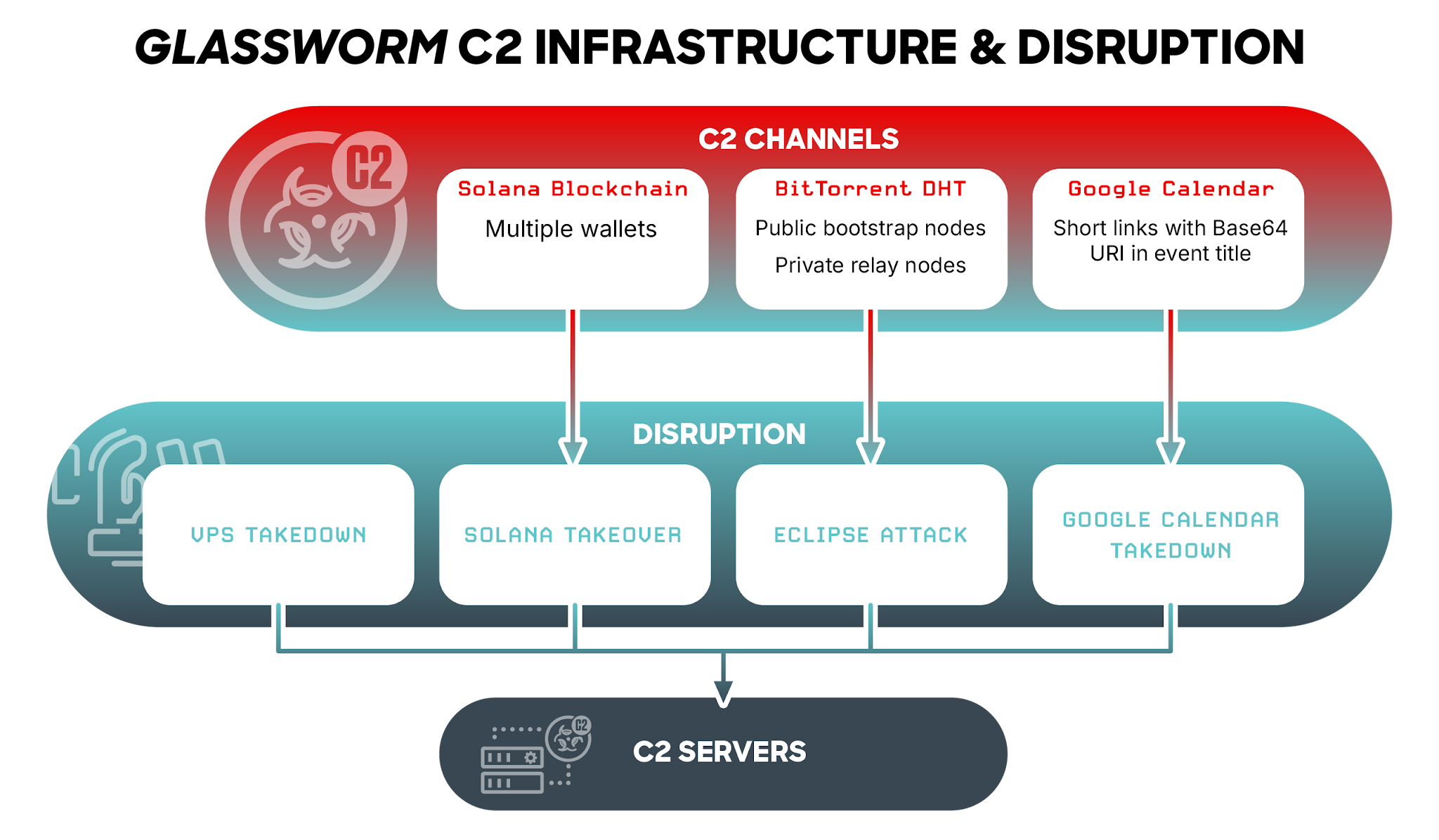
CrowdStrike recently announced the successful disruption of the notorious Glassworm botnet. This malicious apparatus systematically targeted software developers globally. To achieve this, operators weaponized code editor extensions, npm registries, Python packages, and compromised GitHub repositories. Consequently, the mitigation campaign required intense multi-institutional orchestration. Collaborating with Google and the Shadowserver Foundation, security analysts struck a decisive blow. They simultaneously dismantled four independent command-and-control (C2) channels. These pipelines previously distributed malicious instructions and novel payloads to compromised endpoints.
The Strategic Hazard of Developer Infiltration
Undeniably, the peril of the Glassworm campaign extended far beyond mere network scale. Instead, the operation exposed the severe vulnerability of modern engineering environments. Software developers have evolved into premier initial access targets. For instance, a single compromised workstation yields immense administrative leverage. Threat actors can rapidly harvest proprietary source code and corporate cloud environments.
Furthermore, they secure access to continuous integration (CI/CD) pipelines, high-privilege credentials, and upstream package registries. Therefore, the architectural breach quickly transcends the local host. The infection bleeds effortlessly into the broader software supply chain. Ultimately, this contamination compromises downstream enterprise consumers who remain entirely oblivious to the foundational breach.
Multi-Vector Infiltration Mechanics
Threat intelligence indicates that Glassworm operators systematically hunted technical specialists since early 2025. Initially, the adversaries published trojanized Visual Studio Code extensions within the public OpenVSX registry. They cleverly disguised these malicious implants as benign utilities. For example, the software masqueraded as routine time-tracking mechanisms and code formatters.
Consequently, this campaign impacted a vast array of downstream integrated development environments (IDEs). The malicious dependencies successfully infected users operating VSCode, Cursor, Positron, and Windsurf frameworks. Similarly, VSCodium and adjacent architectures natively compatible with the ecosystem suffered immediate exposure.
Simultaneously, the secondary vector of approach targeted the npm and Python Package Index (PyPI) registries. The malicious code initiated silently during standard dependency installation workflows. To achieve this, the operators engineered the payload to trigger via native postinstall hooks and setup scripts. For the unsuspecting engineer, this process perfectly mirrored a routine, benign library update. However, foreign adversarial code was already executing with local user privileges upon the terminal.
The tertiary attack vector involved the systematic corruption of GitHub code repositories. According to CrowdStrike, the operators successfully poisoned more than 300 distinct repositories. To execute this, the adversaries utilized authenticated developer credentials harvested during ancestral infection phases. Subsequently, the threat actors executed destructive force push commands to overwrite default branch historical records. They surreptitiously injected malicious artifacts directly into codebases where collaborative users anticipated standard, benign software development.
Furthermore, this multi-platform campaign operated seamlessly across Windows, macOS, and Linux ecosystems. The functional toolkit featured extensive information theft modules and rapid credential-harvesting engines. Crucially, the centerpiece implant consisted of a highly robust, Node.js-based remote access trojan. CrowdStrike designates this specific framework as GlasswormRAT. This utility provides the remote operator with absolute interactive control over the infected asset.
Forensic Anatomy of the C2 Resiliency Framework
The underlying architecture of Glassworm was explicitly engineered to optimize operational longevity. The operators deliberately rejected reliance on a singular command-and-control infrastructure node. Such simple configurations face rapid termination via hosting provider compliance actions. Instead, the botnet distributed its telemetry across four independent functional channels. Each independent pathway served to dynamically locate backup control nodes or ingest refreshed configuration variables.
Channel I: Distributed Ledger Appends
The inaugural communication loop utilized the Solana blockchain network. The adversaries permanently recorded active C2 server coordinates within the metadata memo fields of public transactions. This configuration operates effectively as an immutable public dead-drop. Because the routing telemetry resides natively within the distributed ledger, it remains completely immune to standard takedown notices or hosting provider interventions.
Channel II: Peer-to-Peer DHT Overlays
The secondary mechanism leveraged the BitTorrent Distributed Hash Table (DHT) infrastructure. GlasswormRAT systematically queried the peer-to-peer network to isolate configuration properties. To validate these assets, the malware processed pre-programmed, hardcoded cryptographic public keys. This decentralized architecture lacks any central point of failure, drastically complicating traditional law enforcement interdiction efforts.
Channel III: Legitimate SaaS Protocol Tunneling
The tertiary routing layer relied upon the obfuscated subversion of a legitimate cloud service. Specifically, Glassworm utilized Google Calendar event metadata fields to broadcast its C2 infrastructure paths. The developers wrapped these destinations inside standard Base64 encoding matrices.
For network defense cells, filtering this telemetry presents a severe operational challenge. Google Calendar represents a trusted enterprise platform; consequently, implementing blunt domain-blocking policies risks interrupting critical corporate workflows.
Channel IV: Traditional Virtual Private Ingress
Finally, the fourth channel aligned closely with classical threat architecture paradigms. The malicious implants established direct network sockets with traditional command servers. The operators leased these assets from conventional, commercial Virtual Private Server (VPS) providers. Through these standard endpoints, the orchestrators systematically distributed final-stage malicious payloads to verified victim nodes.
The Coordinated Takedown Strategy
This hybrid integration of blockchain ledgers, peer-to-peer overlays, SaaS frameworks, and traditional hosting endowed Glassworm with immense resilience. If security teams dismantled a singular channel, the malware autonomously re-routed its telemetry to an alternate pathway. This agility allowed the operators to rapidly restore administrative control.
To counter this, CrowdStrike, Google, and the Shadowserver Foundation executed a synchronized disruption campaign. They simultaneously neutralized all four operational channels. Consequently, the isolated client implants lost all capacity to receive remote commands or ingest auxiliary payloads.
CrowdStrike emphasizes that the Glassworm project matured continuously for over twelve months. The software engineers frequently adapted their compilation strategies, transitioning from legacy JavaScript to modern Rust and Zig frameworks. Concurrently, they expanded their operational reach across diverse software ecosystems while continuously engineering backup infrastructure grids. This unyielding persistence is uniquely perilous within developer environments. Stolen access tokens, repository privileges, and compromised staging environments can trigger widespread downstream contamination impacting thousands of independent institutions.
Forensic Attribution and Regional Telemetry
Forensic telemetry suggests the orchestrators possess intimate expertise within the software supply-chain security discipline. Analysts observed unique behavioral constraints embedded within the early initialization routines. Upon execution, the binary audited the host system’s localized language variables and active time-zone configurations.
If the query revealed the endpoint resided within a Commonwealth of Independent States (CIS) jurisdiction, the malware aborted execution. Regional threat syndicates routinely leverage this defensive tactic to evade local law enforcement scrutiny. Furthermore, analysts isolated distinct Cyrillic code comments within the decompiled source files.
However, CrowdStrike explicitly cautions that these individual traits do not constitute definitive attribution. Geopolitical indicators can easily be forged or integrated using automated artificial intelligence engines. Nevertheless, the holistic operational pattern remained remarkably consistent over a protracted multi-month observation timeline.
Remediation and Network Indicators of Compromise
Following the successful infrastructure disruption, CrowdStrike distributed definitive indicators of compromise (IoCs) to facilitate ecosystem remediation. All endpoints currently infected with the Glassworm implant now automatically route their outbound beaconing traffic to a secure, sinkholed destination. CrowdStrike explicitly governs this defensive IP asset: 164.92.88[.]210.
Therefore, organizations must immediately audit historical network logs and active endpoint telemetry matrices. Any recorded correlation with this address dictates immediate host isolation and forensic sanitization.
Critical Network Telemetry Target
| Parameter Classification | Target Artifact Destination |
| Sinkhole IP Address | 164.92.88[.]210 |
Primary Administrative Audit Checklist
- Meticulously parse all perimeter network logs and firewall connection states.
- Scrutinize endpoint telemetry matrices across all active developer workstations.
- Isolate and examine any local terminals that recently imported extensions from the OpenVSX registry.
- Audit systems that recently ingested unverified code blocks from public npm or PyPI repositories.
To further accelerate verification, CrowdStrike distributed two distinct YARA signature rules. The inaugural rule specifically identifies unique cryptographic string sequences within the decompiled GlasswormRAT payload. Concurrently, the secondary signature script targets the heavily obfuscated Python-based installation routine utilized during the initial access stage.
Structural Deficiencies in Contemporary Supply-Chain Defense
The historical trajectory of the Glassworm botnet exposes a profound structural deficiency within modern supply-chain security models. Relying exclusively on post-incident detection paradigms delivers entirely inadequate protection. A weaponized package can achieve full local installation within a matter of seconds. Consequently, automated security alerts typically manifest long after the adversary has successfully exfiltrated authorization tokens or executed high-privilege scripts.
This operational risk is severely compounded by the fundamental architecture of modern development ecosystems. Registries like npm, PyPI, OpenVSX, and GitHub host millions of independent projects and fragile dependencies. Unfortunately, native verification mechanisms remain structurally limited. This gap allows an adversary to rapidly publish a novel package, inject malicious routines into setup scripts, and harvest immediate victims. Glassworm masterfully exploited this velocity, constantly transitioning across distinct repository registries to maintain continuous persistence on developer endpoints.
Holistic Defensive Hardening Imperatives
Consequently, merely scanning local filesystems for known malicious signatures fails to mitigate these threat vectors. Robust enterprise defense requires the comprehensive implementation of strict dependency verification controls. Security teams must continuously audit editor extensions, enforce the principle of least privilege on API tokens, and actively monitor CI/CD environments.
Simultaneously, incident response teams must swiftly invalidate compromised credentials. Crucially, active infrastructure must be systematically dismantled; should operators retain command of infected hosts, they can effortlessly re-compromise the terminal using altered methodologies.
Ultimately, Glassworm capitalized on a brutally elegant thesis: compromise the engineer to secure un-throttled access to downstream source code and end-user ecosystems. The operators masterfully transformed institutional trust in development utilities, software updates, and public repositories into a weaponized delivery mechanism. While the synchronized neutralization of the four C2 channels does not instantly cure existing host infections, it provides global enterprises with a critical operational window. Organizations must utilize this interlude to audit environments, purge lingering implants, and comprehensively rotate compromised access credentials.
Support Our Threat Intelligence
If you find our technology report and cybersecurity news helpful, consider supporting our work.
 Buy Me a Coffee
PayPal
Buy Me a Coffee
PayPal


